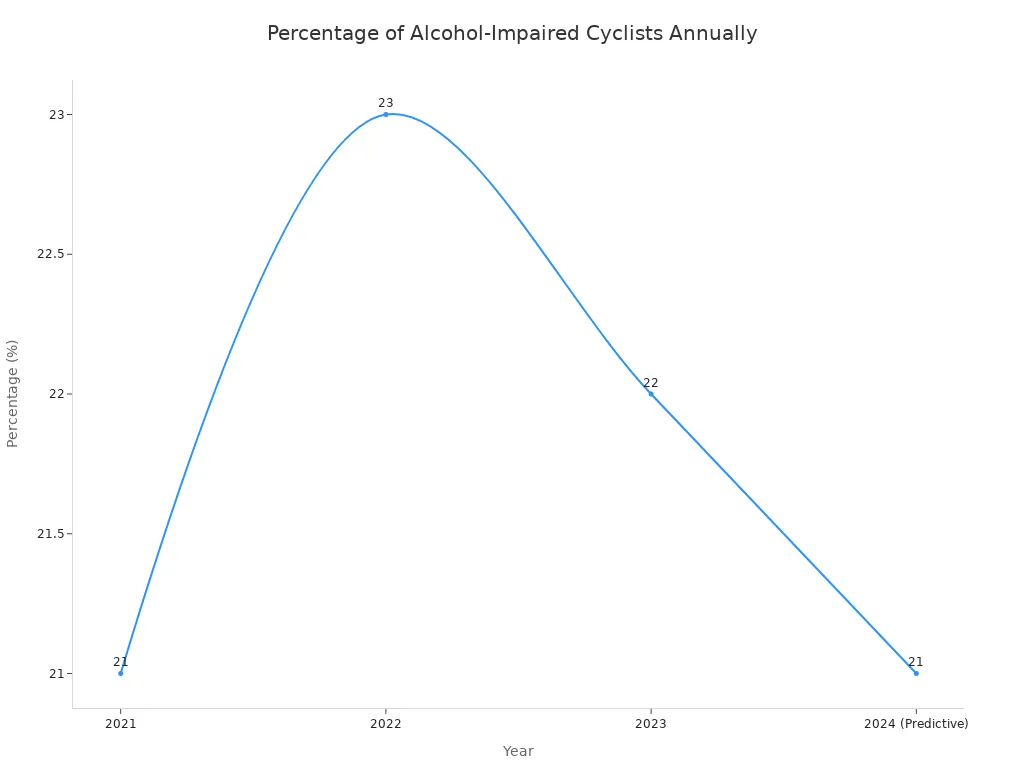
Can you get a DUI on a bike? Generally, no, you cannot get a traditional DUI or DWI on a conventional bicycle in most places, including Texas. State laws do not classify a bicycle as a ‘motor vehicle’ for DUI/DWI purposes. However, cycling while intoxicated carries significant legal risks. You will not face a DWI on a bicycle, but you could face other charges. Over 20% of bicyclist fatalities involve alcohol impairment.
You might face public intoxication charges if you are an intoxicated cyclist. This blog clarifies these legal distinctions. It explains potential charges and offers practical advice for riding a bicycle responsibly. Understanding these laws helps you avoid trouble when drinking and riding.
DUI/DWI Laws and Motor Vehicles
Defining DUI/DWI: What It Means
You often hear terms like DUI and DWI. What do they actually mean? DUI stands for “Driving Under the Influence.” DWI means “Driving While Intoxicated” or “Driving While Impaired.” These laws make it illegal for you to operate a vehicle if alcohol or drugs have affected your ability to drive safely. Your blood alcohol content (BAC) must be below a certain legal limit, usually 0.08%. If you are above this legal limit, you are considered legally impaired. The goal of these drunk driving laws is to prevent accidents caused by impaired drivers.
Motor Vehicle Distinction in DUI/DWI Law
The key to understanding DUI/DWI laws is the definition of a “motor vehicle.” In Texas, laws against impaired operation specifically apply to motor vehicles. This is a crucial point. The Texas Penal Code defines a motor vehicle in a broad way:
“a device in, on or by which a person or property is or may be transported or drawn on a highway, except a device used exclusively on stationary rails or tracks.” This definition can seem unclear. It might even include things like horses, skateboards, or golf carts if you read it literally. The Texas Penal Code Title 7 Chapter 32 states that a motor vehicle is a device that can transport a person or property on a highway. The Texas Transportation Code also defines a motor vehicle as a self-propelled device that can transport people. This broad definition means many unexpected things can be considered motor vehicles for intoxication arrests. These include:
Golf carts
Electric scooters
Hoverboards
Riding lawn mowers
Farm equipment
ATVs
Bicycles Exempt from DUI/DWI
So, where do bicycles fit into this? Generally, you cannot get a DUI on a conventional bicycle. Texas laws, specifically Texas Penal Code § 49.04, apply when you operate a ‘motor vehicle’ while intoxicated in a public place. A conventional bicycle uses human power. It does not have an engine. This means it does not meet the legal definition of a motor vehicle.
Therefore, DWI charges do not apply to it. Texas law generally states that a bicycle is not a motor vehicle for purposes of intoxication laws. This excludes motorized bicycles. The definition of a ‘motor vehicle’ in Texas Penal Code Section 32.34(a) is vague. It does not explicitly require a motor. However, a simple reading of the law suggests a bicycle is not a motor vehicle. This ambiguity can sometimes lead to prosecutors trying to charge people with DWI on a bicycle. However, these cases are often successfully challenged. Texas law does not allow a DWI charge against someone riding a conventional bicycle because laws against impaired operation apply only to motor vehicles. Since bicycles are not motor vehicles under Texas law, you are not subject to DWI charges.
E-Bikes, Scooters, and Other Devices
What about electric bicycles (e-bikes) and electric scooters? These devices are different. The Texas Penal Code Section 32.34 broadly defines a ‘motor vehicle’. This definition includes devices that transport people or property on a highway, except those on rails or tracks. This vague definition allows prosecutors in Texas cities to charge you with DWI for operating electric scooters while intoxicated. This is especially true if you are on a public roadway.
Adding a motor to a bicycle, whether electric or gas, will likely classify it as a motor vehicle. This makes it subject to intoxication laws if you operate it while intoxicated on a public road. In Texas, electric bicycles and electric scooters are motor vehicles under the law. This means you can face DWI charges if you operate them while intoxicated. Their motorized nature causes this classification. They can reach speeds up to 30 mph, though the legal limit is capped at 20 mph. The broad definition of ‘motor vehicle’ in Texas law includes these devices.
This distinguishes them from standard, non-motorized bicycles and scooters regarding the applicability of intoxication laws. The law aims to prevent unsafe behavior. It also reduces the risk of accidents caused by impaired operation. Electric scooters, an e-bike, and other motorized personal mobility devices often fall into a legal ‘gray area’ in Texas.
However, their motors can qualify them as vehicles under Texas laws concerning impaired operation. This makes intoxicated operation a potential cause for DWI charges. This is particularly true if an incident results in injury or property damage. Prosecutors will likely argue that the motor qualifies these devices as vehicles. This subjects them to regulations for impaired operation. You should be cautious. Consider the risks of using these devices after consuming alcohol. You can get a DWI on an e-bike or scooter.
Alternative Charges for Drinking and Riding
You might not face a traditional DUI or DWI charge when cycling while intoxicated. However, you can still encounter serious legal trouble. Law enforcement can issue other charges if they find you drinking and riding. These alternative charges carry their own penalties and can significantly impact your life.
Public Intoxication: A Common Charge
Public intoxication is a very common charge for an intoxicated cyclist. In Texas, you commit public intoxication if you appear in a public place while intoxicated. Your intoxication must make you a danger to yourself or others. A public place includes areas like streets, parks, bars, schools, hospitals, and office buildings.
The law defines intoxication in two ways. You might not have the normal use of your mental or physical abilities because of alcohol or drugs. Or, you might have a Blood Alcohol Concentration (BAC) of 0.08% or more. For a public intoxication charge, police often rely on their observations. They look for signs like slurred speech, an unsteady walk, the smell of alcohol, or bloodshot eyes. They also watch for disorientation or confusion.
Police determine if you pose a danger in several ways. You might be so intoxicated that you are vulnerable to robbery or assault. You could be at risk of falling into the road and getting hit by a car. Starting a fight or being out of control also shows danger. Stumbling into traffic or passing out in public are clear signs of danger.
For adults, public intoxication is a Class C misdemeanor. This can result in a fine of up to $500. First-time offenders usually do not face jail time. However, police can hold you until you become sober, typically for 24-48 hours. Repeat offenders might face up to 180 days in jail. Minors face stricter penalties due to Texas’s Zero Tolerance Law. They can receive a fine, community service, a driver’s license suspension, and must attend an alcohol awareness class. A public intoxication conviction can also lead to mandatory alcohol education classes.
Disorderly Conduct: When Behavior Escalates
Your behavior while cycling under the influence can lead to disorderly conduct charges. This happens if you intentionally or knowingly cause a disturbance in a public place. For example, you might use abusive or vulgar language that incites a fight. You could make offensive gestures that cause a breach of the peace. Making unreasonable noise in a public place can also lead to this charge.
Fighting with another person in public is a clear example of disorderly conduct. Displaying a firearm in a way that alarms people also falls under this category. Texas law defines several types of disorderly conduct. These range from Class C misdemeanors for offensive language to Class A misdemeanors for displaying a firearm to alarm others. If you are an intoxicated cyclist and your actions become disruptive or aggressive, you could face these charges. These are distinct from dwi charges.
Reckless Endangerment or Assault
If your actions while cycling under the influence become more severe, you could face charges like reckless endangerment or assault. Reckless endangerment occurs if you recklessly engage in conduct that places another person in imminent danger of serious bodily injury. For example, swerving erratically into traffic or nearly hitting pedestrians could lead to this charge. If you physically harm someone while riding a bicycle and intoxicated, you could face assault charges. These charges are serious and carry significant penalties, potentially including jail time and substantial fines. These are not dwi charges, but they are still very serious.
Local Ordinances and Bicycle-Specific Laws
While Texas state law does not apply DUI laws directly to bicycles, local authorities have the power to create their own rules. Cities can regulate bicycles within their jurisdiction. They can require registration or licensing. They can also prohibit practices that annoy people on streets or sidewalks. This means some cities might have specific ordinances against biking while intoxicated. You should always check local laws in your area. Even if you avoid a dui, local rules can still lead to legal trouble.
Penalties for Cycling Under the Influence
You might avoid a traditional dui when cycling under the influence. However, you still face significant legal consequences. These penalties can affect your finances, freedom, and future. Understanding these consequences helps you make better choices.
Fines and Court Costs
Even without a dwi, you will likely pay fines and court costs. For adults 21 and older, public intoxication is a Class C misdemeanor. This charge carries a potential fine of up to $500. If you are under 21, the penalties are stricter. You could face a driver’s license suspension for up to 30 days. You must also complete an alcohol awareness class and up to 12 hours of community service. You might also pay a fine up to $500. An arrest for public intoxication also involves a booking process and arraignment. You often need to pay a bond, which can range from $200 to $500. You will likely stay in a ‘drunk tank’ until you become sober.
Jail Time or Community Service
While you are not charged with a dwi, other offenses can lead to jail time. For example, repeat public intoxication offenses can result in jail time. More serious charges like disorderly conduct, especially if it involves a firearm, can also mean jail. You might receive community service hours as part of your penalties. These consequences are serious, even if they are not dwi charges.
Impact on Your Criminal Record
A conviction for public intoxication or disorderly conduct can stay on your criminal record permanently. In Texas, a criminal conviction is permanent. If your public intoxication charge is not dismissed, it remains on your record indefinitely. This can affect many areas of your life. It can impact security clearances, college admissions, and eligibility for student financial aid. A criminal record can create obstacles for jobs, housing, and professional licensing. Deferred disposition might be an option. This allows you to plead guilty or no contest. If you complete the terms, the charge can be cleared from your record. If you fail, you face serious fines and a permanent conviction.
Driver’s License and Driving Record
You will not get points on your driving record for cycling under the influence. This is because you are not driving a motor vehicle. However, if you are under 21 and convicted of public intoxication, your driver’s license can be suspended. This shows that even without dwi charges, your ability to drive can still be affected.
Insurance Implications
Cycling while intoxicated can have indirect insurance consequences. If you cause an accident while intoxicated, your liability insurance might not cover the damages. This could leave you responsible for significant costs. These consequences extend beyond just legal penalties.
If Stopped While Cycling Intoxicated

Remaining Calm and Cooperative
If police stop you while cycling, stay calm. Cooperate with law enforcement officers. This helps de-escalate the situation. Do not become argumentative or confrontational. Your behavior significantly influences the outcome of the stop. An agitated or hostile response can lead to additional charges. Remember, an intoxicated cyclist often faces increased scrutiny from authorities. Maintain a respectful demeanor throughout the interaction.
Understanding Your Rights
You possess important rights during any police stop. You have the right to remain silent. Do not answer questions about your alcohol or drug consumption. You do not have to consent to searches of your person or belongings without a valid warrant. Clearly state that you do not consent to a search. You can also ask if you are free to leave. If the officer says you are not free to leave, you are being detained. This distinction is crucial for your legal standing. You are not facing a traditional dui charge for riding a bicycle, but other charges remain possible.
When to Seek Legal Counsel
Contact a lawyer immediately after any police stop. An experienced attorney protects your legal rights. They help you understand the specific charges against you. They can guide you through the complex legal process. Early legal advice is crucial for building a strong defense. This is true even if you only face a public intoxication charge. A lawyer can assess your situation and advise you on the best course of action.
The Importance of Not Resisting
Never resist arrest. Resisting arrest is a separate and serious criminal charge. It can lead to much more severe penalties than the initial offense. Always comply with all physical commands from officers. Even if you believe the stop is unjust or unlawful, cooperate physically. Your cooperation can prevent further legal trouble and additional charges. You are not getting a dwi for riding a bike, but resisting can make your situation significantly worse.
Preventing Intoxicated Cycling
Planning Ahead: Safe Alternatives
You can easily prevent problems. Plan your transportation before you drink. If you know you will drink alcohol, do not plan on riding a bicycle. Arrange for a designated driver. Use ride-sharing services or public transportation. Walking is also a safe option for short distances. These choices help you avoid a dwi and keep you safe. Your safety is always the top priority. Make a plan. Stick to it.
Dangers of Cycling Under the Influence
Cycling under the influence creates serious risks. Alcohol impairs your ability to ride safely. It alters your psychomotor skills, making it hard to maintain balance. Your cognitive function also suffers. This reduces your ability to handle traffic and react to hazards. Alcohol reduces your endurance performance. This further compromises your ability to react appropriately in traffic situations. You make riskier decisions when impaired. This includes managing speed and maintaining balance. The state of intoxication severely impacts your judgment. Intoxicated cyclists often suffer severe injuries. They are more likely to get fractures, especially bony extremity fractures. These injuries often need operative procedures. You might even need admission to an intensive care unit. Do not risk your health or others’ safety by biking while intoxicated.
Knowing Your Local Laws
Always know your local laws. While you might avoid a dwi on a regular bike, cities can have their own rules. These local ordinances can prohibit cycling while intoxicated. Understanding these laws helps you make smart choices. It ensures you stay safe and avoid legal trouble. Do not drive or ride any vehicle when you are drunk or impaired. Always prioritize safety.
You cannot get a dui on a bicycle in most places, like Texas. A bicycle is not a motor vehicle. You avoid dwi charges. However, drinking and riding carries serious legal and personal risks. You face charges like public intoxication or disorderly conduct. These charges have penalties. You will not face dwi charges on a regular bicycle. Other dwi charges apply to motorized devices. These dwi charges carry severe penalties. Avoiding cycling while intoxicated is your best choice. Safety is paramount. Understand your local laws for responsible bicycle use. The consequences are real. You cannot get a dui on a regular bicycle.