Variable Valve Timing Engine (VVT) technology represents a significant leap in automotive engineering, offering substantial improvements over traditional engines. This advanced variable camshaft timing optimizes engine operation for various driving conditions, leading to enhanced engine performance, better fuel economy, and reduced emissions. You will experience improved overall efficiency. The precise control over valve timing delivers superior performance and fuel efficiency. This optimized valve timing makes a real difference. We will explore nine key advantages that make these Variable Valve Timing Engines a superior choice for modern vehicles.
Key Takeaways
VVT engines give your car more power and better acceleration across all speeds.
VVT technology helps your car use less fuel, saving you money.
VVT engines make your car cleaner by reducing harmful exhaust gases.
Your car will run more smoothly and quietly, especially when stopped.
VVT allows your engine to adapt, giving you good performance and fuel use in different driving situations.
Boosted Engine Performance
A variable valve timing engine significantly enhances your vehicle’s capabilities. This advanced technology allows your engine to generate more power and torque across a wider range of engine speeds. You will experience better acceleration and responsiveness. This is a key performance benefit.
Broader Power Band
You get a broader power band because variable camshaft timing optimizes valve timing and lift at different engine speeds. This means your engine breathes better. For example, as engine revolutions per minute (RPM) increase, the system increases the overlap between intake and exhaust periods. This ensures fresh air enters and exhaust gas leaves efficiently, which is vital for maximizing high-speed power.
Consider these points:
VVT allows for increased overlap between intake and exhaust periods as engine revs increase. This is crucial for high-speed power.
Your engine can rev higher, which raises peak power. For instance, Nissan’s 2-litre Neo VVL engine produces 25% more peak power than its non-VVT version.
Low-speed torque increases, improving drivability. The Fiat Barchetta’s 1.8 VVT engine provides 90% peak torque between 2,000 and 6,000 rpm.
Some designs use variable valve lift. Higher lift at high speeds quickens air intake and exhaust, optimizing breathing. Lower lift at low speeds prevents issues like poor fuel-air mixing.
This dynamic adjustment of valve events optimizes cylinder filling. It overcomes the limitations of fixed valve timing, which only works well in a narrow RPM range. This leads to superior engine performance.
Increased Horsepower & Torque
You will notice a significant boost in both horsepower and torque. Variable camshaft timing manipulates the intake valve closing point. Advancing valve events boosts low-end torque. Retarding them enhances high-rpm horsepower. This is because the intake valve closing point greatly influences how much air your engine can ingest. For maximum performance, delaying the intake valve closing point allows more air into the cylinders at high RPMs. Conversely, at low RPMs, a delayed intake closing can reduce low-end torque. It pushes the air/fuel mixture back into the intake manifold. VVT allows for dynamic adjustment of these valve events. This optimizes cylinder filling and thus engine performance across the entire RPM range. You get better efficiency and more usable performance advantages from your engine. This leads to a more enjoyable driving experience.
Improved Fuel Efficiency
You will experience significant improvements in fuel efficiency with a variable valve timing engine. This advanced technology ensures your engine uses fuel wisely.
Optimize Air-Fuel Mix
Your engine achieves optimal combustion efficiency because variable camshaft timing precisely adjusts valve timing. This ensures the air-fuel mixture burns completely. You get better fuel economy and higher miles per gallon (MPG).
Variable Valve Timing (VVT) works with direct fuel injection. It ensures an optimal air-fuel mixture under all load conditions. This reduces incomplete combustion and improves fuel economy.
VVT systems communicate with electronic throttle control. This balances air intake with valve timing adjustments. You get better control over combustion, especially during changing loads.
By dynamically adjusting valve opening and closing, VVT improves combustion stability. This happens across various engine speeds and loads. It helps optimize the air-fuel mixture for efficient combustion.
VVT works with modern fuel injection and turbocharging. It maximizes combustion efficiency. It ensures optimal cylinder filling and minimizes pumping losses. This directly impacts the air-fuel mixture.
A study on variable valve timing in diesel engines showed impressive results. Optimized valve timing reduced NOx output by over 20% under certain conditions. Engines using variable valve timing strategies can also achieve up to a 5% improvement in fuel efficiency under part-load conditions. This shows the real-world benefits of VVT for better efficiency.
Reduce Pumping Losses
You also benefit from reduced pumping losses. Pumping losses happen when your engine works hard to pull air into the cylinders and push exhaust out. This uses up energy. Variable camshaft timing helps your engine breathe more freely. It adjusts valve timing to minimize resistance. This means your engine does not waste as much energy. It improves overall efficiency. You get better fuel efficiency because the engine uses less power for these basic operations. This contributes to better engine performance and overall efficiency. The precise valve timing ensures maximum performance.
Reduced Emissions Output
You want your car to be powerful and clean. A variable valve timing engine helps achieve both. This technology significantly contributes to cleaner exhaust. It optimizes combustion. This reduces harmful pollutants and overall emissions. You drive a more environmentally responsible vehicle. This means fewer harmful emissions enter the atmosphere.
Better Combustion Control
Your engine gains better combustion control. This is a key benefit for the environment. Variable camshaft timing precisely adjusts valve timing. It ensures the air-fuel mixture burns more completely inside the cylinders. This complete burn means less wasted fuel. It also means fewer harmful substances escape into the air. The system adapts to different engine speeds and loads. For example, at low speeds, it might reduce valve overlap. This prevents unburnt fuel from exiting the exhaust. This constant adjustment improves overall engine efficiency. You get cleaner exhaust gases. This precise control helps reduce overall emissions from your vehicle. It makes your car run more cleanly.
Lower NOx & Hydrocarbon
You will notice lower levels of harmful pollutants. Optimized combustion directly reduces nitrogen oxides (NOx). It also significantly cuts down on unburnt hydrocarbons. These are major contributors to smog and air pollution. NOx forms at high combustion temperatures. Your valve timing system can help manage these temperatures. It ensures a more controlled burn. Unburnt hydrocarbons result from incomplete combustion. Your variable valve timing engine helps achieve these important emission reductions. It does this by ensuring fuel burns thoroughly. This makes your vehicle much more environmentally friendly. It boosts your car’s overall efficiency. You contribute to cleaner air with every drive. This directly impacts global emissions.
Smoother Idling
You will notice a much smoother engine when your car is stopped. A variable valve timing engine makes your vehicle feel more refined. This technology precisely manages engine operations even at low speeds. It ensures a calm and steady idle.
Precise Valve Overlap
Your engine achieves precise valve timing at idle. This is crucial for smoothness. Variable valve timing systems adjust the overlap between when the intake valve opens and the exhaust valve closes. At idle, too much overlap can cause exhaust gases to re-enter the cylinder. This makes the engine run rough. VVT reduces this overlap. It prevents exhaust gas from mixing with the fresh air-fuel charge. This results in a more stable combustion process. You experience less vibration and a quieter engine when you are not moving. Different VVT designs contribute to this overall engine stability.
VVT System Design | Performance Benefit |
|---|---|
Continuous Variable Cam Phasing | Improves torque delivery across a wide rev range |
Variable Lift and Duration (Cam Changing) | Improves high-rev power |
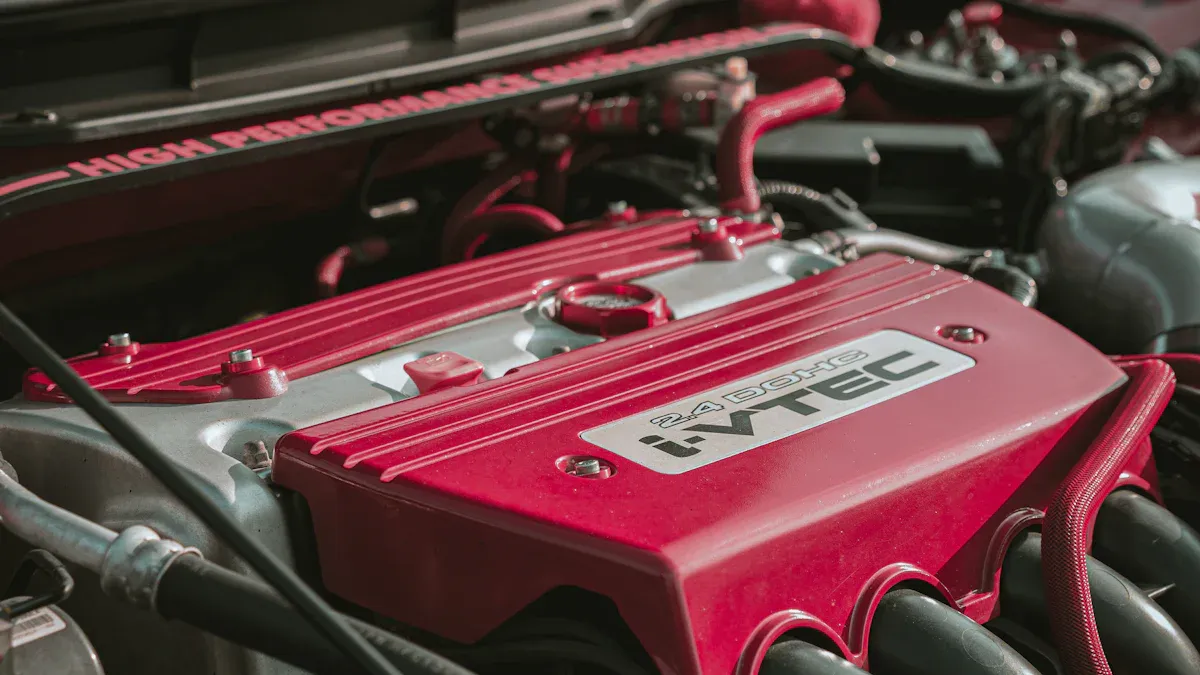
Combined Systems (e.g., Toyota VVTL-i, Honda i-VTEC) | Optimal performance across the entire rev range |
Mercedes Camtronic (2-stage variable lift) | Reduces fuel consumption |
GM iVLC (Intake Valve Lift Control) | Balances power/efficiency |
These advanced systems, like continuous variable cam phasing, allow for fine-tuning of valve timing. This helps maintain consistent engine operation, even at idle.
Stable Engine Operation
You get stable engine operation because of these precise adjustments. The engine’s computer constantly monitors conditions. It tells the variable camshaft timing system to make tiny changes to valve timing. This keeps the engine running steadily. It prevents the engine from stumbling or vibrating. This constant optimization improves overall engine efficiency. It makes your driving experience more comfortable. You will appreciate the quiet and steady feel of your car at every stoplight.
Increased Engine Flexibility
Your engine becomes much more adaptable with a variable valve timing system. This technology allows the engine to change its behavior. It responds to different driving situations. This means your car can be efficient when you need it. It can also deliver strong performance when you want it.
Adapt to Driving Conditions
Your engine can adapt to various driving conditions. This is a major benefit. Variable Camshaft Timing (VCT) advances or retards the camshaft. This changes when valves open and close. It matches the engine’s needs. At low speeds and partial loads, VCT helps with torque, smoothness, and emission control. At high speeds, it focuses on maximum airflow and full power. By adjusting the camshaft, your engine can switch between an ‘economy’ profile and a ‘performance’ profile. It does not have to be optimized for just one scenario.
Variable Valve Timing (VVT) adjusts valve timing, duration, and lift. Valve timing tells when valves open and close. Duration means how long valves stay open. Lift shows how far valves open. These adjustments let your engine switch profiles. It can use an ‘economy’ profile below 6,000 rpm. This gives you better fuel efficiency, lower emissions, and more low-speed torque. It can also use a ‘performance’ profile over 6,000 rpm for maximum horsepower. VVT also adjusts how intake and exhaust valves overlap. This helps clear out old gases. When your engine is cold, valve timing can delay. Earlier valve openings help the catalytic converter warm up faster. This improves overall engine performance.
Variable Valve Lift/Duration
You also get more flexibility from variable valve lift and duration technologies. Variable Valve Lift (VVL) gives you a range of lift and duration control. This can be discrete or continuous. VVL technologies can work with Variable Timing Control (VTC). This allows for both variable lift and variable timing control. These technologies make your engine’s valve train more flexible. They enable variable valve event timing, duration, or lift.
Continuously Variable Valve Duration (CVVD) changes how long a valve stays open. This happens within the combustion cycle. It allows more or less air into the cylinder. This depends on the engine’s RPM. CVVD uses a special camshaft. This camshaft can change the position of each cam lobe. An actuator controls this. This continuous variability optimizes the engine across the entire RPM range. You can see a 5% improvement in economy. You also get a 4% increase in performance. Emissions decrease by 12%. This shows the great efficiency of these systems.
Better Low-End Torque
You will feel a significant improvement in your car’s initial pull. A variable valve timing engine excels at delivering better low-end torque. This means your car responds quickly from a stop. It also makes driving in city traffic much smoother.
Optimize Intake Valve Timing
Your engine achieves this by optimizing intake valve timing. Variable Valve Timing (VVT) can shift the maximum engine torque to a lower engine speed. This gives you more usable power right when you need it. Controlling the intake valve closing time is crucial for low-end performance. This regulates the amount of air-fuel mixture entering the cylinder. An early intake valve closing time at low engine speeds increases the volumetric efficiency of the gas exchange process. This means your engine fills its cylinders better. This leads to more engine performance and better efficiency.
Quicker Off-the-Line Acceleration
This optimized low-end torque directly translates into quicker off-the-line acceleration. When you press the gas pedal, your car moves forward with more authority. You will notice a more responsive feel. This makes merging into traffic easier and safer. The camshaft, intake and exhaust valves, and timing chain all work together. These components are key to how variable camshaft timing delivers this improved performance. Solenoids and sensors precisely control these parts. They ensure the valve timing is always perfect for the current driving conditions. This gives you immediate thrust and greater efficiency.
Quieter Operation
You will notice a much quieter ride with a variable valve timing engine. This advanced technology brings a level of refinement to your vehicle. It ensures a more peaceful driving experience. The engine’s internal workings are managed with exceptional precision. This reduces unwanted sounds and vibrations.
Reduced Engine Noise
You will experience a significant reduction in engine noise. A variable valve timing engine operates with remarkable precision. This leads to smoother, more controlled combustion events within each cylinder. When combustion is smooth, the engine produces less harsh noise and fewer jarring vibrations. This precision also helps manage the air-fuel mixture effectively. It ensures a more complete and consistent burn. This complete burn reduces internal stresses and mechanical shock. These factors collectively contribute to a much quieter engine overall. The engine runs more harmoniously. This quiet operation is a direct result of the engine’s optimized internal processes. This precise control over combustion also contributes to the engine’s overall efficiency. It helps engines maintain efficient combustion under all conditions, leading to cleaner emissions.
Smoother Valve Actuation
You also benefit from smoother valve actuation. The system precisely controls the opening and closing of valves. This reduces the impact forces that occur with traditional fixed valve timing. Older engines often have valves that open and close abruptly. This creates noticeable mechanical clatter and noise. Variable camshaft timing systems use sophisticated hydraulic or electronic actuators. These actuators ensure a gentle and controlled movement of the valves. This smooth action minimizes mechanical noise. It also reduces wear on critical valve train components. This contributes significantly to the engine’s overall quietness and longevity. This precise control over valve timing, alongside other engine technologies, allows operators to achieve simultaneous performance and efficiency gains. It also helps meet stringent environmental regulations. Properly timed valves improve combustion and enhance exhaust gas recirculation. This reduces harmful nitrogen oxides (NOx) and unburned hydrocarbons. According to U.S. Department of Energy Vehicle Technologies research, optimized valve timing strategies support cleaner burn profiles and lower regulated emissions. Vehicles with VVT are better positioned to comply with these environmental regulations. They do this without needing drastic measures like downsizing engine displacement or adding expensive after-treatment systems.
Enhanced Engine Braking
You will find your car handles descents better with a variable valve timing engine. This technology helps your vehicle slow down more effectively. It uses the engine itself to assist in braking. This gives you more control.
Control Exhaust Valve Timing
You can control the exhaust valve timing. This is how your engine creates braking force. The system adjusts when the exhaust valves open and close. It can keep them closed longer than usual. This traps exhaust gases inside the cylinder. This creates back pressure. The engine has to work harder to push these gases out. This resistance slows the engine’s rotation. It acts like a brake on your vehicle. This process helps manage your speed without relying solely on your friction brakes.
This controlled resistance helps your vehicle maintain a steady speed on steep hills. It reduces the need for constant brake pedal use.
Improved Deceleration
You will experience improved deceleration. The engine’s internal resistance helps slow your car down. This is especially useful when you drive downhill. It also helps when you need to reduce speed quickly. This feature reduces wear on your brake pads. It also prevents your brakes from overheating. This contributes to the overall efficiency of your braking system. Your car feels more stable and controlled during deceleration. This makes your driving experience safer and smoother. The precise valve timing adjustments make this possible.
Greater Design Freedom
You gain significant design freedom with a variable valve timing engine. This technology allows engineers to create more innovative and compact engine layouts. It also enables better integration with other advanced automotive systems.
Engine Packaging Advantages
You benefit from more flexible engine designs. Variable valve timing systems often reduce the need for bulky mechanical components. This allows engineers to design smaller engines. They can also place other vehicle systems more strategically. This leads to better weight distribution. It also creates more space under the hood for additional features. You get a more streamlined and efficient vehicle package. This design flexibility helps optimize the entire car’s layout.
Integration with Other Technologies
You see variable valve timing working seamlessly with other advanced technologies. This synergy boosts overall engine performance.
With turbocharging, VVT optimizes airflow and combustion pressure. It maximizes boosted air intake. This improves torque and peak power. It also reduces turbo lag. Studies show up to a 15% improvement in engine responsiveness.
With direct injection, VVT precisely coordinates to ensure an optimal air-fuel mixture. This happens under all load conditions. This synergy leads to reduced incomplete combustion. It also improves fuel economy and lower emissions. This is especially true in modern diesel and gasoline engines. They aim for higher thermal efficiency.
Manufacturers are also looking ahead. You can expect future advancements:
Development of hybrid vehicle VVT systems.
Integration of VVT with electric powertrains.
Expansion into emerging markets with tailored VVT solutions.
Integration of artificial intelligence (AI) and machine learning into engine management systems. This will enhance VVT performance.
Advancements in cam changing technology. This offers improved performance across various speeds and loads.
These integrations show VVT’s crucial role in modern automotive innovation.
You now understand the significant advantages of a variable valve timing engine. This technology drives modern automotive advancements. The nine benefits you explored collectively deliver superior engine performance, remarkable fuel efficiency, and reduced emissions. Consumers prioritize these aspects, seeking lower operating costs and advanced engines. You experience enhanced fuel efficiency, reduced emissions, and variable power delivery, making your driving experience better. This technology optimizes combustion processes in real-time, leading to significant fuel savings and overall efficiency. This improves your vehicle’s engine performance.
VVT is a cornerstone technology. It continues to shape the future of internal combustion engines. You receive a compelling blend of performance and responsibility. This ensures your vehicle is both powerful and environmentally friendly, offering excellent efficiency through precise valve timing.
FAQ
How does a variable valve timing engine work?
Your engine’s computer controls VVT. It adjusts when the intake and exhaust valves open and close. This happens based on your driving conditions. It optimizes airflow into the engine. This helps your engine run better and more efficiently.
Do all modern cars have VVT?
Many modern cars use VVT technology. It is very common in new vehicles. Car manufacturers use it to meet strict emission standards. They also use it to improve fuel economy and performance. You will find it in many different models.
What are the main benefits of VVT for you?
You get several key benefits. VVT gives you better fuel efficiency. It also provides more power across different speeds. Your car produces fewer harmful emissions. You will also notice a smoother engine idle.
Can VVT systems have problems?
Yes, like any engine part, VVT systems can have issues. You might experience problems if oil changes are skipped. Low oil pressure can also cause VVT issues. Regular maintenance helps prevent these problems.