

Keeping your car’s air conditioning system in top shape is crucial for comfort, especially during hot months. Regularly adding Freon helps maintain efficiency and prevents costly repairs down the line. The good news? You can handle this straightforward process right at home with the right tools and a little know-how to add Freon effectively.
Regular maintenance can help you avoid significant issues. For instance, checking refrigerant levels and cleaning components can extend the lifespan of your AC system, ensuring you won’t need to add Freon as frequently.
Key Takeaways
Regularly check your AC system to maintain efficiency and avoid costly repairs. Annual inspections can help catch issues early.
Use the correct tools, including R134A refrigerant and a recharge kit, to safely add Freon to your vehicle’s AC system.
Always prioritize safety by wearing protective gear and following environmental regulations when handling refrigerants.
Tools to Add Refrigerant
To successfully add Freon to your 2012 Buick LaCrosse, you’ll need a few essential tools. Having the right equipment makes the process smoother and safer. Here’s what you’ll need:
R134A Refrigerant
First, you’ll need R134A refrigerant. This is the type of refrigerant your vehicle uses. Here’s a quick list of what to get:
Two 12oz. cans of R134A refrigerant
Recommended brands include:
Factory Air: Known for high-quality OEM and aftermarket options, with an average customer rating of 4.4 stars.
Certified A/C Pro: Offers reliable refrigerants with an average rating of 4.3 stars, starting at competitive prices.
Recharge Kit
Next, grab a recharge kit. This kit typically includes a refrigerant dispenser with a pressure gauge and trigger. It helps you monitor the refrigerant levels accurately. Here’s a quick look at the average cost of a recharge kit in the U.S.:
Product Name | Price |
|---|---|
ZeroR® AC Recharge Refrigerant Kit for R134a Systems | $34.99 |
With these tools in hand, you’re ready to recharge your AC system. Remember, using the right refrigerant and equipment ensures your air conditioning runs efficiently.
Safety Precautions
When you’re working with refrigerants like Freon, safety should always come first. Handling these chemicals improperly can lead to health risks and environmental damage. Here’s what you need to know to keep yourself safe while adding Freon to your AC system.
Personal Safety Gear
Before you start, make sure you have the right personal safety gear. This gear protects you from potential hazards associated with refrigerants. Here’s a quick list of recommended safety equipment:
Safety Gear | Recommendation |
|---|---|
Eye Protection | Always wear eye protection when servicing A/C systems or handling refrigerant. |
Gloves | Use protective impervious gloves to prevent skin contact with PAG lubricant, which can be a skin irritant. |
Using this gear can help you avoid serious injuries. Remember, safety is not just a precaution; it’s a necessity.
Environmental Considerations
Improper handling of refrigerants can have serious consequences for the environment. Here are some important points to consider:
Refrigerant leaks contribute significantly to climate change and can harm local ecosystems.
Even small leaks lead to increased greenhouse gas emissions and ozone depletion.
Harmful refrigerants like R-22 and R-410A add carbon pollution to the air and destroy ozone in the upper atmosphere.
Additionally, there are strict regulations governing the disposal of refrigerants. For instance, it’s illegal to vent refrigerants during any service or disposal activities. Instead, you must recover and store them properly. Here’s a quick overview of some key regulations:
Regulation/Practice | Description |
|---|---|
Venting Prohibition | It is illegal to vent refrigerants during any service or disposal activities. |
Recovery Requirement | Refrigerants must be recovered and stored properly during service and disposal. |
Certification | Technicians must be certified by an EPA-approved organization to handle refrigerants. |
Best Management Practices | Recommended methods for compliance include using EPA-approved equipment and employing certified technicians. |
By following these guidelines, you not only protect yourself but also help safeguard the environment. Remember, taking these precautions is essential for both your health and the planet.
How to Add Freon
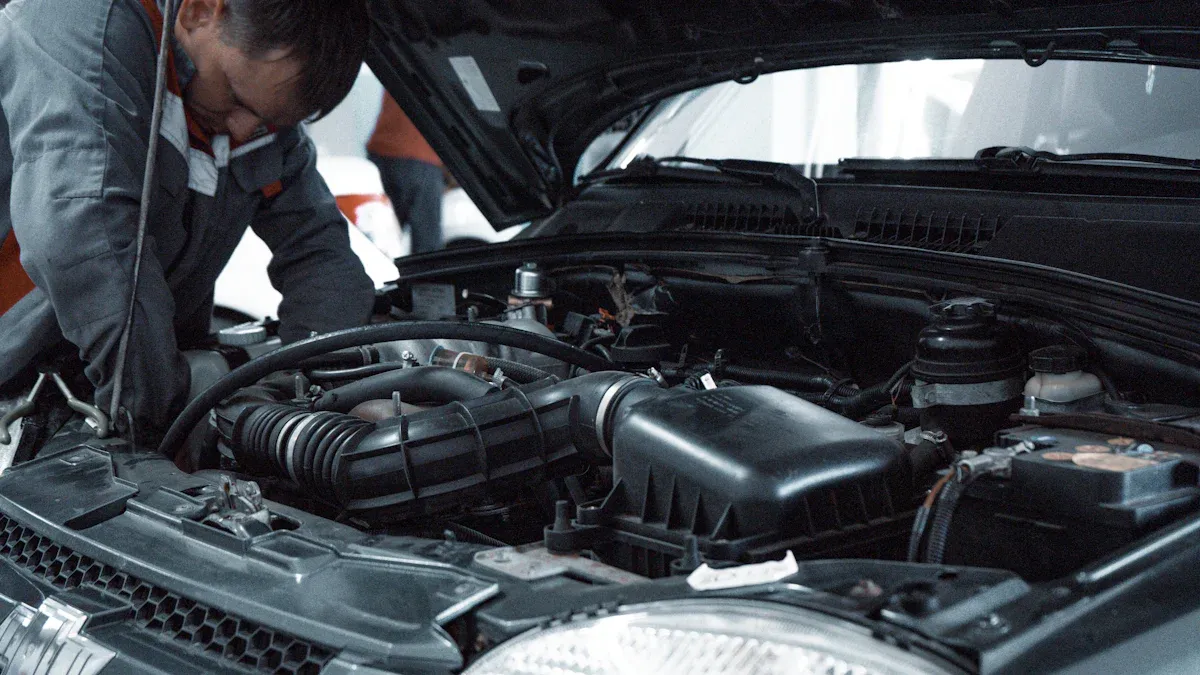
Adding Freon to your 2012 Buick LaCrosse is a straightforward process, but it requires attention to detail. Follow these steps to ensure you do it correctly and safely.
Locate Low-Pressure Port
The first step is to find the low-pressure port. This is where you’ll connect the recharge hose to add refrigerant. Here’s how to locate it:
The low-pressure port is on the larger A/C line towards the firewall.
It’s the first thing you should find when looking to add refrigerant.
Follow the A/C line until you spot the valve, which is covered with a plastic cap.
Once you find the low-pressure port, you’re ready to move on to the next step.
Connect Recharge Hose
Now that you’ve located the low-pressure port, it’s time to connect the recharge hose. Here’s how to do it properly:
Remove the plastic cap from the low-pressure port.
Take your recharge kit and attach the hose to the low-pressure port. Make sure it fits snugly.
Check the connection. An improper connection can lead to refrigerant leaks or system failure. Here are some risks associated with incorrect hose connections:
Risk Type | Description |
|---|---|
Refrigerant Leaks | Under-tightened fittings can lead to refrigerant escaping from the system. |
System Failure | Both under-tightened and over-tightened connections can cause system malfunctions. |
Costly Repairs | Improper connections often result in expensive repairs due to system damage. |
Start Engine and Add Refrigerant
With the hose connected, start your engine and turn on the A/C to the maximum setting. This helps the system draw in the refrigerant. Here’s what to do next:
Shake the can of refrigerant well before attaching it to the recharge hose.
Open the valve on the refrigerant can slowly. You should hear a hissing sound as the refrigerant enters the system.
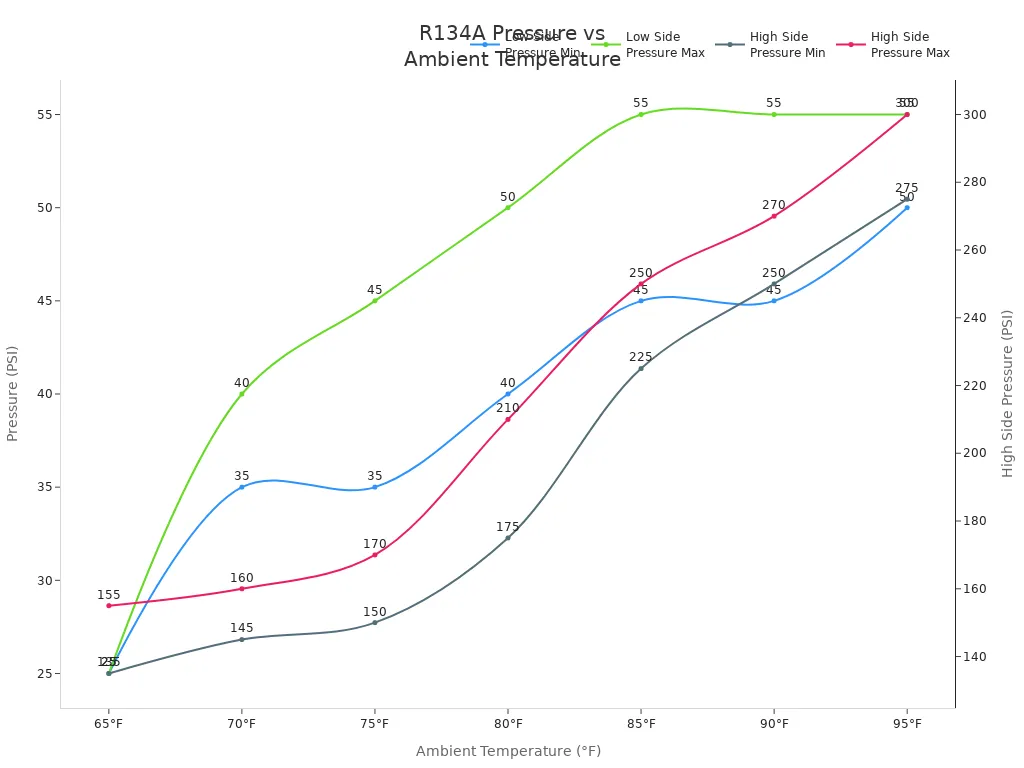
Keep an eye on the pressure gauge. You want to maintain the pressure within the ideal range for R134A refrigerant. Here’s a quick reference for the pressure ranges based on ambient temperature:
Ambient Temperature (°F) | Low Side Pressure Range (PSI) | High Side Pressure Range (PSI) |
|---|---|---|
65 | 25-30 | 135-155 |
70 | 35-40 | 145-160 |
75 | 35-45 | 150-170 |
80 | 40-50 | 175-210 |
85 | 45-55 | 225-250 |
90 | 45-55 | 250-270 |
95 | 50-55 | 275-300 |
Monitor Pressure and Test System
As you add refrigerant, keep monitoring the pressure gauge. You want to avoid overcharging the system, which can lead to several issues. Signs of overcharging include:
High discharge temperature
High subcooling in the condenser
High pressures in the condenser
Higher condenser splits
Normal-to-high evaporator pressures
Normal superheats
High compression ratio
After you’ve added the appropriate amount of refrigerant, turn off the engine and disconnect the recharge hose. Replace the plastic cap on the low-pressure port to protect it from debris.
By following these steps, you can successfully add Freon to your 2012 Buick LaCrosse and keep your A/C system running smoothly.
Adding Freon to your 2012 Buick LaCrosse is simple when you follow the right steps. Remember to locate the low-pressure port, connect the recharge hose, and monitor the pressure as you add refrigerant. Regular maintenance is key! Schedule annual inspections for your AC system to catch any issues early. If you notice warm air blowing, weak airflow, or strange noises, it might be time to seek professional help.
Service Type | Recommended Interval |
|---|---|
AC System Inspection | Annually or as per manufacturer recommendations |
Taking care of your air conditioning system keeps you cool and comfortable on the road!
FAQ
How often should I add freon to my Buick LaCrosse?
You should check your freon levels annually or whenever you notice reduced cooling performance.
Can I add freon myself?
Yes, you can add freon yourself using a recharge kit, but follow safety precautions carefully.
What are signs that my AC needs freon?
Signs include warm air blowing from vents, weak airflow, or unusual noises when the AC is running.



