

Cruise control is a common feature. It helps you maintain a set speed without pressing the accelerator. You know this speed control technology offers convenience. Many hidden pros and cons, however, often go unnoticed. This post will explore these less-known aspects of cruise control. We aim to help you make informed and safer driving decisions. We will uncover its nuanced impact on your safety, efficiency, and driving habits.
Key Takeaways
Cruise control helps you drive long distances. It reduces how tired you get. It also saves gas and makes your tires last longer.
Cruise control can be dangerous sometimes. It can make you react slower. It also increases the risk of sliding on wet roads.
Use cruise control on dry, open highways. Do not use it in rain, snow, or heavy traffic. Always stay alert when driving.
Newer adaptive cruise control systems are smarter. They keep a safe distance from other cars. You still need to pay attention to the road.
Hidden Advantages of Cruise Control
Reduced Driver Fatigue
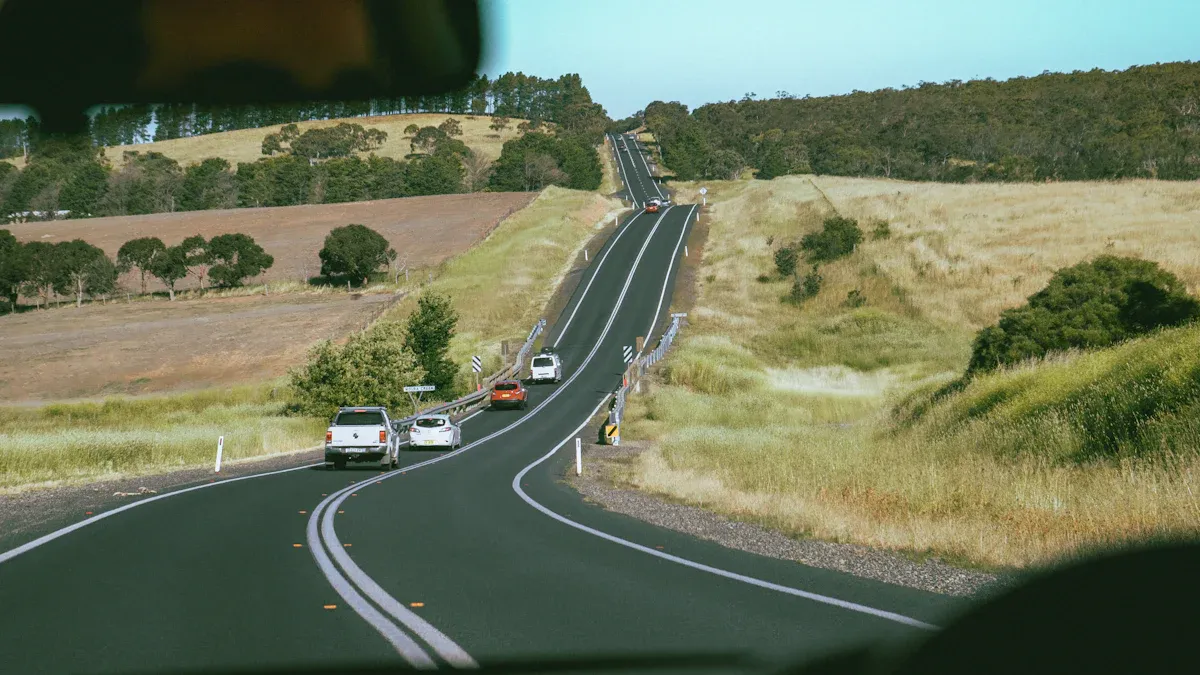
Long drives can make you tired. Holding your foot on the accelerator for hours strains your leg. Using cruise control helps you rest your leg. This reduces fatigue on long journeys. You experience less physical strain. This leads to more driver comfort and a safer trip. Proper use of cruise control can reduce driver fatigue by removing the need for constant manual adjustments. This physical and mental strain decreases. You can then focus more on the road and traffic around you. This helps lower the risk of distracted driving.
Enhanced Focus on Surroundings
When you do not constantly adjust your speed, you can pay more attention to other things. Cruise control allows you to shift your focus. You can look at the road ahead and your surroundings more closely. This can improve your overall awareness. Studies show that drivers using advanced systems, like Adaptive Cruise Control (ACC), still need to pay attention. Clear information on your car’s dashboard helps you understand what the system is doing. This helps you maintain focus on the road. This contributes to overall safety benefits.
Consistent Speed and Flow
Cruise control keeps your car at a steady speed. This creates a smoother driving experience. You avoid sudden speed changes. This helps maintain a consistent flow of traffic. It also makes your ride more comfortable. Maintaining a consistent speed helps you avoid unnecessary braking and accelerating.
Fuel Efficiency Benefits and Emissions
Driving at a steady speed is good for your car’s gas mileage. Cruise control helps you do this. This leads to fuel efficiency benefits. Research shows that conventional cruise control can improve your car’s fuel efficiency by about 3.3 percent compared to manual driving. Advanced systems, like Adaptive Cruise Control (ACC), also show promise. They can help reduce energy use. This means your car might produce fewer emissions. Automakers can control emissions better with these technologies. Studies use large amounts of data from cars with ACC. This helps them understand how much energy these systems save in real-world driving.
Extended Tire Life
When you drive at a constant speed, your tires wear out more evenly. Cruise control helps you do this. You avoid sudden acceleration and hard braking. These actions put stress on your tires. By using cruise control, you reduce this stress. This can make your tires last longer. You save money on new tires over time.
Potential Insurance Benefits
Cars with advanced safety features often get better insurance rates. Advanced driver-assistance systems (ADAS), like adaptive cruise control, help prevent accidents. They can also make accidents less severe. Insurance companies see these cars as lower risk. This means you might get reduced premiums for your car. While you may not see a specific discount just for cruise control, these features are part of your car’s overall safety profile. This can lead to safety benefits and lower insurance costs.
Hidden Disadvantages of Cruise Control

While cruise control offers many benefits, it also comes with less obvious drawbacks. You need to understand these hidden disadvantages to use the system safely.
Delayed Reaction Time
When you use cruise control, you might relax too much. Your foot is off the pedal, and your mind might wander. This can slow your response time in an emergency. A study from France found that drivers using cruise control took about one second longer to react in urgent situations. This delay can be critical. It means you have less time to brake or steer away from danger. This increased reaction time can contribute to distracted driving.
Increased Hydroplaning Risk
Driving in the rain with cruise control can be very dangerous. When your car hydroplanes, it loses grip on the wet road. Your car’s wheels spin freely. Cruise control systems might try to speed up when they detect this loss of traction. This is the opposite of what you should do. You need to slow down. Also, your foot is not on the accelerator or brake pedal. This reduces your reaction time to a hydroplaning event. You should always turn off cruise control in wet conditions. This allows you to brake more easily and react quickly if your car starts to skid.
Accelerated Brake Wear
You might think cruise control saves your brakes because you are not constantly pressing them. However, some advanced systems, like adaptive cruise control, can actually increase brake wear. These systems automatically apply your brakes to maintain a safe distance from the car ahead or to slow down on a downhill slope.
If the system does a lot of automatic hard braking, especially in stop-and-go traffic, it will wear your brakes faster. Drivers have noticed their cars applying brakes when going downhill with cruise control engaged. Your car uses both engine braking and physical wheel braking. The system uses physical brakes when it needs to slow down quickly or maintain speed against gravity. This means your brake pads work harder than you might realize.
False Sense of Security
Modern cars are very comfortable and stable, even at high speeds. This can give you a false sense of security. When you use cruise control, you might feel safer than you actually are. This feeling can make you less alert.
Features like cruise control can keep your car at high speeds without you fully realizing it. This creates a deceptive feeling of safety. Drivers using advanced driver-assistance systems, including cruise control, often feel they have more control over road risks. This can lead to a false sense of control, making you less vigilant. This false sense of security can lead to distracted driving.
Reduced Driver Engagement
Using cruise control changes your role from an active driver to a passive monitor. You are no longer actively controlling the speed. This shift can lead to reduced driver engagement. You might find yourself doing other things, like listening to the radio more or even checking your phone. Studies show that drivers use their phones more and engage in other non-driving tasks when automation is active.
This decrease in vigilance can be risky. Your attention might drift from the road. This passive role can cause you to disengage from the driving environment. This increases the risk of distracted driving. These disadvantages highlight the need for constant driver awareness, even with advanced technology.
When to Use and When Not to Use Cruise Control
Optimal Conditions for Engagement
You can use cruise control effectively in specific situations. It works best on long highway drives with minimal traffic. The road conditions should be dry and clear. Flat terrain is also ideal because it requires minimal speed adjustments. Cruise control is perfect for open highways, not stop-and-go traffic. You will find it most effective on long, straight roads with consistent speed limits. Light to moderate traffic also suits its use. Always use it on dry roads and in clear weather. The ideal speed range for cruise control on interstates is generally between 55 and 70 miles per hour. You must not set cruise control above the legal speed limit. This ensures your safety and follows legal requirements.
Situations to Avoid Cruise Control
You should avoid using this feature in certain situations. It becomes dangerous under specific weather conditions. Do not use it when rain is heavy enough to create standing water. Avoid it in snow, sleet, or freezing rain. Icy patches or “black ice” conditions also make it unsafe. Fog or whiteout visibility means you should turn it off. High winds can push your vehicle and reduce your control. Driving in rainy weather with the system engaged increases the risk of hydroplaning. Your tires lose contact with the road due to a layer of water. This makes it difficult for you to react and adjust to slippery conditions.
It can lead to a loss of control. Braking response can also be delayed in wet conditions when the system is active. It maintains speed instead of allowing for immediate driver input to slow down. The system maintains a constant speed without considering road surface conditions. If your tires begin to hydroplane in wet conditions, it may continue trying to maintain or regain the set speed.
This worsens the situation. It also delays your reaction time. Your foot is not positioned to immediately lift off the accelerator or brake. This is critical in slippery conditions. You should turn off your cruise control when driving in the rain. This allows you to remain fully engaged. You can adjust your speed as necessary to maintain control. This is especially true given the unpredictable nature of wet roads. It also helps with the increased risk of hydroplaning and longer stopping distances.
You should also avoid this feature on certain road types. Curvy roads are dangerous for this technology. It cannot account for sharp turns. You need manual speed adjustments for safe navigation. Roads with frequent stops, construction zones, or varying terrain are problematic. These conditions demand quick adjustments in speed and direction.
The system cannot handle them efficiently. This feature negatively impacts fuel efficiency on both uphill and downhill sections in mountainous areas. On downhills, it does not effectively use regenerative braking. This leads to wasted energy as heat. Standard cruise control is not designed for these complex scenarios.
Adapting to Advanced Systems
Modern vehicles offer more advanced systems. You will find significant differences between traditional cruise control and adaptive cruise control. Standard cruise control simply maintains a set speed. You must intervene for braking or accelerating to maintain distance. It works best for open roads with low traffic. It has no external sensors for traffic detection and no automatic braking. It automatically accelerates to maintain your set speed. It requires constant driver vigilance for traffic changes. It provides convenience on open roads. Its system is relatively simple and costs less.
Adaptive cruise control (ACC) is more complex. It maintains a set speed and a safe following distance from the vehicle ahead. You set your desired speed and preferred following distance. The system automatically adjusts speed and applies brakes or the accelerator.
It suits varying traffic conditions, including stop-and-go traffic with some advanced ACC systems. It uses radar, lidar, or camera sensors to detect leading vehicles. It offers automatic braking to maintain distance or stop the vehicle. It also provides automatic acceleration to maintain set speed or resume travel after a stop. ACC enhances safety by reducing your driver workload. It reacts to traffic changes more quickly.
It offers convenience in various traffic conditions, reducing fatigue. Its system is more complex due to sensor integration and control algorithms, making it costlier. ACC is evolving with features like stop-and-go, lane-keeping assist, and predictive capabilities. You will find it very useful on a long highway trip.
However, advanced systems like adaptive cruise control have limitations. In complex driving environments, the overall engagement time for ACC is lower. This means you use it less often. These systems have clear limitations in heavy traffic, poor weather, or during sudden roadway changes. You remain fully responsible for vehicle control at all times. Drivers sometimes feel discomfort with the system’s aggressiveness. They may lack trust in its detection capabilities. The system might also be incompatible with your driving style.
Environmental complexities, like construction zones and pedestrian-heavy areas, cause drivers to disengage it. You might also over-rely on the technology. This can make you complacent or distracted. You might assume ACC can handle all conditions. Sensor interference can occur from weather conditions like rain, snow, or fog, or from debris. ACC can also show inconsistent performance. It might brake too aggressively or follow too closely, depending on its calibration. ACC is not ideal for city driving. It works better for highways. It may not function optimally in urban environments with frequent stops and complex traffic. Remember, these safety features are aids, not replacements for your attention.
You now understand the hidden advantages and disadvantages of cruise control. It is a powerful tool for specific driving situations. Remember, technology helps you, but it does not replace your active driving skills. Responsible use of cruise control means you know its obvious and hidden impacts. This helps you weigh the pros and cons. Always stay vigilant. Adapt your driving for road conditions. Prioritize safety above all else.
FAQ
Can I use cruise control in heavy traffic?
No, you should avoid using cruise control in heavy traffic. This environment requires constant speed changes and frequent braking. You need to maintain full manual control for quick reactions. Using it here can be inefficient and unsafe.
Does cruise control really save fuel?
Yes, it often saves fuel. Cruise control helps you maintain a steady speed. This prevents unnecessary acceleration and braking. Consistent driving allows your engine to work more efficiently. You can achieve better gas mileage on long, open roads.
Is it safe to use cruise control in the rain?
No, it is not safe. You should turn off cruise control in the rain. Your car can hydroplane, losing tire grip on wet roads. Cruise control tries to maintain speed, which worsens this situation. You need immediate manual control to react safely.
Should new drivers use cruise control?
New drivers should use cruise control cautiously. Focus on mastering basic driving skills first. Cruise control can reduce your active engagement. You must understand its limitations and know when to disengage it. Prioritize full attention to the road.
How does adaptive cruise control differ from standard cruise control?
Standard cruise control simply holds a set speed. Adaptive cruise control is more advanced. It adjusts your speed to maintain a safe following distance from the car ahead. It uses sensors to detect other vehicles. This reduces your workload in varying traffic.


