

Boating offers incredible freedom and excitement, allowing you to explore open waters and create lasting memories. However, enjoying these adventures safely begins long before you hit the water. Proper Towing Your Boat is critical for a worry-free experience. I
mproper towing can cause accidents, damage, and serious legal issues. For example, a simple tow can escalate into costly salvage disputes, potentially leaving you with unexpected bills if your insurance doesn’t cover such services. This guide will help you understand vehicle compatibility and master safe practices for how to tow a boat, so you can gain confidence and ensure safety on every journey.
Key Takeaways
Always check your vehicle’s towing capacity. Make sure it can safely pull your boat and trailer.
Use the right hitch and equipment. Match them to your boat’s weight for safe towing.
Inspect your trailer before every trip. Check tires, lights, and brakes to prevent problems.
Drive carefully when towing. Allow more space for stopping and make wider turns.
Prepare for emergencies. Know how to change a flat tire and manage trailer sway.
Vehicle Compatibility for Towing
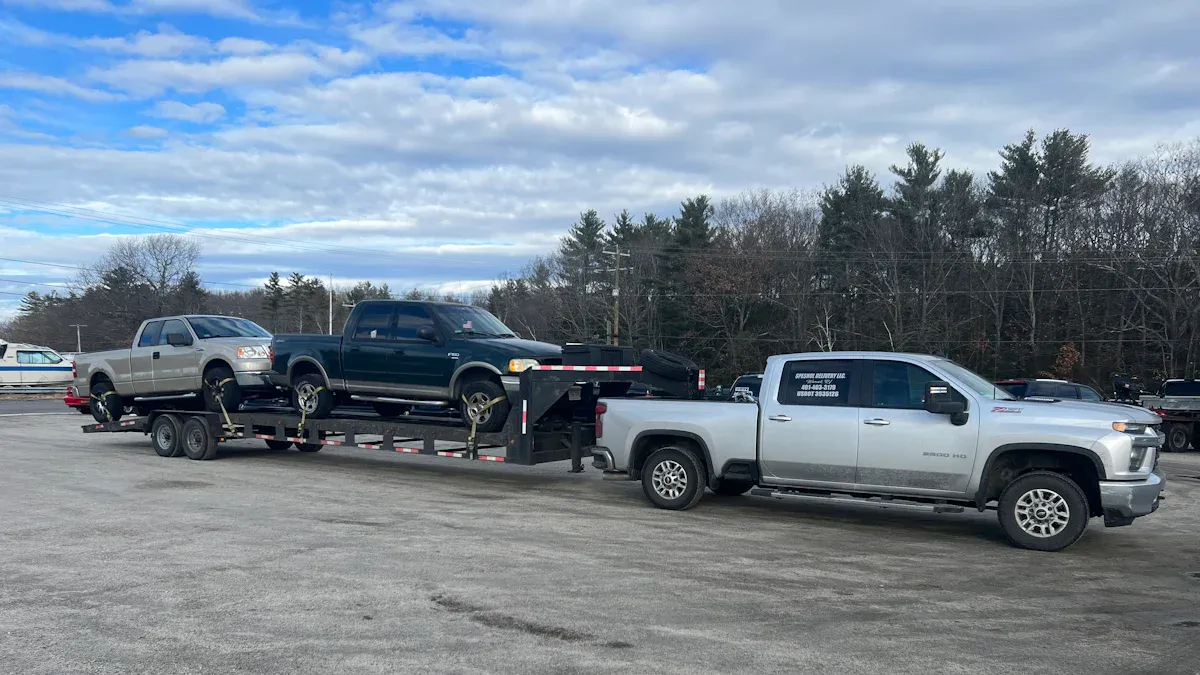
Before you even think about how to tow a boat, you must understand your vehicle’s capabilities. Your vehicle must handle the combined weight of your boat and its contents. Always check your vehicle’s owner’s manual for specific towing limits. Matching your tow vehicle and trailer correctly is crucial for safe towing.
Towing Capacity Explained
Towing capacity refers to the total weight your vehicle can safely pull behind it with a trailer. This includes items like boats, campers, and other vehicles that require transport. It is the maximum weight your truck can pull. This calculation considers your truck’s own weight and any cargo it carries. This number is your first and most important guide. Never exceed this limit. Overloading puts immense strain on your vehicle’s engine, transmission, and brakes.
Gross Vehicle Weight Rating (GVWR)
Gross Vehicle Weight Rating, or GVWR, is the maximum total weight your fully loaded vehicle can safely weigh. This includes the vehicle itself, all passengers, cargo inside, and the tongue weight from your trailer. The tongue weight is the downward force your trailer exerts on your hitch. You must ensure your vehicle’s total weight, with the boat attached, stays below its GVWR.
Gross Combined Weight Rating (GCWR)
Gross Combined Weight Rating, or GCWR, is the absolute maximum weight of your fully loaded tow vehicle and your fully loaded trailer combined. This is the total weight of everything moving down the road. Your vehicle’s manufacturer sets this limit. You must never exceed your GCWR. This rating ensures your vehicle can safely accelerate, brake, and handle the entire load.
Vehicle Payload Capacity
Vehicle payload capacity tells you how much weight your vehicle can carry inside. This includes you, your passengers, any gear in the truck bed or cabin, and the tongue weight from your trailer. Payload capacity defines the maximum allowable weight for occupants, gear, and other items within or on a truck. For towing purposes, the tongue weight—the downward pressure the trailer exerts on the hitch—is subtracted from this payload capacity. Both payload and towing capacities are maximum limits. If you surpass them, you jeopardize safety.
For instance, if you fully utilize the towing capacity with a heavily loaded boat and its accompanying equipment, you might not have enough remaining payload capacity for passengers or additional gear in the truck. Experts advise that the combined weight of a fully loaded boat and its equipment should not exceed 85% of your vehicle’s towing capacity.
This allows for a reasonable payload margin within the truck. Your vehicle’s payload capacity dictates how much weight it can safely carry internally. This encompasses passengers, cargo, and the downward force exerted by the boat on the hitch. Your vehicle’s payload must adequately support the boat’s weight for safe operation. Pulling heavy loads also impacts your vehicle’s radiator. Larger radiators are more effective at cooling to prevent overheating. Always check your vehicle’s door jamb sticker or owner’s manual for your specific payload capacity. Understanding these numbers helps you safely tow a trailer.
Essential Towing Equipment
You need the right gear for safe towing. First, find and read your trailer’s capacity plate. This plate tells you important weight limits for your trailer. All parts of your towing kit must work together. This includes your vehicle, hitch, and trailer. They must all be rated for the weight you plan to tow. Always choose the highest-rated hitch your vehicle can handle. Make sure it includes the light pigtail for electrical connections.
Choosing the Right Hitch
Your hitch connects your vehicle to the trailer. Different hitches handle different weights. You must pick a hitch that matches your boat’s weight. Here are common hitch classes:
Hitch Class | Hitch Receiver Tube Size | Max. Gross Trailer Weight (GTW) | Max. Tongue Weight (TW) |
|---|---|---|---|
Class 1 | 1-1/4″ | 2,000 lbs. | 200 lbs. |
Class 2 | 1-1/4″ | 3,500 lbs. | 350 lbs. |
Class 3 | 2″ | 8,000 lbs. | 800 lbs. |
Class 4 | 2″ | 10,000 lbs. | 1,000 lbs. |
A Class One hitch works for smaller loads. A Class Three hitch handles midsize campers and boats. Always match the hitch class to your trailer’s weight.
Selecting the Correct Ball Mount
The ball mount slides into your hitch receiver. It holds the hitch ball. Many types of ball mounts exist. These include standard 1-1/4″ and 2″ mounts. You can also find adjustable mounts. For boat trailers, common trailer ball sizes are 2 inches or 1-7/8 inches. Choose a ball mount that positions your trailer level with your tow vehicle.
Matching the Hitch Ball Size
The hitch ball connects your trailer coupler to the ball mount. Its size must match your trailer’s coupler. Using the wrong size can cause your trailer to disconnect. Each hitch ball has a maximum weight capacity.
Hitch Ball Size | Maximum Weight Capacity |
|---|---|
1⅞ inches | 3,500 lbs |
2 inches | 12,000 lbs |
2 5/16 inches | 30,000 lbs |
Always check your trailer’s coupler for the correct ball size.
Trailer Wiring Essentials
Your trailer needs working lights. This ensures safety and follows the law. Wiring connects your vehicle’s lights to your trailer’s lights.
Pin Configuration | Wire Color | Function |
|---|---|---|
4-Pin (Basic Setup) | Brown | Tail/Running Lights |
Yellow | Left Brake + Turn Signal | |
Green | Right Brake + Turn Signal | |
White | Ground | |
7-Pin (Advanced Setup) | Blue | Electric Trailer Brakes |
Black | 12V Battery Charge or Accessories | |
Purple | Reverse Lights |
A 4-pin setup works for small trailers without brakes. A 7-pin setup is for trailers with brakes or extra power needs. For boat trailers, waterproofing is very important. Use sealed LED lights and marine-grade connectors.
Trailer Brake Systems
Trailer brakes help you stop safely. They are crucial for heavier boats. Different types of trailer brakes exist.
Brake System Type | Operational Principle |
|---|---|
Electric Brake | Your vehicle’s brake pedal sends a signal. This signal activates electromagnets. These magnets apply the trailer’s brakes. |
Surge Brake | The trailer pushes forward when your vehicle slows. This pressure applies the trailer’s brakes hydraulically. |
Electric Over Hydraulic (EOH) Brake | This system uses an electrical signal. The signal activates a hydraulic pump. The pump then applies the trailer’s brakes. |
Always ensure your trailer has the correct brake system for its weight.
Trailer Preparation and Inspection
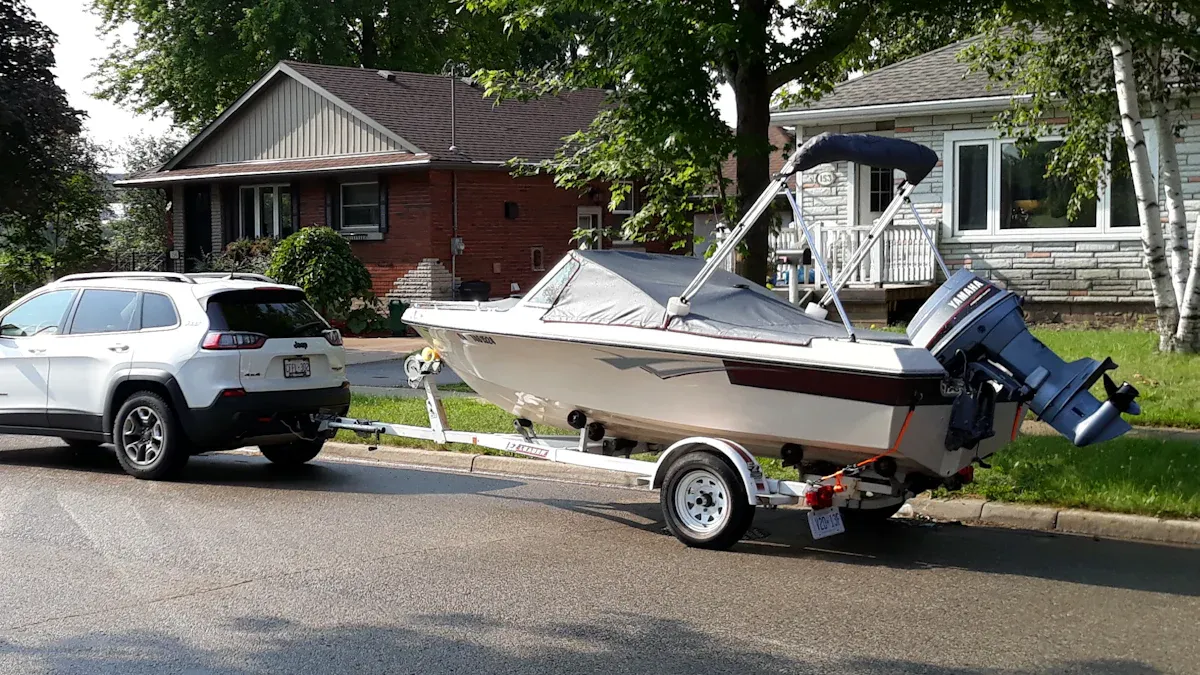
Before you hit the road, thorough preparation and inspection of your trailer are essential. This ensures a smooth and safe journey. Remember to regularly check lug nuts on a new trailer, especially during the first few hours of towing, as they may loosen.
Tire Inspection Before Towing
Always check your trailer tires before every trip. The correct air pressure is usually the maximum PSI molded onto the tire’s sidewall. This often ranges from 50 to 65 psi. You can also find this information on a sticker near the trailer tongue, especially for new trailers. Ensure your tires have no visible damage or excessive wear.
Trailer Lighting Check
Your trailer lights must work correctly for safety and legal reasons. Federal rules require stop lights, tail lights, turn signals, and reflectors. Boat trailers need submersible lights because they go into the water. Look for DOT and SAE codes on the lenses. This shows they meet safety standards. Test all lights before you leave.
Inspecting Trailer Brakes
Inspect your trailer brakes. Check the brake fluid level in the master cylinder. Look for dark or low fluid. Examine hydraulic lines for cracks or leaks. Check brake pads and rotors for wear. For electric brakes, ensure all electrical connections are clean and secure. Test your brake controller’s manual override before you start moving. This is a crucial step for trailer towing tips.
Securing the Boat to the Trailer
Always secure your boat to the trailer at both the bow and the stern. Use strong ratchet straps. Do not rely only on the winch. Use a bow chain and hook for extra safety. A heavy strap should anchor the boat’s stern. This prevents bouncing. Make sure tie-downs do not cross sharp edges. Avoid using winch straps or bungee cords for securing the boat during transport. Stop and check your rig after you start driving and then regularly.
Proper Safety Chain Connection
Connect your safety chains correctly. They must be stronger than your trailer’s total weight. Cross the chains under the trailer tongue. This creates a cradle if the hitch fails. Keep the chains as short as possible. Make sure they do not drag on the ground. This is vital for safety when towing a trailer.
Trailer Load Balancing
Proper load balancing prevents trailer sway. Place heavy items low and close to the trailer axle. Distribute weight evenly from side to side. Secure everything with quality straps. Avoid putting too much weight at the rear of the trailer. This reduces tongue weight and increases sway risk. Your trailer’s tongue weight should be 10-15% of its total weight. A well-balanced trailer rides level and tracks smoothly.
Safe Practices for Towing Your Boat
Your tow vehicle must have enough power to safely pull and stop the combined weight of your boat and its trailer. You must not overload your boat. Your vehicle has a maximum towing capacity. Exceeding this limit compromises safety.
Driving Habits for Towing
Towing a trailer changes how your vehicle handles. You need to adjust your driving habits. Drive smoothly. Avoid sudden movements. This helps keep your trailer stable.
Longer Stopping Distances
When you are towing your boat, you need more room to stop. A car-trailer combination needs a greater stopping distance than a car alone. This is because of the extra weight and length. Allow more time and distance for stopping. This applies in cities and on open roads.
Executing Wider Turns
Your trailer does not follow the exact path of your tow vehicle. It cuts corners. You must make wider turns than usual.
Position your tow vehicle on the outside of the lane when you approach a turn. This allows for a wide turn.
Delay turning the steering wheel until your tow vehicle’s rear wheels pass the inside curb.
The longer your trailer, the wider your turn needs to be. This prevents hitting obstacles.
Mirror and Blind Spot Monitoring
Your mirrors are crucial when you are towing your boat. You need to see around your trailer. Adjust your side mirrors before you start driving. Consider using extended towing mirrors. These give you a better view of your blind spots. Check your mirrors often. Be aware of vehicles around you.
Speed and Lane Management
Driving at the right speed is important for safety. Some people aim for a maximum of 70 mph when towing a trailer. They stay in the slow lane. This prioritizes safety, saves fuel, and allows quick stops. Others drive faster, but stability depends on your setup. The boat and trailer are often the “weak link.” Higher speeds increase risks like tire blowouts or difficulty avoiding obstacles. Always drive defensively. Be aware of your trailer‘s stability. Follow posted speed limits.
Towing on Hills and Grades
Hills and grades put extra strain on your vehicle. Shift to a lower gear before you start climbing. This helps your engine and transmission. It also helps control your speed when going downhill. Do not ride your brakes on long descents. This can cause them to overheat. Use your engine braking. This is a key part of trailer towing tips for how to tow a boat.
Legal Requirements and Regulations
You must understand the legal requirements for towing your boat. These rules ensure safety for everyone on the road.
State Trailer Brake Laws
State laws often require brakes on your trailer. Most states (47 out of 50) require trailer brakes for trailers weighing 3,000 pounds or more. Kansas has a lower threshold, requiring brakes for trailers over 2,000 pounds. Nevada and California have the lowest threshold, requiring brakes for trailers weighing 1,500 pounds or more. Some states also specify the type of brakes you must use. Always check your state’s specific regulations.
Towing Speed Limits
Speed limits for towing can differ from regular vehicle speed limits. Many states have lower maximum speeds when you tow. You must always follow these posted limits. Driving slower helps you maintain control and react to road conditions.
Registration and Licensing
You must register your boat trailer. Registration is crucial for legal compliance when towing a trailer on public roads. It proves ownership and meets insurance needs. The process involves gathering your title or proof of purchase. You confirm the trailer’s VIN and complete forms. You pay fees and get a license plate or sticker. Requirements vary by state. Some states need annual renewals. Others offer permanent registration. Always check your state’s Department of Motor Vehicles (DMV) website for specific details.
Mandatory Safety Gear
You need specific safety gear. This includes working lights, safety chains, and sometimes flares or reflective triangles. Ensure your trailer lights meet federal and state standards. Your safety chains must be strong enough for your trailer’s weight. This ensures safety.
Towing Insurance Considerations
You should review your insurance coverage. Boat towing insurance covers professional towboat services. Collision coverage reimburses for physical damage to your boat while towing. It also covers damage to other property. Comprehensive coverage, or marine hull insurance, covers physical damage to your boat and equipment. This includes incidents like sinking. Consult an independent insurance agent. They help you get all necessary coverage. They also check your policy’s exclusions. This protects your investment.
Emergency Preparedness for Trailer Towing Tips
You must prepare for unexpected events when you tow your boat. Knowing what to do in an emergency keeps you safe. These trailer towing tips help you handle common roadside issues.
Flat Tire Procedures
A flat tire on your trailer can happen. You need to know how to change it.
Pull your trailer well off the road. Find a level shoulder or area. Engage the emergency brake.
Check if the flattened tire allows jack clearance. If not, use a solid object, like the spare tire, to raise the flat tire. Slowly drive your tow vehicle forward onto this brace. Put the vehicle back in park. Engage the emergency brake.
Use the correct size wrench. Loosen the lug nuts on the flat tire’s wheel. Do this before jacking up the trailer. This prevents the wheel from spinning.
Place the jack under the trailer frame on the side of the damaged tire.
Jack up the trailer until you can remove the wheel from the lug bolts. Ensure enough clearance for a fully inflated tire. Remove the lug nuts and the flat tire.
Place the spare tire onto the lug bolts. Replace and hand-tighten the lug nuts.
Slowly lower the jack until the tire touches the road surface. This allows you to tighten the lug nuts with the wrench without the wheel spinning. Tighten the lug nuts in an alternating pattern until they are all tight.
Release the jack completely. The tire now supports its side of the trailer. Recheck each lug nut for tightness before removing the jack.
Get the flat tire repaired or replaced quickly. Then mount it as a spare or return it to its primary position.
Managing Trailer Sway
Trailer sway feels dangerous. Wind and drafts from large vehicles can cause it. Improper hitch adjustments also lead to sway. Incorrect weight distribution, too much weight on one side, or too far front or back, upsets the trailer’s balance. You should have 12-15% of the trailer’s weight on the tow hitch.
To prevent sway:
Use correct, manufacturer-recommended towing gear.
Maintain correct tire inflation.
Drive at slower speeds.
Avoid sharp steering movements. Brake smoothly.
If sway occurs:
Lift your foot off the accelerator.
Grip the steering wheel firmly. Counter pulling forces.
Avoid braking unless a collision is imminent.
Once slowed, pull over. Inspect weight distribution and balance.
Emergency Braking
You must know how to brake in an emergency. Apply your brakes smoothly and firmly. Avoid sudden, hard braking. This can cause your trailer to jackknife. If your trailer has a brake controller, use its manual override if you feel the trailer pushing your vehicle.
Roadside Emergency Kit
You need a well-stocked roadside emergency kit. This kit helps you handle minor issues.
An emergency repair kit (tools, spare parts, basic boat repair guide)
A quality spare tire (matching trailer specifications, regularly checked for condition and pressure)
Spare tire, jack, and lug wrench for the trailer
Extra bearings, grease, and tools for roadside fixes
A roadside emergency kit (flares, a first aid kit, reflective triangles)
A VHF radio for marine communication (for safety near your destination)
When to Pull Over Safely
If you notice any issues, pull over immediately. This includes strange noises, smells, or handling problems. Find a safe, level spot away from traffic. Address the problem before you continue your journey.
You now understand the essentials for towing your boat. This includes checking vehicle compatibility, selecting proper equipment, and practicing safe driving. Responsible boat towing combines thorough preparation, solid knowledge, and cautious driving. Prioritize safety to ensure enjoyable, incident-free boating adventures. Knowing how to tow a boat correctly makes all the difference.


