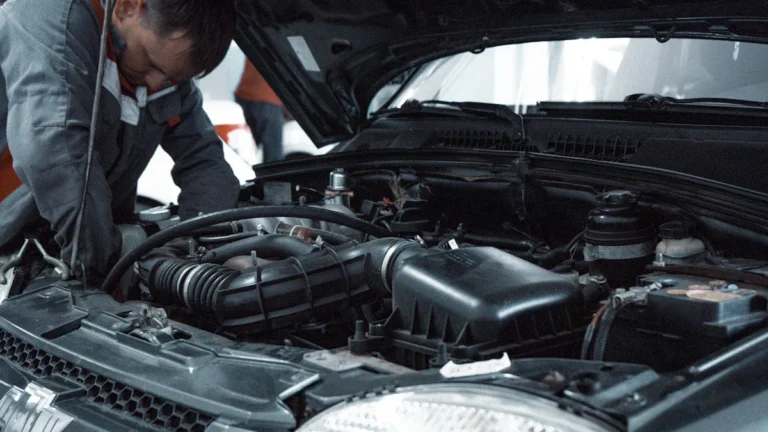
Should your charcoal canister be going bad, you could smell strong fuel odors, see the check engine light, struggle to fill the tank as the pump keeps clicking off, or feel rough idling and even stalling. You might also notice worse gas mileage. You can check for loose or cracked hoses, look for damage, and see whether fuel drips out as it’s tipped. From there, you’ll know whether a simple repair or full replacement makes sense next.
What Your Charcoal Canister Actually Does
Although it could appear like a simple black box near your fuel tank, your charcoal canister is quietly doing a very important job every time you drive.
To give you a clear functionality overview, it captures fuel vapors before they escape the tank and stores them in activated charcoal. Then, as driving conditions are right, your engine pulls those vapors in and burns them like regular fuel.
This process protects the air you and your community breathe, so the environmental impact is real and personal.
At the same time, the canister helps keep fuel tank pressure stable, which supports smooth engine performance and better efficiency.
As it works properly, you waste less fuel, create fewer toxins, and help your car stay healthy longer.
Where to Find the Charcoal Canister in Your Vehicle
Location is the primary mystery you’ll solve as you start looking for your charcoal canister, and it helps to know that it almost always sits somewhere between the fuel tank and the engine. You’re not alone should that sound confusing at the outset.
Pop the hood and look near the intake manifold for a large black plastic box with several small hoses. Should you not see it there, check underneath the vehicle, following the fuel lines toward the rear. Some models place the charcoal canister near the fuel tank.
Because charcoal canister location varies according to make and model, your owner’s manual becomes your teammate.
Use these vehicle inspection tips often, since road dirt, debris, and rocks can damage this exposed part.
Classic Symptoms of a Bad Charcoal Canister
Now that you know where the canister sits, let’s look at how your car tries to warn you at the time it’s in trouble.
You’ll notice both common EVAP warning signs, like a check engine light or strong fuel smells, and also performance and fuel clues, like rough idling or more gas use than normal.
As you read these signs, you’ll start to see how they connect to your everyday driving and help you catch problems prior to them turning into bigger worries.
Common EVAP Warning Signs
As your charcoal canister starts to fail, your car usually tries to warn you in several clear ways, and paying attention to these signs can save you stress, time, and money.
Whenever the evap system struggles, you could see the check engine light stay on. That light can feel scary, but it’s often your initial hint that something simple needs attention.
You might also notice strong fuel smells around or inside the car. That odor can make rides unpleasant and leave you worried, and those feelings are valid.
At the pump, the nozzle could keep clicking off, like the tank is full when it’s not.
Over time, you may also feel rough idling and notice fuel efficiency dropping as the system loses vapor control.
Performance and Fuel Clues
Even before parts start to break, your car quietly uses performance and fuel clues to tell you the charcoal canister isn’t doing its job.
You may feel like something is off, but not be sure why. That’s where paying attention to fuel efficiency and simple engine diagnostics really helps you protect your ride.
Here are signs you’re not imagining things:
- You struggle to refuel because the pump keeps clicking off.
- You smell strong fuel fumes inside the cabin, even with windows cracked.
- Your engine feels rough at idle or stumbles like it wants to stall.
- The car acts like it’s running out of gas, though the tank is full.
- You notice higher emissions or you fail an emissions test unexpectedly.
How to Diagnose Charcoal Canister Problems at Home
Should you be concerned that your charcoal canister could be causing trouble, you can do several simple checks at home before paying for a repair.
Start your home inspection by looking at the dash for a check engine light. That light can point to EVAP problems.
Next, use basic diagnostic tools like an OBD-II scanner. You can borrow one from many parts stores, and it will show EVAP trouble codes that guide your next steps.
Then, find the canister and look closely for cracks, broken tabs, or loose hoses.
Gently remove it and turn it upside down. In case fuel drips out, the canister is saturated.
Also pay attention to hard refueling, slow pump shutoffs, or strong fuel smells inside the cabin.
Essential Fixes: Repairing vs. Replacing the Charcoal Canister
Now that you know how to spot a bad charcoal canister, you may be curious whether you can fix it or whether you really need a new one.
In this part, you’ll see at what point a simple repair or cleaning could be sufficient and at what point a full replacement safeguards your car and your wallet in the long run.
This way, you won’t feel stuck guessing and you can choose the option that feels safest and most reasonable for you.
When Repair Is Possible
Although a bad charcoal canister can feel like one more thing going wrong with your car, there are instances that you can fix it instead of replacing it.
Whenever the canister is only clogged, careful cleaning techniques and gentle carbon rejuvenation can sometimes bring it back to life. You’re not alone in this, and you don’t have to jump straight to costly parts.
You might be able to repair the canister whenever you:
- See no cracks, leaks, or broken fittings on the housing
- Notice mild fuel smells but no strong, constant odor
- Get diagnostic trouble codes that point to flow or vent issues
- Catch problems soon during regular maintenance checks
- Find the canister hasn’t been heavily soaked from overfilling the gas tank
When Replacement Makes Sense
Even with the best repair efforts, there comes a point at which your charcoal canister has simply done all it can.
Once you reach that point, it helps to lean on careful symptoms assessment and clear replacement timing instead of guessing.
If the canister is fuel soaked, cracked, or saturated, cleaning won’t bring it back.
You’ll still notice strong fuel smells, hard refueling, or a check engine light that returns after other fixes.
You may also feel weaker engine power, worse gas mileage, or face a failed emissions test.
If your vehicle is around seven years old or more, replacing the canister becomes a smart, caring choice.
Parts usually cost 50 to 200 dollars, and labor often takes about an hour.
Costs, Time Estimates, and Tools You’ll Need
Money, time, and tools all come together at the moment you’re managing a bad charcoal canister, and grasping them can calm a lot of that “car repair stress” you might be feeling.
Whenever you understand replacement pricing and labor estimates, you feel more in control and less alone at the shop counter.
You’ll usually face parts between about 50 and 200 dollars, depending on your vehicle, plus about an hour of labor for most mechanics.
To visualize what you’re stepping into, contemplate:
- Charcoal canister cost range according to make and model
- Shop hourly rate for that one hour of work
- Socket set for removing bolts
- Screwdrivers for clips and brackets
- OBD-II scanner or vacuum tester to confirm the fix
Maintenance Habits to Prevent Future Charcoal Canister Issues
Whenever you wish to stop charcoal canister problems from coming back, the real secret is taking care of a few small habits long before anything breaks.
These little choices might feel tiny, but together they protect your canister and your wallet.
Start your preventive maintenance with regular inspections you can do yourself.
Check your fuel cap often. Make sure it clicks tight and the seal isn’t cracked. A bad cap can push extra pressure into the system and soak the canister.
At the gas station, don’t top off after the pump clicks. That extra squeeze can send raw fuel into the canister.
Then, during routine service, ask the shop to inspect the EVAP system, monitor fuel mileage changes, and clean or replace the canister on schedule.