

Should you want cooler temps in 2026 traffic, start with a proven 4-row aluminum radiator that fits your Chevy right. You can trust the ECMRAD 1973 to 1991 C10 radiator for tough towing, or choose the 4-row kit version that adds dual 12-inch fans and a smart thermostat. For 1967 to 1972 C/K trucks, ALLOYWORKS CU369 brings fans, shroud, and a trans cooler. ECMRAD also nails 1968 to 1972 Chevelle and Chevy GMC truck fitments, and there’s more you’ll want to check next.
| ECMRAD Aluminum Performance Radiator for 1973-1991 Chevy C10 |

| Best Daily Driver | Core rows: 4-row | Material: Full aluminum | Build type: TIG-welded tanks | VIEW LATEST PRICE | Read Our Analysis |
| ALLOYWORKS Aluminum Radiator for 1967-1972 Chevy C/K (CU369) |

| Best Fan Kit | Core rows: 4-row | Material: AA5052 aluminum | Build type: Fully welded/brazed core | VIEW LATEST PRICE | Read Our Analysis |
| ECMRAD 4-Row Aluminum Radiator for Chevy Chevelle 1968-1972 |
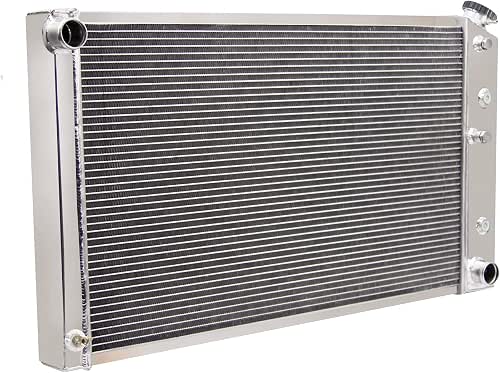
| Best for Muscle Cars | Core rows: 4-row | Material: Aircraft-grade aluminum (5057) | Build type: TIG-welded tanks | VIEW LATEST PRICE | Read Our Analysis |
| 4-Row Aluminum Radiator for 1968-1972 Chevy GMC Trucks |

| Best Heavy-Duty Upgrade | Core rows: 4-row | Material: AA5052 aluminum | Build type: Vacuum brazed (no epoxy) | VIEW LATEST PRICE | Read Our Analysis |
| 4 Row Aluminum Radiator Kit for 1973-1991 Chevy GMC Trucks |

| Best Complete Kit | Core rows: 4-row | Material: AA5052 aluminum | Build type: Welded + leak tested | VIEW LATEST PRICE | Read Our Analysis |
More Details on Our Top Picks
ECMRAD Aluminum Performance Radiator for 1973-1991 Chevy C10
Should you drive a 1973 to 1991 Chevy C10 or a similar Chevy or GMC truck and you’re tired of watching the temp gauge climb while you tow, idle in traffic, or cruise on hot days, the ECMRAD 4 Rows Aluminum Performance Radiator can feel like a real relief. You get full aluminum build and TIG welded end tanks, so you don’t worry like you do with plastic tanks. Next, the 4 row core enhances cooling, with a 19 x 28.5 inch core and 1.5 inch inlet and outlet. It fits many V8 trucks. It weighs 21 pounds.
- Core rows:4-row
- Material:Full aluminum
- Build type:TIG-welded tanks
- Upper inlet:1.5″ driver side
- Lower outlet:1.5″ passenger side
- Radiator cap:Cap included
- Additional Feature:Vehicle-specific fitment
- Additional Feature:19″ x 28.5″ core
- Additional Feature:TIG-welded end tanks
ALLOYWORKS Aluminum Radiator for 1967-1972 Chevy C/K (CU369)
Should you drive a 1967 to 1972 Chevy or GMC truck and you’re tired of watching the temp needle creep up in traffic, the ALLOYWORKS CU369 4 row aluminum radiator is built for you. It drops in with no drilling and matches common OEM numbers like CU369 and DPI369, so you don’t have to guess. Next, you get smart airflow help: two 12 inch electric fans, a louvered shroud, a relay wire kit, and a cap. Finally, its welded AA5052 aluminum core enhances heat transfer, claims 30% more cooling, and includes a trans cooler. Leak checks add confidence.
- Core rows:4-row
- Material:AA5052 aluminum
- Build type:Fully welded/brazed core
- Upper inlet:1.5″ driver side
- Lower outlet:1.75″ passenger side
- Radiator cap:Cap included
- Additional Feature:Includes dual 12″ fans
- Additional Feature:Louver fan shroud
- Additional Feature:Thermostat relay kit
ECMRAD 4-Row Aluminum Radiator for Chevy Chevelle 1968-1972
ECMRAD’s 4-row aluminum radiator fits you best in case you drive a 1968 to 1972 Chevy Chevelle and you’re tired of watching the temp gauge climb once traffic slows or the throttle stays down. You get full aluminum strength with TIG welded end tanks, plus a tube and fin layout that sheds heat rapidly.
Next, fit and function stay simple. The 17 inch across 28 1/4 inch core drops into many GM classics, and the 1 1/2 inch inlet and outlet line up cleanly. You also get a built in brass petcock drain, a CNC machined filler neck and cap, and a trans cooler with G1/4 fitting. At 21.4 pounds, it cools hard without feeling bulky.
- Core rows:4-row
- Material:Aircraft-grade aluminum (5057)
- Build type:TIG-welded tanks
- Upper inlet:1.5″ driver side
- Lower outlet:1.5″ passenger side
- Radiator cap:Cap included
- Additional Feature:Built-in brass petcock
- Additional Feature:CNC machined filler neck
- Additional Feature:Transmission oil cooler
4-Row Aluminum Radiator for 1968-1972 Chevy GMC Trucks
Should you drive a 1968 to 1972 Chevy or GMC truck and you’re tired of watching the temp gauge creep up in traffic or under load, this 4-row full-aluminum radiator is made for you. It fits C10 to K30 trucks plus Blazer, Suburban, and Jimmy. You get a downflow 4-core design that can cool 35 to 45 percent better than stock.
Next, the build helps you trust it. AA5052 tanks and core are vacuum brazed, not glued. It bolts in like OEM, stays light at 22.4 pounds, and includes a CNC cap and trans cooler. Each unit is leak tested.
- Core rows:4-row
- Material:AA5052 aluminum
- Build type:Vacuum brazed (no epoxy)
- Upper inlet:1.5″ (side not specified)
- Lower outlet:1.75″
- Radiator cap:CNC cap included
- Additional Feature:35–45% cooling efficiency
- Additional Feature:Vacuum-brazed no epoxy
- Additional Feature:100% leak tested
4 Row Aluminum Radiator Kit for 1973-1991 Chevy GMC Trucks
In case you drive a 1973 to 1991 Chevy or GMC truck and you’re tired of watching the temp gauge creep up in traffic, this 4 Row Aluminum Radiator Kit is built for you. You get the radiator, a shroud, two 12-inch fans, a relay, and a thermostat kit that kicks on at 180°F and shuts off at 165°F, so you can relax.
Because it’s full AA5052 aluminum with clean welding, it stays tough and leak-tested. The 4-core downflow design can drop temps 35 to 45 percent, plus it includes a transmission cooler. Installation feels simple with fan tabs and drop-in fit.
- Core rows:4-row
- Material:AA5052 aluminum
- Build type:Welded + leak tested
- Upper inlet:1.5″ (side not specified)
- Lower outlet:G1/4 cooler noted; outlet size not specified
- Radiator cap:CNC cap included
- Additional Feature:Shroud and fan kit
- Additional Feature:2300±200 CFM fans
- Additional Feature:180°F on/165°F off
Factors to Consider When Choosing 4 Rows Car Radiators
Now that you’ve seen a solid 4-row option for Chevy and GMC trucks, you’ll want to make sure the next radiator you pick truly matches your vehicle’s fitment and your cooling demands. You can do that through checking core size and row count, confirming inlet and outlet dimensions, and choosing a radiator with strong material and clean welds you can trust. In case your ride has an automatic transmission, you’ll also want to confirm whether you need an internal transmission cooler, because missing that detail can turn a simple install into a long weekend.
Vehicle Fitment Match
Why does fitment matter so much when you’re shopping for a 4 row radiator? Because even a great radiator can turn into a stressful return when it won’t sit right in your bay. So initially, make sure the total dimensions match the space you actually have, or you’ll fight fans, shrouds, and brackets.
Next, check the inlet and outlet hose diameters. In case they don’t line up with your hoses, you’ll chase leaks and odd clamps. Then confirm it matches your engine and your transmission type. Automatics often need built-in transmission oil cooling, so verify the cooler ports are included and placed correctly. Finally, pick a radiator made for your exact make, model, and production years, so it bolts in cleanly without guesswork.
Core Size And Rows
After you’ve confirmed a radiator will actually bolt in and line up with your hoses, the next thing that protects your engine is the core size and the number of rows. Core size means height, width, and thickness, and it directly controls how much heat the radiator can shed. In case you tow, climb grades, or drive hard in summer, you’ll want more core area and a thicker core. That extra thickness matters because it lets the radiator take higher heat loads without panic moments on the temp gauge.
Next, look at rows. A true 4 row core adds more tubes and more surface area for coolant to flow through. So you get stronger heat transfer, better durability, and fewer overheating scares whenever conditions get demanding.
Inlet Outlet Dimensions
Because a 4 row radiator can move a lot of coolant, you’ve got to make sure the inlet and outlet dimensions match your vehicle before you buy. Most necks measure 1.5 to 1.75 inches, so check your hose size initially or you’ll fight leaks, loose clamps, or messy adapters.
Next, look at where the ports sit. The inlet is often on the driver side and the outlet usually lands on the passenger side. That layout controls hose routing, so you want smooth bends, not kinks that choke flow and raise temps. Also, keep both ends consistent in size so coolant moves at the right speed for strong heat control.
If you run an automatic, confirm the transmission cooler fitting sizes too, or installation turns into a headache.
Material And Weld Quality
In case you want a 4 row radiator that won’t leave you stranded with steam pouring out, you’ve got to look closely at the metal and the welds, not just the shiny finish. Start with aircraft grade aluminum like AA5052 or 5057, because it sheds heat fast and stays tough without adding much weight.
Next, check how the tanks meet the core. You want clean TIG welds or vacuum furnace brazing, since those joints handle pressure, vibration, and hard heat cycles without seeping. Also, skip cores bonded with epoxy, because sudden temp swings can crack that shortcut over time. Little details matter too, like CNC machined filler necks and caps that seal tight. Finally, trust brands that pressure test and inspect in steps, so you don’t gamble on leaks.
Transmission Cooler Needs
While you’re shopping for a 4 row radiator, don’t overlook the transmission cooler, since it can be the difference between a calm drive and a hot, slipping gearbox. In case you drive an automatic, you’ll feel the payoff fast, especially during towing, hauling, or sitting in traffic. A built in transmission oil cooler keeps fluid temps steady, so shifts stay smooth and parts last longer.
Next, check the connection points before you buy. Many integrated coolers use fittings around 26mm or a G1/4 thread, so you need a secure match to your lines. This setup also keeps engine coolant and transmission fluid in separate paths, which can enhance overall cooling efficiency. And should you swap drivetrains later, a cooler that supports automatic and manual use gives you extra flexibility.
Fan Shroud Compatibility
How do you know your new 4 row radiator won’t turn your cooling setup into a shaky, noisy mess? You check fan shroud compatibility initially. Your shroud has to line up with the radiator’s mounting tabs and match its size, so you can bolt it on tight without odd spacers or extra brackets. That tight fit keeps the fan steady, which cuts rattles and annoying vibration.
Next, make sure the shroud is built for the radiator’s thicker core. In case it’s too shallow, your fan blades can kiss the fins or nearby parts, and that’s a heart sink moment. In the event you run electric fans, confirm the shroud clears the fan depth and supports its airflow needs. A good match guides air straight through the core.
Cooling Capacity Gains
Because heat can spike fast as you’re towing, stuck in traffic, or pushing the throttle, a 4-row radiator gives you a bigger safety cushion through enhancing your system’s cooling capacity. You get a noticeable jump in coolant volume, so the system can soak up heat longer before temps climb.
Next, the extra rows add more surface area inside the core. That means air moving through the fins can pull more heat out of the coolant, faster. In real terms, you can see about 30% to 45% more cooling capacity than many standard or 2 to 3-row setups.
This matters whenever the day turns brutal. You’ll fight off overheating during heavy loads, quick temperature surges, or spirited driving. Plus, the added thermal mass steadies the gauge and helps parts last longer.
