Car differentials send power to your wheels. This power distribution greatly affects traction. Traction is vital, especially on snow and ice. Many people think only special systems work well in winter. You might be surprised by how effectively some standard options perform. We will explore various car differentials. You will learn their good points and bad points for winter driving. Understanding different types of Car Differentials helps you drive safer and keep control in tough winter conditions.
Key Takeaways
Car differentials send power to your wheels. This affects how well your car grips the road, especially on snow and ice.
Open differentials are common. They let one wheel spin if it loses grip. This can make your car get stuck in snow.
Limited-slip differentials (LSDs) are better for winter. They send power to the wheel with more grip. This helps your car move forward.
Advanced systems like Subaru’s Symmetrical AWD and Audi’s Quattro use smart differentials. They give you great control and stability on slippery roads.
Good winter tires are very important. They work with any differential to give you the best grip on snow and ice.
Understanding Car Differentials for Winter
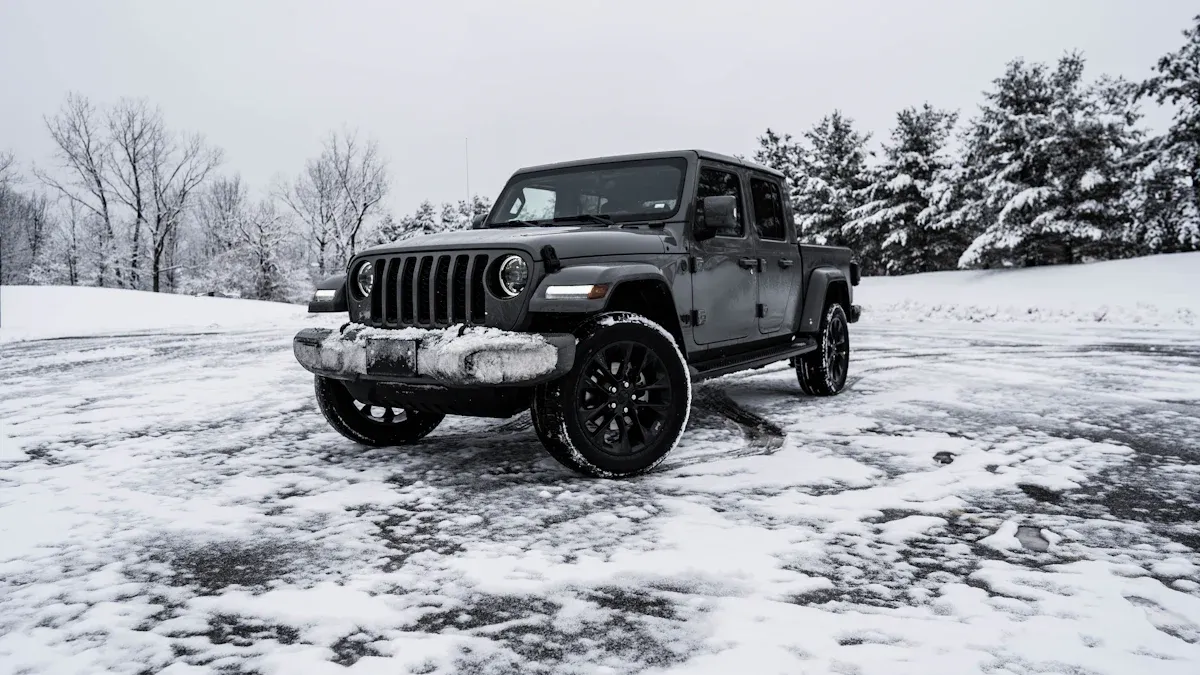
Open Differential Behavior in Snow
An open differential is common in many cars. It allows wheels to spin at different speeds. This is good for turning corners. However, it creates problems on snow or ice. When one wheel loses traction, the open differential sends all power to that spinning wheel. This happens even if other wheels have grip. For example, if one wheel hits an icy patch, it spins uselessly. The car cannot move forward. This loss of traction makes your vehicle prone to getting stuck. It can also cause you to lose control. This is a specific risk in low-grip conditions.
Importance of Traction in Low Grip
Traction is crucial for driving in winter. It is the friction between your drive wheel and the road. Losing traction means you lose grip. On snow and ice, this friction is much lower. Your car needs good traction to move, stop, and turn safely. Without enough traction, your wheels can spin. You can lose control of your vehicle. This increases stopping distances. It also raises the risk of accidents. Devices like aggressive tire treads or snow chains can increase traction on low-friction surfaces.
Vehicle traction is defined as the friction between a drive wheel and the road surface. Losing traction means losing road grip.
Key Winter Differential Features
Some differential features greatly improve winter driving. Limited-slip differentials (LSDs) are key. They send more power to the wheel with better traction. This prevents your car from losing driving force when one wheel slips. Torsen LSDs use helical gears. They smoothly transfer torque to the wheel with more grip.
This happens automatically. You do not need to do anything. This automatic adjustment improves mobility and control. It works even if one wheel is on ice and the other is on dry ground. The effectiveness of an LSD depends on its bias ratio. A higher ratio means better traction. However, LSDs have limits. They may not prevent slipping if both wheels are on extremely slippery surfaces. You still need to drive with caution. Proper lubrication is also important for LSDs. They work best with other traction aids, like studded tires. These combinations enhance safety in winter.
Recommended Car Differentials for Snow and Ice

You need to know about different Car Differentials to drive safely in winter. Here are 10 types that help you on snow and ice.
1. Open Differential
Many cars have an open differential. It is often the safest choice for general snow and ice driving. If one tire loses traction on black ice, the open differential lets that wheel spin. The other wheel can still maintain some grip. This prevents your car from spinning out of control. A limited-slip differential, in contrast, might cause both tires to lose traction. This would make your vehicle uncontrollable. Open differentials are common in passenger vehicles. They help prevent the rear end from sliding out.
An open differential on black ice might save you from spinning out. If one tire loses traction, the speedometer will show a high speed and the engine will rev, but the other tire can maintain some grip. In contrast, a limited-slip differential (posi) would cause both tires to lose traction, significantly increasing the chance of the vehicle becoming uncontrollable and spinning.
2. Selectable Locking Differential
Selectable locking differentials give you full lock-up when you need it. This makes them excellent for extreme low traction. You can engage them manually. This forces both wheels on the same axle to turn at the same speed. This happens even if one wheel has less traction. This gives you a big traction advantage over an open differential. You can disengage them for safer road driving.
Electric systems use a magnet inside the differential. This magnet joins the two axle shafts.
Pneumatic systems use high-pressure air from a compressor. This air engages an internal clutch gear. It locks the spider and side gears together.
You should engage these differentials when:
Starting on icy or snowy hills.
Driving through deep or uneven snow.
Moving slowly on winter trails off-road.
Trying to get unstuck.
You should disengage them or avoid using them when:
Driving fast on plowed roads.
Making sharp turns on dry pavement.
Driving on mixed traction surfaces at speed.
When engaged, expect less responsive steering. Adjust your speed. Use smooth inputs and drive slower to keep control. Your turning radius might increase, and steering can feel heavier.
3. Torsen Limited-Slip Differential (LSD)
A Torsen LSD uses gears. It continuously checks how much torque each wheel gets. It has helical-cut gears. These gears are different from clutch-based systems. When one wheel starts to spin, the Torsen instantly senses the difference in resistance. The helical gears create internal friction. This friction resists the slipping wheel.
It sends power to the wheel with traction. This action is continuous. It ensures smooth power transfer. You will not feel sudden jerks. This makes it ideal for varying grip. Torsen LSDs use gears instead of clutches. This makes them durable. Their smooth engagement gives you a comfortable ride. You avoid the jolts that other differentials can cause.
4. Clutch-Type Limited-Slip Differential (LSD)
Clutch-type LSDs provide aggressive lock-up. This gives you consistent traction. They use friction plates inside the differential. When one wheel starts to slip, these plates engage. This sends more torque to the wheel with better grip. These differentials apply lock when you press the throttle. This helps distribute torque before one wheel spins too much. It acts like a locked differential.
However, an overly aggressive clutch-type LSD can cause problems on very slick roads. These LSDs are always partly engaged. This is due to their springs and friction plates. While good for very slippery conditions, this constant engagement can be too aggressive for normal street use. You might hear noise. The inside wheel might drag during slow, tight turns. The friction plates also wear out over time. You might need to rebuild them every 2-5 years.
5. Viscous Coupling Limited-Slip Differential (LSD)
A viscous coupling LSD uses fluid. It offers progressive engagement on slippery surfaces. It has a chamber filled with thick fluid, like silicone oil. Inside are perforated discs. Half connect to one driveshaft, half to the differential carrier. When wheels spin at different speeds, these discs move through the fluid. This creates friction. If the speed difference continues, the fluid heats up and expands. This pulls the discs together.
This “hump phenomenon” gently locks the differential. It reduces the speed difference. This system gives you a good balance of traction and smoothness.
6. Electronic Limited-Slip Differential (eLSD)
An Electronic Limited-Slip Differential (eLSD) uses a computer. It precisely controls torque distribution. It uses a Model Predictive Control (MPC) system. This system predicts how the eLSD will distribute torque. It then manages clutch pressure to prevent oversteering. It prioritizes eLSD clutch pressure.
Differential braking is a secondary option. This avoids affecting your comfort. It aims to keep your car stable. It tracks your desired turning rates. It activates lower-priority actions only when needed. It calculates optimal braking forces. It prioritizes front/rear torque distribution. It uses differential braking if necessary.
An eLSD integrates with your car’s traction control systems. This gives you superior winter grip. Systems like the Haldex Gen4 coupling with Saab’s eLSD work in real-time. Your car’s Electronic Stability Program (ESP) controls it. This setup sends torque to the rear wheels before slippage happens. It anticipates road conditions.
It does not just react. The Gen4 system has faster hydraulics and smarter computer control. It uses engine and brake inputs. This allows for torque pre-load and full ESP cooperation. The eLSD also vectors torque across the rear axle. This makes your car feel more neutral and composed.
7. Helical Gear Limited-Slip Differential (e.g., Quaife ATB, TrueTrac)
Helical gear Limited-Slip Differentials, like Quaife ATB and TrueTrac, use gears. They do not use clutch plates. This makes their performance much smoother. They never lock harshly. They automatically bias torque away from a spinning wheel. They send it to the wheel with more traction. This happens to a varying degree.
They are fully automatic and progressive. They seamlessly transfer power from a spinning wheel to the wheel with the most traction.
These differentials maximize traction and minimize wheel spin. They eliminate torque steer in front-wheel-drive cars. They are maintenance-free. They use standard oil lubrication. They operate silently, even when parking slowly. They never “lock,” making them progressive and safe. They lack clutches, ramps, or springs. This makes them durable. They use a proven system of helical gears. They are designed to use standard transmission oils. These are popular and good value examples for snow.
8. Automatic Torque Biasing (ATB) Differentials (e.g., Aussie, Tru-Track)
Automatic Torque Biasing (ATB) differentials are good value options for snow and ice. They effectively control traction loss on slippery surfaces. They provide appropriate biased traction to overcome bad conditions.
They lock up in proportion to the power you give. This prevents too much slip before it starts. They limit both wheels before they slip. They progressively lock as you apply more power. They do not need wheel slip to engage. This is unlike traditional LSDs. This makes them very helpful in low traction conditions like snow or ice.
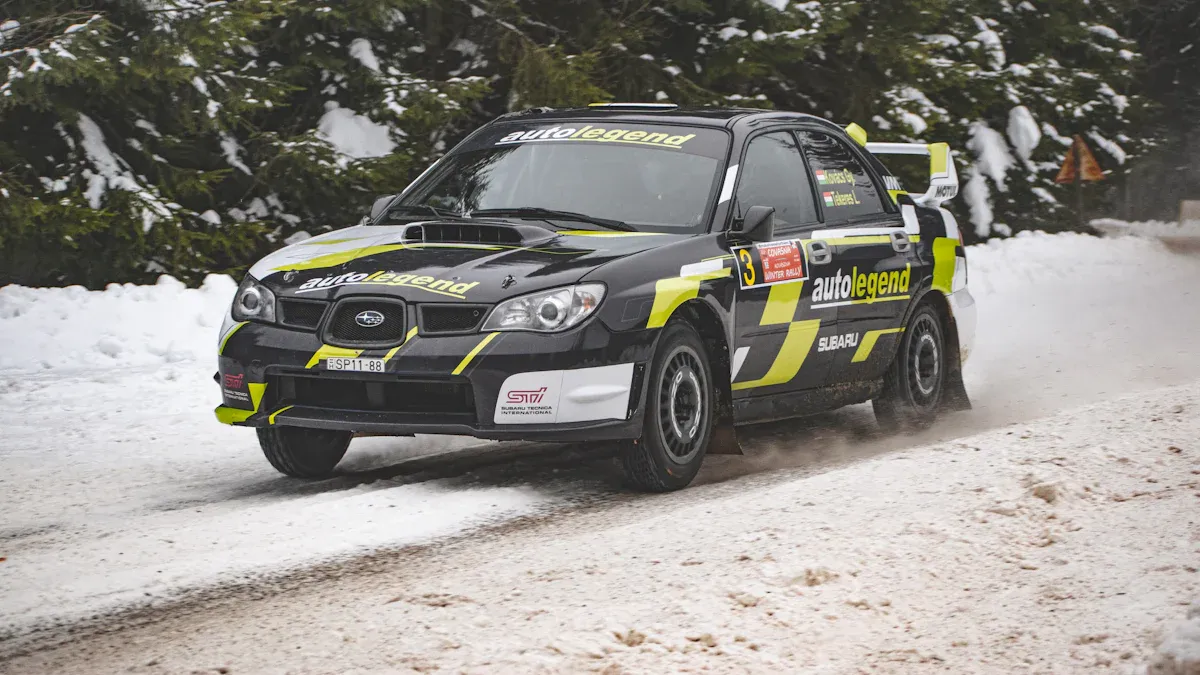
9. Subaru’s Symmetrical All-Wheel Drive System
Subaru’s Symmetrical All-Wheel Drive system is an integrated system. It often features a viscous or electronic center differential. This provides balanced power distribution. It gives you superior winter performance.
It is an always-on full-time system. It continuously sends power to all four wheels. This enhances stability. Engine power distributes evenly. This gives you great traction and control. The flat BOXER engine and symmetrical layout create a lower center of gravity. This makes your ride more stable, especially on curves and inclines. The system adjusts in real-time to different road conditions.
This system offers superior traction. It continuously monitors and distributes power to the wheels that need it most. This ensures optimal grip on icy roads. It works with Vehicle Dynamics Control (VDC). This helps keep your car on its intended path. It also improves braking performance. It maintains even pressure across all four wheels. This reduces skidding and shortens stopping distances. X-MODE® optimizes engine output, transmission, and braking. This gives you better control on slippery surfaces. Hill Descent Control keeps a consistent speed when driving downhill on icy roads. This prevents sliding.
Subaru’s AWD system integrates different types of differentials:
AWD System | Center Differential/Clutch | Front Differential | Rear Differential |
|---|---|---|---|
Viscous Center Differential (VCD) | Viscous Center Differential | Open | Open |
Active Torque Split (ATS) | Multi-plate Center Clutch | Open | Open |
Variable Torque Distribution (VTD) | Planetary Center Differential & Electronic Hydraulic Transfer Clutch | N/A | N/A |
Driver Controlled Center Differential (DCCD) | Planetary Mechanical Limited Slip Differential & Electronic Differential | Helical Limited Slip | Torsen Limited Slip |
10. Audi’s Quattro All-Wheel Drive System
Audi’s Quattro All-Wheel Drive system is advanced. It uses sophisticated differentials. This gives you superior winter grip and stability. Modern Quattro systems, like Quattro Ultra, use multi-disc clutches. They variably deliver torque between the front and rear axles. This allows for quick torque shifts to the axle with traction.
This happens when conditions reduce grip. It ensures stability and safety. Quattro Ultra also improves efficiency. It disengages the rear axle when you do not need all-wheel drive. This reduces drag and saves fuel. It reactivates in milliseconds when you need more grip. This adaptability, with torque vectoring, minimizes skidding. It prevents loss of control on icy or rain-soaked roads. This gives you stability and peace of mind.
Audi’s Quattro system has evolved through several generations:
First Quattro System (Mechanical Differentials): It used three mechanical differentials. You could manually lock the center differential. This made front and rear differentials turn at the same speed. This was important for slick surfaces. You could lock the rear differential for traction. The front remained open for steering.
Late 1980s Update (Torsen Differential): This replaced the manual center differential with a Torsen differential. It automatically split power 50:50 front to rear. Torsen differentials could send up to two-thirds of the torque to the axle with traction. This happened when one axle lost grip.
Transverse Engine Period (Haldex Coupling System): For cars with transverse engines, Audi used a Haldex coupling system. This system senses speed differences. It builds hydraulic pressure to engage a multi-plate clutch. This connects the front and rear axles. Electronic Differential Lock (EDL) uses the ABS system. It manages individual wheel traction loss.
Modern Systems (Electronic Differentials with Torque Vectoring): Current Quattro systems have electronic wheel-selective torque control. This uses individual wheel braking to help traction. In S and RS models, a rear Sport differential can overdrive wheels. It can send almost all power to one rear wheel during hard cornering. This enables torque vectoring for more neutral handling. Default power distribution is 40:60 front to rear. It can send up to 70% to the front or 85% to the rear.
Here is a look at the different generations of Audi’s Quattro system:
Generation | Years Used | System Type | Center Differential | Rear Differential | Front Differential |
|---|---|---|---|---|---|
I | 1981-1987 | Permanent 4WD | Open, manually lockable | Open, manually lockable | Open, no lock |
II | 1986 onwards | Permanent 4WD | Torsen, 50:50 default split, up to 71.5% torque transfer | Open, manually lockable (ABS disabled when locked, unlocks > 25 km/h) | Open, no lock |
III (V8 auto) | 1988-1994 | Permanent/Part-time 4WD | Planetary gear with electronically controlled multi-plate locking clutch | Torsen Type 1 | Open |
III (V8 manual) | 1988-1994 | Permanent/Part-time 4WD | Torsen Type 1 | Torsen Type 1 | Open |
IV | 1995 onwards | Permanent 4WD | Torsen Type 1, 50:50 default split, up to 75% torque transfer | Open with Electronic Differential Lock (EDL) | Open with Electronic Differential Lock (EDL) |
V (Torsen Type C) | 2006 onwards | Permanent 4WD | Torsen Type C (T3), asymmetric 40:60 front-rear split | Open with EDL | Open with EDL |
VI (Crown-wheel) | 2010 onwards | Permanent 4WD | Crown Gear, 40:60 static split, up to 85% rear, 70% front | Open with EDL | Open with EDL |
BorgWarner (Q7) | First generation Q7 | Permanent 4WD | Torsen Type 3 (T3) | N/A | N/A |
Ultra | 2016 onwards | Front-wheel drive biased | N/A | N/A | N/A |
Choosing the Right Differential for Your Needs
Factors: Driving Style, Vehicle Type, Budget
You need to pick the right differential for your car. First, think about how you drive. Do you drive carefully on icy roads? Or do you often face deep snow? Your driving style affects what differential works best. Next, consider your vehicle type. A small sedan has different needs than a large SUV or truck. Some differentials fit certain vehicles better. Finally, look at your budget. Aftermarket Car Differentials can be expensive to buy and install. Factory-installed options are often part of a vehicle package.
Installation and Maintenance
Installing an aftermarket differential usually needs a professional. This ensures it works correctly and safely. After installation, regular maintenance is key. You must change your differential fluid. Most manufacturers suggest fluid changes every 30,000 to 60,000 miles. Check your owner’s manual for exact times. If you drive in tough conditions, like towing or off-roading, change the fluid more often. This could be every 15,000 to 30,000 miles.
During a professional service, mechanics inspect for leaks and wear. They drain old fluid and check for metal bits. Then, they refill with new, correct fluid. Neglecting maintenance can lead to costly repairs. A differential rebuild can cost $500 to $1,500. A complete replacement might cost up to $4,000. Seal or bearing repairs often cost $300 to $900.
Complementary Technologies: Tires and Traction Control
A good differential helps a lot. But it is not the only thing you need for winter driving. Good winter tires are very important. They give you the best grip on snow and ice. They work with your differential to keep you safe. Also, your car’s traction control system works with the differential. This system helps manage wheel spin. It improves overall performance in slippery conditions. Always use these technologies together for the best safety and control.
Choosing the right Car Differentials greatly improves your vehicle’s performance and safety in winter. You have learned about many effective options. These range from the simple open differential to advanced AWD systems. The best differential for you depends on your driving conditions, vehicle type, and what you value most: safety or performance. Make an informed choice. Consider the pros and cons of each type. This helps you drive safely and effectively in challenging winter weather.
FAQ
Can I use an open differential in snow?
Yes, you can. An open differential is often safer for general snow driving. It prevents your car from spinning out. If one wheel slips, the other can still grip. This helps you maintain control.
What is the best differential for extreme snow?
For extreme snow, a selectable locking differential is best. You can fully lock it when needed. This forces both wheels to turn together. It gives you maximum traction to get unstuck.
Do I need special maintenance for LSDs?
Yes, you do. Limited-slip differentials need regular fluid changes. Check your owner’s manual for specific intervals. Tough driving conditions mean more frequent changes. This keeps your LSD working well.
Are AWD systems the same as LSDs?
No, they are not the same. All-wheel drive (AWD) is a system that sends power to all four wheels. Limited-slip differentials (LSDs) are components within an AWD system or a two-wheel drive system. They manage power between wheels on an axle.
Can tires make a difference with any differential?
Absolutely! Good winter tires are crucial. They give you the best grip on snow and ice. They work with any differential. Always use them for top safety and control in winter.