

Many people confuse a blown cylinder head gasket with a cracked engine block. These are distinct engine failures. Accurate diagnosis is critical for any effective repair. It also helps you manage costs. This article will help you understand the differences. You will learn to identify key symptoms. We will explore 12 key fixes for both your blown head gasket and issues with the engine block.
Key Takeaways
A blown head gasket is a seal failure between the engine block and cylinder head. A cracked block is a break in the engine’s main metal structure. A cracked block is a more serious problem.
Both issues can cause similar symptoms like overheating or milky oil. You need a correct diagnosis to fix the problem right. Professionals use special tools to find the exact issue.
You can use chemical sealants for small head gasket leaks. These are not permanent fixes. Large leaks or a cracked block need more serious repairs like welding or part replacement.
Regular maintenance helps prevent these problems. Check your oil and coolant often. Make sure your cooling system works well. Avoid your engine getting too hot.
Blown Cylinder Head Gasket: Understanding the Issue
What is a Blown Cylinder Head Gasket
You might wonder, “What is a blown cylinder head gasket?” This critical component seals the combustion gases within your engine’s cylinders. It also prevents coolant or engine oil from leaking into the cylinders. The head gasket ensures that combustion gases, coolant, and lubricating oil do not mix.
It maintains fluid separation where the engine block and cylinder head meet. A primary role is managing intense pressure and temperatures within the engine. It ensures coolant is maintained in the combustion chamber. When this seal breaks, you have a blown cylinder head gasket.
Causes of Blown Head Gasket
What are the causes of a blown head gasket? Engine overheating is the most common reason. Extreme heat can warp engine components. This creates gaps where the gasket should seal. Low coolant levels, a faulty radiator, or a clogged cooling system can all lead to overheating. Poor maintenance habits also stress the head gasket.
Neglecting regular maintenance, like dirty oil or coolant leaks, contributes to head gasket failure. Pre-ignition and detonation create intense pressure. This pressure can damage the gasket. Manufacturing defects or wear over time also cause a blown head gasket.
Signs of a Bad Head Gasket
You need to recognize the signs of a bad head gasket. One clear sign is your engine overheating. Your temperature gauge might climb rapidly. You might see white steam from under the hood. Another key sign is milky oil.
This looks like a chocolate milkshake. You might also see white exhaust smoke. This smoke is thick and has a sweet smell. You could experience a loss of power. Your engine might struggle or misfire. Bubbles in the coolant reservoir are also signs of a blown head gasket. You might see gurgling in the coolant when the engine is cool. External coolant leaks or oil and coolant mixing around the engine head are also common symptoms.
Diagnosing a Blown Head Gasket
Diagnosing a blown head gasket involves looking for these specific signs. If you notice any of these symptoms, you should investigate further. For example, if you see white smoke, it suggests coolant is burning in the combustion chamber. Milky oil indicates that oil and coolant have mixed. These signs of a blown head gasket help you pinpoint the problem. A professional assessment is often necessary for a definitive diagnosis.
Cracked Engine Block: A More Severe Problem
What is a Cracked Engine Block
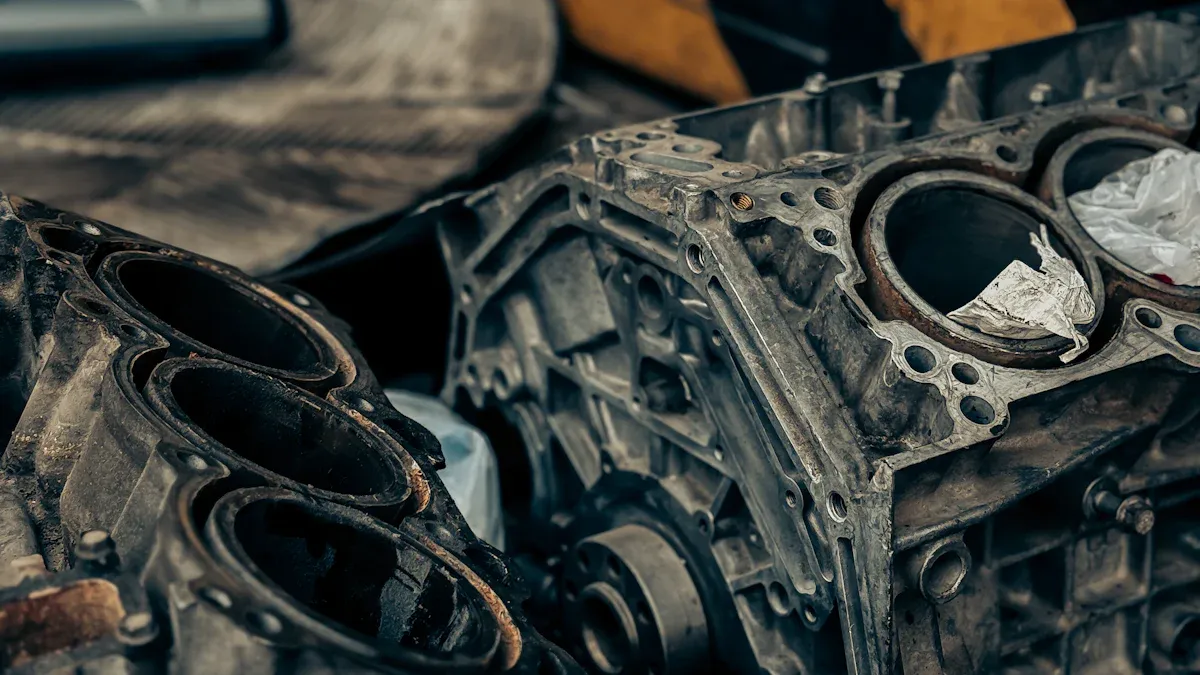
A cracked engine block is a serious problem. It means the main metal structure of your engine has a break. This block forms the basic structure for your entire engine. It supports moving parts like pistons and the crankshaft. It holds them in correct positions for synchronized operation. The block also dissipates heat from fuel combustion. It must be properly sealed. This prevents oil or coolant leaks. It also maintains correct pressure within the cylinders.
Your engine block contains cylinders and other components. Modern blocks integrate the crankcase with the cylinder block as a single unit. They often include coolant passages and oil galleries. Manufacturers typically cast these blocks from either cast iron or an aluminum alloy. Aluminum blocks are lighter. They transfer heat more effectively. Iron blocks offer durability and reduced thermal expansion. A cracked block is much more severe than a blown head gasket.
Causes of Engine Block Cracks
Several factors can cause a cracked engine block. The most common cause is insufficient coolant. Low coolant leads to excessive heat. This heat can warp and crack the block. A failed water pump also prevents proper coolant circulation. This often results in coolant leaks or overheating.
An overworked engine can also cause cracks. Stress from non-OEM turbochargers or towing heavy loads can damage the block. Extreme cold is another risk. In very cold climates, freezing coolant expands. This expansion puts pressure on the block. It can cause the block to crack.
Symptoms of a Cracked Block
You will notice several signs if your engine has a crack. These signs can be similar to a blown head gasket. You might see external coolant leaks. Oil leaks are also common. Your engine will likely overheat. You may see white smoke from the exhaust.
This indicates coolant is burning. Milky oil, like a milkshake, suggests oil and coolant are mixing. These are serious symptoms. You need to address them quickly.
Diagnosing a Cracked Engine Block
Diagnosing a cracked engine block requires careful inspection. You can use several methods to find cracks. Dye penetrant testing (DPT) is one way. You apply a dye to the surface. The dye seeps into cracks. This makes them visible. This method works for both ferrous and non-ferrous materials.
A home-brew method uses kerosene or diesel fuel with talcum powder. You apply the liquid, let it soak, and then dry it. Sprinkle talcum powder on top. Wet spots in the powder show cracks. For ferrous materials, Magnafluxing is often recommended. This technique is more sensitive than DPT for steel. It helps identify a cracked engine block. These diagnostic signs help confirm a cracked engine block.
Comparing Symptoms & Diagnosis
Overlapping Symptoms & Differentiation
You now understand the distinct issues of a blown cylinder head gasket and a cracked engine block. However, their symptoms often overlap. This makes accurate diagnosis challenging without deeper inspection. For example, both conditions can cause your engine to overheat. You might experience a loss of coolant without seeing any visible leaks. You may also notice milky oil, which indicates oil and coolant mixing.
These are all common signs. You need to differentiate between these problems. A definitive diagnosis often requires removing the cylinder head(s) for a thorough inspection. This helps you see if you have a blown cylinder head gasket or a cracked head.
Advanced Diagnostic Techniques
To pinpoint the exact problem, you can use advanced diagnostic techniques. A CO2 electronic handheld gas analyzer is a quick and easy way to detect combustion gas leaks. This tool helps diagnose issues with blown head gaskets, cylinder heads, and engine block leaks. It is a non-invasive method. It measures CO2 concentrations in your engine’s cooling system. This gives you a reliable sign of combustion gas leakage.
These analyzers can detect leaks with CO2 concentrations as low as 20 parts per million. This helps you identify problems early. Professional-grade CO2 analyzers use infrared spectroscopy technology. This ensures accurate and consistent readings. This method is much faster than traditional tests. It reduces diagnostic time from hours to minutes. It also minimizes the risk of misdiagnosis.
Professional Assessment Importance
Given the complexity and overlapping signs, a professional assessment is very important. Mechanics have specialized tools and experience. They can accurately diagnose if you have a blown head gasket, a cracked head, or a cracked engine block.
They can perform detailed inspections. This includes pressure testing, leak-down tests, and using CO2 analyzers. A professional can also remove the cylinder head(s) if needed. This ensures you get the correct repair. This saves you time and money in the long run. You avoid unnecessary repairs or further damage to your engine block.
12 Key Fixes: Gasket & Block Repair
You face a significant challenge when your engine shows signs of trouble. Whether you have a blown cylinder head gasket or a cracked engine block, you need effective solutions. This section outlines various repair and preventative strategies. You will learn about options for both issues. Remember, a cracked block typically requires a more costly and labor-intensive repair compared to a blown head gasket.
Head Gasket Repair & Replacement
When you suspect a blown head gasket, you must first evaluate the damage. If your car overheats in less than 15-20 minutes, a mechanic will likely need to replace the factory gasket. For mild to moderate leaks, where your car runs safely for longer than 15 minutes without overheating, chemical repair products can seal the leak. These products work without needing engine disassembly.
Bar’s Leaks offers several DIY fixes:
HG-1 Head Seal (Blown Head Gasket Repair): This product is for cars that can run between 15 and 20 minutes without overheating. It is a commercial-strength product with carbon fiber. You add it directly to the coolant tank. It requires holding your car at a high idle for about 15 minutes. You do not need to drain the system.
Head Gasket Fix (1111): Use this for minor-to-moderate leaks. Your car should run for about 20 minutes without overheating. It is easy to install. You pour it into the coolant tank.
Head Gasket Repair (1100): This is for borderline cases, where your car runs just over 20 minutes without overheating. You must drain and flush the cooling system. Then, refill it with water, as this product is not compatible with antifreeze. It uses Aramid for a stronger bond.
Chemical solutions are not enough for large leaks, broken head bolts, or severely warped cylinder heads. These issues require a replacement part or even a new vehicle.
Engine Block Repair Options
A cracked engine block presents a more severe problem. You have several repair options depending on the crack’s nature and location. These include:
Welding
Brazing
Cold metal stitching
You can also use cold-applied repairs. Products like Belzona 1111 (Super Metal) and Belzona 9341 Reinforcement Tape offer a robust solution. To perform this type of repair, you follow specific steps:
Clean the surface thoroughly.
Terminate cracks by drilling and tapping small holes at their ends. 3 Thread studs into the holes and cut them flush with the casing.
Vee out the cracks with a grinder and roughen the repair area.
Mix and apply Belzona 1111 directly onto the cleaned surface.
Apply a small piece of Belzona 9341 Reinforcement Tape. Wet this tape with the mixed material. Place it over the crack and encapsulate it.
Apply the remaining mixed material. Create a buildup of approximately 1/8″ (3 mm) over the entire area.
Chemical Sealants & Limitations
Chemical sealants can be effective for mild to moderate head gasket leaks. This is especially true if you catch the problem early. If your car can run for 15-20 minutes without overheating, a quality chemical repair solution will likely work. Using sealants can extend your vehicle’s life. It can also save you significant money compared to physical repairs, which often cost $1,500-$3,000.
However, these sealants have limitations. They are not suitable for badly damaged head gaskets with major leaks. They cannot fix rapid overheating or multiple severe symptoms. No chemical technology can seal oil-to-combustion or oil-to-external head gasket leaks. If your car overheats quicker than 15-20 minutes, the issue might be too severe for chemical repair. You will need a full physical replacement. Dr. Meyers advises caution regarding sealant-based repair products for head gaskets. He emphasizes that they offer short-term relief rather than a definitive repair. While these products can sometimes seal minor leaks without engine disassembly, their effectiveness and longevity are often limited. They may not withstand engine pressures and temperature cycles over time.
Engine Replacement Considerations
Sometimes, replacing the entire engine becomes a more cost-effective solution than repair. You should consider engine replacement if you have severe engine damage. This includes a seized engine or one that has overheated beyond repair. Frequent breakdowns also suggest that replacing the engine could save you money in the long run. If your engine has over 150,000 miles, replacement might be more beneficial than recurring repairs.
Engine replacement offers several advantages. If your vehicle is new and under warranty, replacement can be a low-cost or no-cost option. Similarly, if your insurance covers the service, you could get a like-new vehicle at minimal or no expense. Replacing the engine is often more affordable than buying a new vehicle.
A new engine provides a long-term, reliable solution. This is especially true when the alternative is an older used vehicle with its own potential engine problems. For vehicles with significant sentimental value, engine replacement allows you to keep a cherished car and its memories.
Preventative Maintenance
You can extend the life of your engine’s head gasket and block through preventative maintenance. Regularly monitor your oil and coolant levels. This ensures adequate lubrication and cooling. Perform routine inspections. Look for signs of wear, leaks, or other issues during scheduled maintenance. Use high-quality fluids. Low-quality oil or coolant can degrade gaskets faster. Avoid overheating your engine. Keep your cooling system in good shape to prevent thermal damage to gaskets.
While DIY checks are helpful, professional inspections provide a more thorough assessment of your engine’s condition. Trained technicians can spot subtle issues. They can recommend appropriate repairs or replacements before problems escalate. Investing in regular inspections is a small price for peace of mind and optimal engine performance.
The accuracy of head gasket replacement is crucial. This includes proper alignment and torque specifications. These prevent issues like oil consumption or coolant leaks. Use high-grade gaskets from reputable brands. These gaskets withstand thermal variations and pressures. An efficient cooling system (radiator, water pump, thermostat) is essential to prevent overheating. This protects your new gasket and engine. Consistent maintenance, such as regular oil changes and routine checks of components like belts and spark plugs, enhances engine performance. It also reduces distress on the block.
Cooling System Checks & Upgrades
Your cooling system is vital for engine health. You need to regularly check and potentially upgrade several critical components.
Coolant (Antifreeze): Test your coolant regularly for its condition, freeze/boil protection. Flush it if it is contaminated or old. Different types of coolant (Traditional Green, Extended Life Orange/Red, HOAT, Phosphate-Free European) have varying service intervals. Mixing them can cause severe damage.
Radiator: Your radiator needs annual maintenance. This includes external cleaning, fin straightening, internal flushing for contamination, cap pressure testing, and core flow testing for restrictions. Over time, passages can clog. External fins can bend or clog, reducing efficiency.
Hoses: Inspect hoses for soft spots, cracks, or bulges.
Belts: Check their condition and tension.
Cooling Fan: Verify its operation.
Thermostat: Test its operation.
System Pressure: Pressure test the entire system for leaks.
For upgrades, focus on maximizing the radiator’s surface area. Consider core thickness and fin count for optimal heat transfer. Higher fin counts improve cooling but require more diligent cleaning. The water pump is the ‘heart’ of the cooling system. It circulates coolant. Upgrades should focus on quality hardware.
This includes large-bearing shafts, billet steel hubs, and cast/machined impellers. High-flow units, including aftermarket electric pumps, are available for improved performance. The thermostat regulates coolant flow. It allows the engine to warm up quickly and then dissipate heat. Using the correct temperature rating is crucial.
A lower-than-required thermostat is only a temporary fix for underlying issues. Pressure testing is essential for identifying leaks or weak points. This prevents coolant loss, overheating, and engine damage. Hose and belt inspections are crucial for detecting wear, cracking, or leaks. This ensures timely replacements and system failures.
A malfunctioning thermostat can lead to engine overheating or inefficient temperature control. This highlights the need for regular checks and potential replacement.
Proper Torque Specifications
Incorrect torque specifications for cylinder head bolts can lead to severe consequences. You risk pulling threads out of the block. You can also yield (fail) the stud/bolt. This happens when it stretches beyond its yield strength. Both issues can cause head gasket failure. They can also lead to engine overheating. Proper torque ensures an even seal and prevents damage to the block.
Fluid Checks & Maintenance
Regular fluid checks are essential for your engine’s health. You should follow recommended intervals for various fluids:
Fluid Type | Recommended Interval | Purpose |
|---|---|---|
Engine Oil | Every 5,000 to 7,500 miles or manufacturer’s recommendation | Prevents engine wear, avoids costly repairs, lubricates moving parts, reduces friction, keeps engine cool. |
Coolant | Every 60,000 to 80,000 miles or every two years | Prevents engine overheating/freezing, prevents corrosion, regulates engine temperature. |
Transmission Fluid | Every 60,000 to 100,000 miles | Maintains smooth shifting, prevents transmission damage, prevents overheating. |
Brake Fluid | Every 50,000 miles or every two years | Ensures responsive braking, maintains safety, transmits hydraulic force for effective braking. |
Power Steering Fluid | Every 100,000 miles or as per vehicle manual | Ensures smooth and responsive steering, makes turning easier. |
Windshield Washer Fluid | Check at least once a month or before long trips | Keeps windshield clean, ensures visibility for safe driving. |
General Fluid Check | At least once a month or before long trips | Ensures correct fluid levels, reduces risk of breakdowns. |
Preventing Engine Overheating
Preventing engine overheating is key to avoiding major repairs. You can use several effective strategies:
Regular Oil Changes: Maintaining fresh engine oil is crucial for lubrication and cooling. This prevents overheating and internal damage.
Cooling System Inspection: Have a mechanic inspect the radiator, coolant, pumps, fans, hoses, and seals. This ensures proper function. A cooling system service, including coolant replacement, may be recommended.
Shade Parking: Parking in the shade, using window shades, or cracking windows helps keep your car’s interior and engine cooler.
A/C System Management: Use the fresh air setting. Direct initial airflow to floor vents. If overheating is imminent, turn off the A/C and turn on the heater. This diverts heat from the engine.
Temperature Gauge Monitoring: Regularly check your dashboard temperature gauge. If it enters the red zone or shows warnings, pull over. Allow your vehicle to cool down. Seek professional repair if the problem persists.
Coolant/Water Levels: Once the engine is completely cool, check coolant levels. Add more coolant or water if low. Investigate any fluid leaks immediately.
Battery Replacement: An aging car battery (over 3 years old) can make the engine work harder and overheat. Consult a mechanic about replacing the battery and other electrical components.
Addressing Root Causes
You must address the root causes to prevent repeated head gasket failures or block issues. Prolonged overheating is the most common cause. High engine temperatures cause metal surfaces around the gasket to expand, warp, or crack. High combustion pressure, often from pre-ignition, creates sudden force that stresses the head gasket.
This can also result from incorrect fuel grade, carbon buildup, and incorrect ignition timing. Worn or poor-quality gasket material also contributes. Over time, the layers of metal or composite materials in gaskets can degrade.
This is especially true in older vehicles or those with previous overheating issues. Improper engine assembly or torque can also cause problems. If head bolts are not torqued to specification during repairs or assembly, the gasket may not seal properly. Poor cooling system maintenance, including issues with the radiator, water pump, thermostat, or low coolant levels, leads to high temperatures and stress on the head gasket. Age and wear also play a role. Head gaskets degrade over time due to repeated heating and cooling cycles.
Professional Repair Best Practices
When you face persistent symptoms like thick white smoke from the exhaust or milky oil on the dipstick, you should seek professional help. This is also true for repeated overheating despite attempts to fix minor issues. Ignoring advanced symptoms can escalate repair costs significantly. Early professional consultation is invaluable.
When choosing a reliable mechanic, look for certifications and experience. Mechanics certified by reputable organizations like the National Institute for Automotive Service Excellence (ASE) are a good choice. Check online reviews and seek word-of-mouth recommendations. This helps you gauge reliability and service quality. A reputable mechanic will provide clear, upfront pricing and detailed explanations of necessary repairs.
To diagnose a head gasket failure, mechanics use several methods. A compression test assesses pressure within cylinders. Uneven readings can indicate a gasket breach. A block tester checks for exhaust gases in the coolant system. This is a common sign of head gasket failure. A comprehensive diagnosis not only saves time but also prevents unnecessary repairs.
Professional repairs offer many benefits. Qualified mechanics possess the knowledge and experience to accurately diagnose the root cause of head gasket failure. They can troubleshoot complex issues that a DIYer might miss. Professional shops use sophisticated diagnostic tools. These go beyond basic code readers. They pinpoint the exact source of the head gasket failure. Professional repairs often come with a warranty. This offers peace of mind against unforeseen issues post-repair.
Even professionals can make mistakes. These include misdiagnosis, using substandard parts, failing to resurface a warped cylinder head, not replacing other worn components, and overlooking proper cleaning procedures.
Cost-Benefit Analysis of Repair
You need to perform a cost-benefit analysis when deciding between engine repair and replacement. Consider the immediate financial impact. Repairs can be cheaper for minor damage. However, extensive damage might make replacement more cost-effective. Replacement typically has a higher upfront cost. Think about the long-term economic benefit. You should also assess the risk of future problems. Consider the convenience value.
Evaluate your vehicle’s remaining lifespan. Look at its current mileage versus its expected useful life. Consider the vehicle’s depreciation rate and the frequency of recent repairs. Project future maintenance costs. Gather complete diagnostic information from qualified mechanics. Calculate your vehicle’s current market value accurately.
Apply the ‘50% rule’: if repair costs approach 50% of your vehicle’s value, replacement might be better. This is especially true if other existing issues are present. New or remanufactured engines often come with warranties. They can extend your vehicle’s life significantly. Repairs may offer limited or no warranty and a shorter life extension. Replacing with a more efficient engine can improve fuel economy and reduce emissions.
You now understand the key differences between a blown head gasket and a cracked block. Accurate diagnosis is crucial for any successful repair.
Act quickly when you notice symptoms. Neglecting these issues leads to more severe damage. Use these 12 key fixes as your guide. Make informed decisions for DIY repairs or when consulting a mechanic. Understanding these problems helps you maintain your engine’s health and ensures its longevity.



