

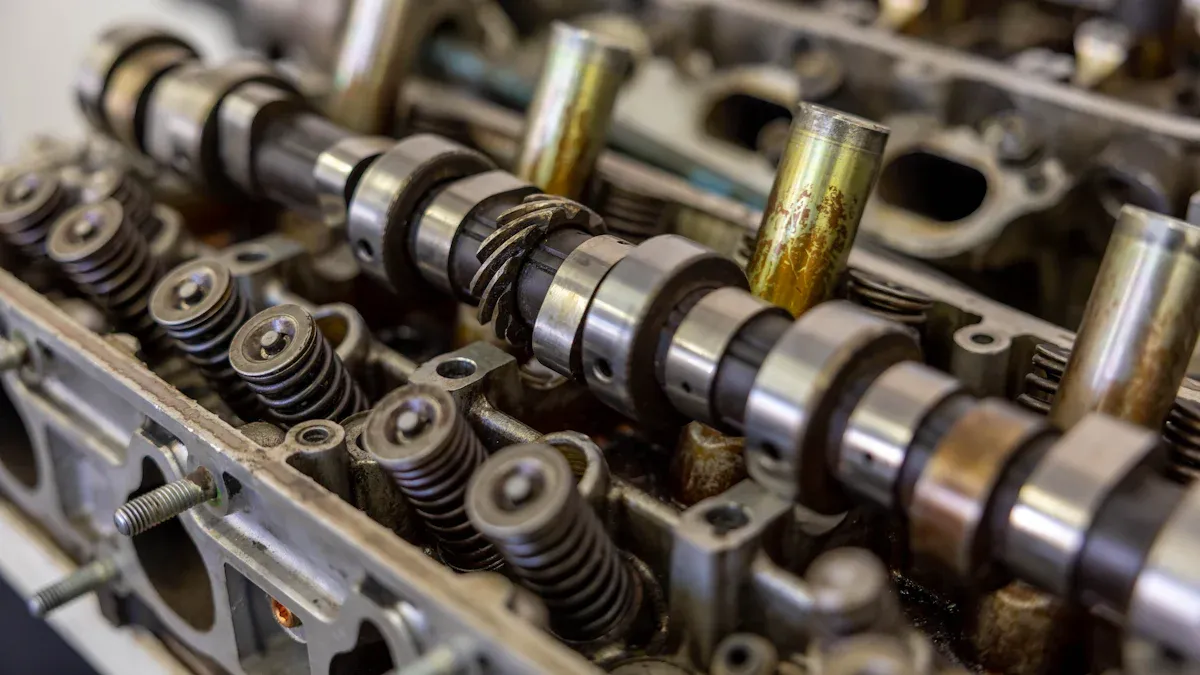
Your car engine is crucial for every driver. You can maintain your car better and detect problems early. This improves overall road safety. Modern cars are complex, but knowing core engine parts demystifies their operation. This knowledge empowers you. For example, the average car repair cost for check engine light issues was about $393 in 2021. This cost shows why understanding your car engine is important. Knowing these engine components helps you avoid costly fixes for your car. This blog introduces 15 essential car engine parts and their functions. You will learn about these key engine components. Each part plays a vital role in your car engine’s operation.
Core Car Engine Parts for Power
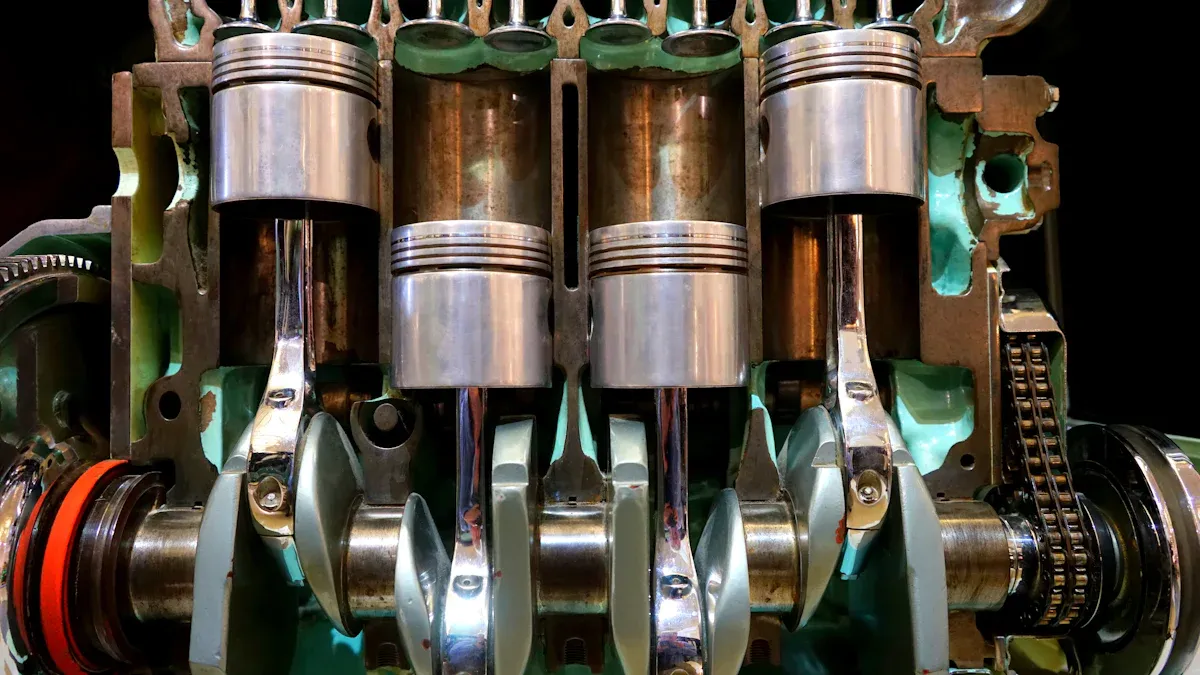
You need to understand the core car engine parts that create power. These components work together in your car engine to make your vehicle move.
Engine Block
The engine block is the main structure of your car engine. Think of it as the skeleton. It is a large, heavy casting that houses the cylinders. This central component provides the foundation for all other engine parts. It contains the cylinders where combustion happens.
Tip: Engine blocks are often made from strong materials.
Cast Iron: Many American V-8 engine blocks use cast iron. It is strong and costs less to make.
Aluminum Alloys: These blocks are much lighter, about half the weight of iron. They cost more but help reduce the car’s overall weight. Aluminum blocks usually have cast-iron liners inside the cylinders to prevent wear.
Your engine block operates within a specific temperature range. Most engines run between 190 and 220 degrees Fahrenheit. This temperature ensures efficient operation of the internal combustion engine.
Cylinder Head
The cylinder head sits on top of the engine block. It seals the top of the cylinders. This part contains the intake and exhaust valves, spark plugs, and combustion chambers. It manages the flow of air into the engine and exhaust gases out of it. The cylinder head is vital for the engine’s breathing process.
Pistons
Pistons are cylindrical components. They move up and down inside the cylinders. These parts convert the pressure from burning fuel into mechanical force. During the power stroke, an explosion pushes the piston down. This creates the power for your car.
Pistons endure extreme conditions.
Temperatures can reach over 2,000 degrees Fahrenheit during combustion.
They experience constant stress from moving thousands of times per minute.
The force from the ignited air-fuel mixture pushes the piston down with great power.
Crankshaft
The crankshaft is a large, rotating shaft. You find it at the bottom of the engine block. Connecting rods link the pistons to the crankshaft. This crucial engine part converts the linear (up-and-down) motion of the pistons into rotational motion. This rotation ultimately drives your car’s wheels. The crankshaft is central to the internal combustion engine’s power delivery.
Camshaft
The camshaft is another rotating shaft. It usually sits in the cylinder head or engine block. It has lobes, or cams, along its length. The camshaft controls the opening and closing of the engine’s valves. It synchronizes these valve movements with the piston’s motion. This ensures the internal combustion engine gets air at the right time and expels exhaust gases efficiently.
Key Engine Parts: Fuel and Air Systems
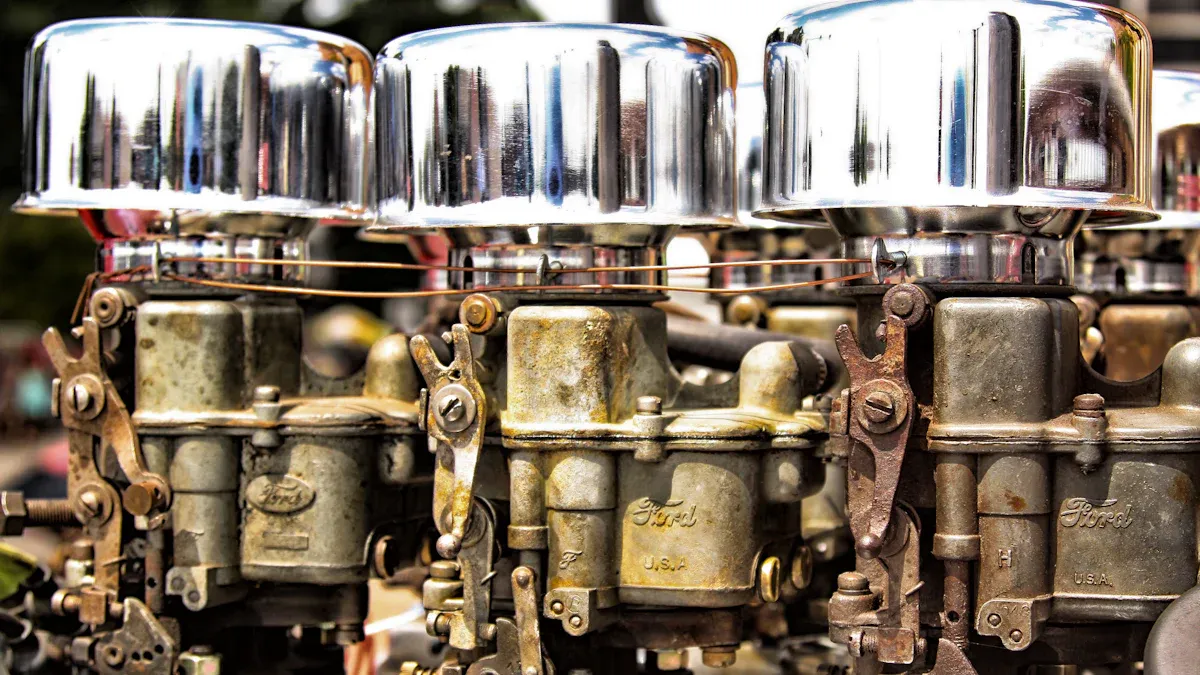
You need to understand how your car engine gets fuel and air. These systems are vital for your car to run. They ensure the engine receives the right mix for combustion.
Fuel Injectors
Fuel injectors are small, electronically controlled nozzles. They spray a fine mist of fuel into the engine’s combustion chambers or intake manifold. This precise delivery ensures efficient burning. Different types of fuel injection systems exist in modern vehicles:
Mechanical Unit Injector (MUI): This older system combines a high-pressure pump and injector. It is simple and durable. It lacks modern precision and fuel efficiency.
Distributor Pump System: This system uses a central pump. It delivers fuel to each cylinder. It offers better atomization and improved efficiency.
Common Rail Direct Injection (CRDi): This is common in modern diesel engines. It uses a high-pressure rail for precise control. This leads to better efficiency and lower emissions.
Electronic Unit Injector (EUI): Each injector has its own electronically controlled pump. This gives precise fuel delivery.
Piezoelectric Injector System: This system uses special materials for very precise control. It results in accurate fuel delivery and reduced emissions.
Air Filter
Your car’s air filter cleans the air entering the engine. It stops dirt, dust, and debris from reaching sensitive engine parts. A clean air filter ensures your car engine gets enough clean air. This helps your car run well. You should check your car’s air filter every 12,000 to 15,000 miles. Driving conditions can change this. You might need to replace it more often in dusty areas.
Intake Manifold
The intake manifold is a series of tubes. It directs the air-fuel mixture (or just air in modern systems) from the throttle body to each cylinder. A good design ensures equal air distribution. This prevents uneven fuel mixtures and misfires. A faulty intake manifold can restrict airflow. This causes power loss and rough idling.
Tip: Intake manifold designs vary.
Wet-flow manifolds: These route both air and fuel. Distributing both equally to all cylinders is hard.
Single-plane: This has one large chamber feeding all cylinders.
Dual-plane: This splits the engine into two systems. It uses smaller, longer runners for better power.
Dry-flow manifolds: These only flow air. Fuel injects closer to the cylinder head.
Individual Runner (IR) intakes: Each cylinder has its own throttle. This maximizes airflow.
Exhaust Manifold
The exhaust manifold collects exhaust gases from each cylinder. It then directs these hot gases into the exhaust system. This is one of the car engine parts that handles extreme heat. You find it bolted to the cylinder head. Materials for exhaust manifolds must withstand high temperatures.
Cast Irons: SiMo51 and Ni-resist D5S are common.
Austenitic Cast Steels: HF, A3N, HK30, and HK-Nb are used.
Ferritic Cast Steel: 1.4509 is another option. These components are crucial for your car’s performance and emissions control.
Engine Ignition and Cooling Essentials
You need specific components for your car engine to start and stay cool. These engine parts are essential for your car’s operation.
Spark Plugs
Spark plugs are small but mighty car engine parts. They sit in the cylinder head. Each spark plug creates an electrical spark. This spark ignites the compressed air-fuel mixture inside your engine’s cylinders. This ignition causes the combustion that powers your car. Without working spark plugs, your car engine cannot start.
Ignition Coils
Ignition coils work closely with spark plugs. These electrical components are crucial engine parts. An ignition coil takes the low voltage from your car’s battery. It then transforms this low voltage into the very high voltage needed by the spark plugs. This high voltage creates the powerful spark. If an ignition coil fails, your engine might misfire.
Radiator
Your engine generates a lot of heat. The radiator is a vital component that keeps your car engine from overheating. It dissipates heat from the engine coolant. Hot liquid from the engine flows into the radiator. This liquid has absorbed heat generated during combustion. The radiator has many small tubes and a honeycomb of fins. These components rapidly transfer this heat to the surrounding air.
The process of heat dissipation from engine coolant involves:
Coolant absorbs heat from the engine.
Heated coolant flows into the radiator.
Heat transfers from the coolant to the fins.
Heat then transfers from the fins to the surrounding air.
This cooling process is critical for your car engine’s health.
Water Pump
The water pump is another key component in your car’s cooling system. It circulates the coolant. This pump moves the coolant through the engine and then to the radiator. Think of it as the heart of your car’s cooling system. It ensures the coolant moves constantly. This keeps your engine at the right operating temperature. All these parts work together. They make sure your car runs smoothly and efficiently.
Vital Car Engine Support Systems
You need to know about vital car engine support systems. These components ensure your car runs smoothly. They keep your engine lubricated and powered.
Oil Pan
The oil pan is a crucial car engine part. You find it at the bottom of your engine. It acts as a reservoir for the engine oil. This oil lubricates the moving parts of your car engine. A typical factory oil pan for a passenger car generally holds between 4.5 and 5 quarts of oil. This total includes about one gallon (4 quarts) in the pan itself. It also includes an additional 0.5 to 1 quart in the oil filter. Some engines, like certain GM models, use larger pans. These can have capacities of 6 or 7 quarts. Occasionally, you might find smaller ones. The oil pan ensures your engine always has enough oil. This prevents friction and wear. It protects your engine parts.
Alternator
The alternator is another vital component. It is an electric generator in modern automobiles. Its main job is to charge your car’s battery. It also powers the car’s electrical system when the engine runs. The engine’s drive belt rotates a pulley attached to the alternator. This spinning motion powers internal components. These components generate electrical current. An alternator converts mechanical energy from the engine into AC electrical energy. It then converts this AC to DC using rectifiers. This DC voltage charges the battery. It also supplies power to the car’s electrical systems.
The rotor, spun by the drive belt, contains an electromagnet.
Voltage applied to this coil creates a magnetic field.
The stator, a stationary part, encloses the spinning rotor.
Voltage is induced in the stator coils. This happens as the rotor’s magnetic field moves through them. This process is based on electromagnetic induction.
The generated AC immediately converts to DC. This ensures your car has power for all its electrical parts. These components are essential for your car’s operation.
You now have foundational knowledge about 15 essential car engine parts and their functions. These components work together seamlessly to power your car. Pay attention to your car’s sounds and performance. These are indicators of potential issues. Regular vehicle maintenance is crucial for extending your engine’s life. Consistent oil changes are vital. Oil degrades over time, losing its effectiveness. Adhere to manufacturer recommendations, typically every 5,000 to 7,500 miles. This ensures your car engine runs smoothly and stays protected. Professional inspections keep these engine parts functioning optimally. This extends your car’s engine life.
FAQ
What is the most important part of my car’s engine?
Your car’s engine has many vital parts. No single part is “most important.” All components work together. They create power for your car. For example, the engine block provides the main structure. The pistons and crankshaft convert force into motion. The intake and exhaust valves control air flow.
💡 Tip: Think of your engine as a team. Every player is essential for success!
How do pistons and the crankshaft work together?
Pistons move up and down inside the cylinders. They push the connecting rods. These rods connect to the crankshaft. The crankshaft then turns this up-and-down motion into rotation. This rotation powers your car’s wheels. The piston movement directly drives the crankshaft.
Why are valves important in an engine?
Valves control air and exhaust flow. They open and close precisely. This allows fresh air into the engine. They also let burnt gases out. The camshaft controls these valves. Proper valve operation is crucial for your engine’s efficiency and power. Without these valves, the engine cannot breathe. You rely on these valves for combustion and exhaust.
How often should I check my engine oil?
You should check your engine oil regularly. Do this at least once a month. Refer to your car’s owner’s manual. It provides specific recommendations. Regular checks help ensure proper lubrication. This protects your engine from wear.



