Proper wheel alignment is essential for your car’s safety and optimal vehicle performance. This process ensures your wheels point in the correct direction. You generally encounter two main types: four-wheel alignment and front end alignment. The key difference in four-wheel alignment vs. front end alignment is simple: four-wheel alignment adjusts all four wheels, while front-end alignment focuses only on the front. Understanding these distinct approaches helps you make informed decisions for your car wheel alignment and overall maintenance. Good alignment improves your driving experience.
Key Takeaways
Four-wheel alignment adjusts all four wheels. Front-end alignment only adjusts the front wheels.
Many modern cars need a four-wheel alignment. This is especially true if your car has an independent rear suspension.
Look for signs like your car pulling to one side or uneven tire wear. These signs mean you need a wheel alignment.
Proper wheel alignment helps your tires last longer. It also improves your car’s safety and saves gas.
Get your wheels checked every year or after hitting a big pothole. This keeps your car driving well.
What is Front End Alignment?
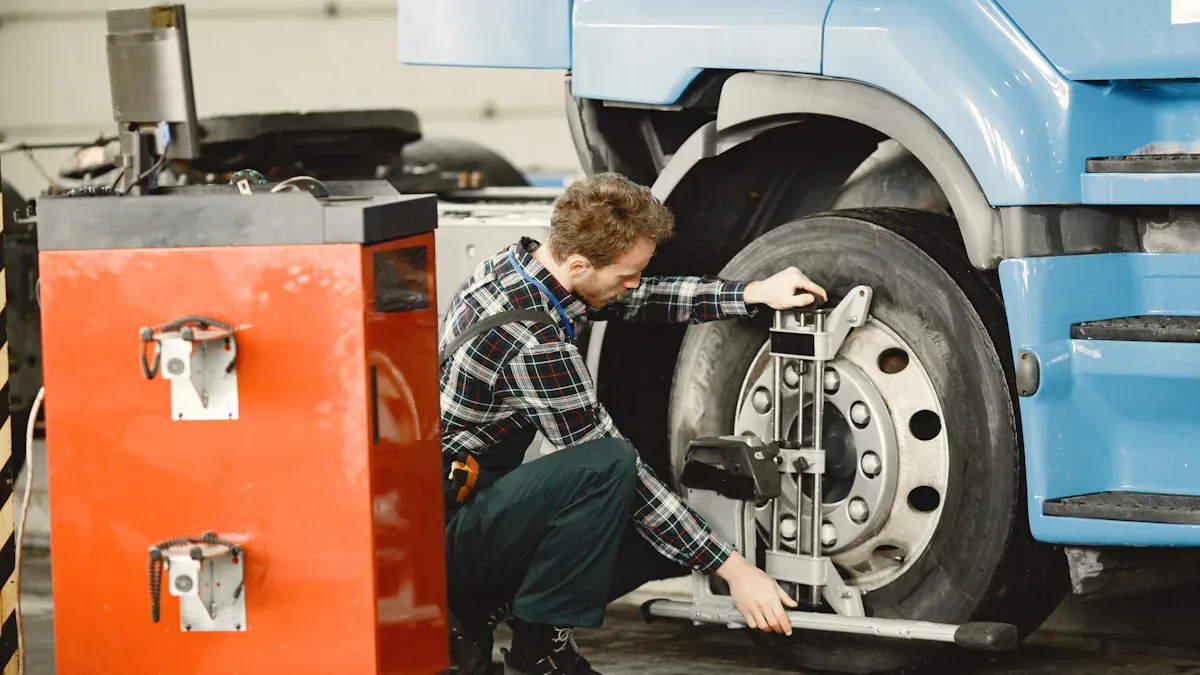
Front end alignment focuses on adjusting only the front wheels of your car. This type of alignment specifically targets the front suspension system. It ensures your front wheels point straight ahead and work together correctly. This is often considered a standard wheel alignment for many vehicles.
The Front End Alignment Process
During a front end alignment, technicians make precise adjustments to several key components. They use specialized equipment to measure and correct the angles of your front wheels.
Caster: This adjustment involves the forward or backward tilt of the steering axis. You can see this tilt when you view the wheel from the side. Correct caster helps your car maintain a straight path and improves steering stability.
Camber: This refers to the inward or outward tilt of your wheels when you look at them from the front or back. Proper camber ensures even tire wear and good handling.
Toe: This adjustment checks how much your front wheels turn inward or outward when viewed from above. Technicians adjust the outer tie rod to correct the toe. They tighten or loosen it depending on whether the wheel needs to point more inward or outward.
Manufacturers provide specific “preferred” angles for these adjustments. They also give acceptable minimum and maximum ranges. For example, the typical acceptable range for camber and caster is usually within plus or minus 1 degree of the preferred angle. Caster on most cars is often positive, set between 3 and 5 degrees. An example reading for camber might be “one degree plus or minus 30 minutes,” where 30 minutes equals half a degree. For toe, specifications often come in fractions of an inch, like “negative one quarter of an inch plus or minus one eighth of an inch.” These precise measurements ensure your front-end alignment is perfect.
Who Needs Front End Alignment?
You need a front end alignment if you notice certain signs while driving your car. These symptoms tell you that your front wheels are not properly aligned.
Vehicle Pulling or Drifting: Your car might pull to one side when you try to drive straight. This is a clear sign of misalignment.
Uneven Tire Wear: You can check your tire tread. If you feel that one side of the tire wears down faster than the other, you likely need a front-end alignment.
Crooked Steering Wheel: Your steering wheel might not be centered when you drive straight. It could be off to the left or right.
Steering Wheel Vibrations: You might feel your steering wheel vibrate, especially when you drive at highway speeds.
Squealing Tires: Your tires might squeal when you turn, even at normal speeds.
Reduced Handling: You might notice your car handles poorly during braking or turning.
If you experience any of these issues, you should get a front-end wheel alignment. Addressing these problems quickly prevents further damage and improves your driving experience. This type of alignment is a crucial part of your car’s maintenance.
What is Four-Wheel Alignment?
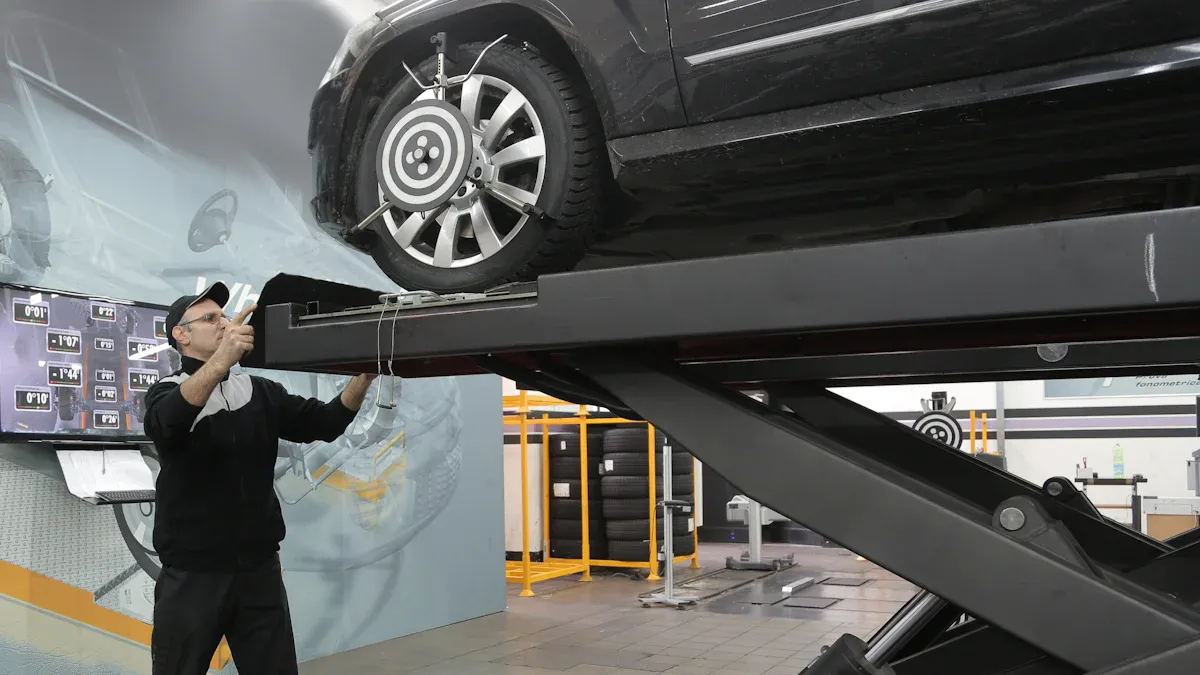
A four-wheel alignment is a comprehensive service. It adjusts all four wheels of your car. This process includes both a front-end alignment and adjustments to your rear suspension. It ensures every wheel points in the correct direction. This type of alignment is crucial for many modern vehicles. It helps your car drive straight and handle properly.
The Four-Wheel Alignment Process
During a four-wheel alignment, technicians use advanced equipment. They measure and correct the angles of all four wheels. This process is more detailed than a front-end alignment. It ensures your entire suspension system works in harmony.
You will find several key adjustments made during this process:
Camber: This angle shows the inward or outward tilt of your tires. You see this when looking at your car from the front. Correct camber helps distribute weight evenly across the tire surface. This prevents uneven wear. This angle is adjusted on all four tire and wheel assemblies.
Caster: This angle refers to the steering axis’s tilt. You see this when looking at the wheel from the side. Caster influences steering stability. It also helps your steering wheel return to a straight position after a turn. This angle is adjusted on all four tire and wheel assemblies.
Toe: This measures how much your tires point inward or outward. You see this when looking down at your wheels from above. Proper toe alignment is critical for straight-line stability. It also prevents rapid tire wear. This angle is adjusted on all four tire and wheel assemblies.
Technicians also check your steering wheel. They make sure it is centered. This ensures a comfortable and safe driving experience. A complete four-wheel alignment addresses all these factors. It gives you optimal handling and tire longevity.
Who Needs Four-Wheel Alignment?
Most modern cars benefit greatly from a four-wheel alignment. If your car has an independent rear suspension, you definitely need this service. Independent suspension allows each wheel to react independently. This provides maximum road grip. Many German performance cars, such as BMW, Porsche, Mercedes-Benz, Audi, and Volkswagen, feature independent suspension. These vehicles are designed to require a precise four-wheel alignment.
Vehicles with independent rear suspensions typically offer toe angle adjustment. Independent rear axles usually allow for adjustable rear camber. This can be done through eccentric bushings or an eccentric at the strut-to-rear upright. This means technicians can fine-tune the rear wheels. This level of detail is not possible with a simple front-end alignment.
You should consider a 4-wheel alignment if you notice any handling issues. This includes your car pulling to one side or uneven tire wear on any wheel. A proper alignment improves your car’s performance. It also extends the life of your tires.
Comparing Four-Wheel vs. Front-End Alignment
Key Differences in Adjustment
When you compare four-wheel alignment vs. front end alignment, you find clear distinctions. The primary difference lies in which wheels get adjusted. A front end alignment, also known as a two-wheel service, focuses only on your car’s front wheels. It adjusts the angles of the suspension components in the front of the vehicle. For this two-wheel service, technicians check angles like caster, camber, toe, steering axis inclination (SAI), and toe-out on turns. This type of service ensures your front tires point straight.
In contrast, a four-wheel alignment is a more comprehensive process. It adjusts all four wheels. This means technicians adjust the angles of the suspension components in all four wheels, including both front and rear. This process includes both a front-end alignment and a rear suspension adjustment. This means technicians adjust camber, toe, and caster angles on both the rear and front of the vehicle. For a four-wheel alignment, in addition to the front wheel angles, rear wheel camber and toe are also checked. Furthermore, setback and the vehicle thrust angle are added to the equation. This complete adjustment ensures every wheel works together.
Proper wheel alignment, including rear wheel adjustments, significantly improves vehicle handling, stability, and your overall driving experience. It can resolve issues like your car pulling to one side, an off-center steering wheel, wander, or vibrating. A rear-end adjustment, similar to a two-wheel alignment but for the rear, adjusts camber, toe, and caster. This ensures rear tires strike the road correctly. After a four-wheel alignment, your steering wheel is centered. Your car will not pull to the right or left. Driving becomes easier. A properly aligned vehicle drives better and maximizes tire life. This comprehensive service offers superior benefits.
Choosing the Right Alignment for Your Vehicle
Choosing the right service depends on your vehicle’s design. Most modern vehicles require this comprehensive service. A front-wheel alignment is not suggested for modern vehicles because it does not account for the rear wheel angles. Standard wheel alignments, which are comprehensive services, are suitable for most vehicles. They involve adjusting both front and rear wheels. This includes toe, caster, and camber for the front, and toe and camber for the rear.
Some vehicles, however, may only need a two-wheel alignment. This type of service only adjusts the front wheels. It is generally not recommended for modern vehicles. For vehicles without an adjustable rear suspension system, a thrust alignment is often used. With a thrust alignment, technicians adjust only the front wheels. They align them relative to the rear thrust line by measuring rear axle angles first. This applies to some large trucks with solid rear axles. These trucks may only require a two-wheel alignment.
Understanding the difference between four-wheel alignment vs. front end alignment helps you make the best choice. If your vehicle has an independent rear suspension, you will almost certainly need this comprehensive service. If you drive an older model or a specific type of truck with a solid rear axle, a two-wheel alignment might be sufficient. Always consult a qualified technician. They can determine the correct wheel alignment for your specific vehicle.
Signs You Need a Wheel Alignment
Poor alignment, whether front or rear, can lead to fast and uneven tire wear. It also causes potential handling problems. You should pay attention to several key indicators. These signs tell you your vehicle needs a wheel alignment.
Vehicle Pulling or Drifting
You might notice your car pulling to one side. This is a common sign of misalignment. Your vehicle might constantly drift to the left or right. You have to fight against the steering to keep it straight. An off-center steering wheel also indicates an issue. When you drive in a straight line, your steering wheel should be centered. If it is tilted more than 5 degrees off-center, you need a wheel alignment inspection. Look at the top of your steering wheel. If it sits beyond the 11 o’clock or 1 o’clock mark while driving straight, you likely have an alignment problem. These issues point to poor vehicle handling.
Uneven Tire Wear
Poor alignment, whether front or rear, can cause fast and uneven tire wear. You should regularly inspect your tires. Look for specific wear patterns. Tire cupping, or scalloping, shows as patches of uneven wear across the tread. This often signals misaligned tires or suspension problems. Toe wear appears as an uneven pattern between the inside and outside of the tire. This means a tire is not tracking correctly. Edge wear, excessive wear on both sides, usually points to underinflation. Center wear, excessive wear in the middle, typically comes from overinflation. Proper wheel alignment helps prevent these issues and extends the life of your tires.
Crooked Steering Wheel
A crooked steering wheel is another clear indicator. When you drive straight, your steering wheel should sit perfectly level. If it consistently appears off-center, even slightly, your car needs an alignment check. This often accompanies a pulling sensation.
Steering Wheel Vibrations
You might feel vibrations in your steering wheel. These vibrations can become more noticeable at higher speeds. This sensation suggests an issue with your wheel alignment. It can also point to unbalanced tires. Do not ignore these vibrations. They can worsen over time.
Causes of Wheel Misalignment
Your car’s wheels can lose their proper alignment for several reasons. You might encounter these issues during everyday driving. Understanding these causes helps you prevent future problems.
Road Hazards and Impacts
You often face road hazards. These can quickly knock your car’s wheels out of alignment. Potholes are a leading cause. When your wheel hits a pothole, the sudden impact can damage suspension parts. This shifts alignment angles. Speed bumps also pose a risk. Driving over them too fast can jolt the suspension. This also causes misalignment. Curbs are another common culprit. Accidentally hitting or scraping a curb can bend or damage suspension components. This leads to misalignment. Even navigating loose material like gravel can cause your tires to shift.
Worn Suspension Parts
Over time, parts of your car’s suspension system wear out. This natural wear affects your wheel alignment. Components like wishbone or control arms and their bushings can become worn. Ball joints also wear down. The axial rod with its tie rod end can loosen. Top strut bearings, part of the mounting kit, also wear out. When these parts are worn, they cannot hold the wheel angles correctly. This causes your car’s alignment to drift.
Everyday Driving Wear
Daily driving also contributes to gradual wheel misalignment. You might not notice it right away. Repeated encounters with potholes and curbs, even small ones, add up. This causes gradual changes to your alignment. Driving on rough roads or unpaved surfaces also jolts your suspension. This slowly shifts the angles. Your car’s components, like tie rods and wheel bearings, experience normal wear and tear as the vehicle ages. This wear causes your alignment to drift out of specification over time.
Benefits of Proper Wheel Alignment
Regular alignment checks are crucial for your car. They help maintain tire life. They also ensure proper vehicle handling and fuel efficiency. You gain many benefits from proper wheel alignment.
Extended Tire Lifespan
Proper wheel alignment helps your tires last longer. When your wheels are aligned correctly, your tires wear evenly. This means you do not have to replace them as often. You save money on new tires.
Improved Fuel Efficiency
You will also notice better gas mileage. A car with misaligned wheels uses more fuel. Proper alignment can improve your car’s fuel efficiency by up to 10%. This leads to significant savings on gas each year. You get more miles from every tank.
Enhanced Driving Safety
Proper wheel alignment is crucial for your safety. It ensures your car maintains optimal stability. This helps you navigate sudden turns. You can avoid obstacles more easily. You can also stop in emergencies. Misaligned wheels can cause your car to pull to one side. This is especially dangerous in wet or icy conditions. This pulling reduces your control. It increases the risk of accidents. Research shows misaligned wheels can increase stopping distance by up to 20%. This is critical for accident prevention.
Better Vehicle Handling
You will experience better handling and steering response. Correct alignment ensures optimal wheel angles. This leads to more predictable handling. You can navigate turns precisely. You can maintain straight lines efficiently. You also get better control during sudden maneuvers. Your car feels lighter and more responsive. This is one of the key benefits of car wheel alignment. Cornering becomes smoother and more predictable. Balanced camber angles maintain better tire contact. This improves grip and stability.
When to Get a Wheel Alignment
You need to know when to get a wheel alignment. Regular checks keep your car safe. They also help your car perform its best.
Recommended Alignment Frequency
You should check your wheel alignment regularly. For most regular cars, you should check it every 20,000 to 30,000 miles. This is about once a year. Some experts recommend an alignment check at least twice per year. Others suggest checking it every two years or every 10,000 miles. This general advice can vary. It depends on your specific car model. It also depends on how you drive. Regular alignment helps prevent early tire wear. It also improves your safety.
After Specific Events
Certain events require an immediate alignment. You should get an alignment service after replacing tires. Hitting a pothole or bumping a curb can also knock your wheels out of place. Any collision that causes structural damage to your car needs an alignment. The same applies to suspension damage. Driving over rough roads often causes issues. These events change your wheel angles. A full wheel alignment service corrects these changes.
Importance of Regular Checks
Neglecting regular alignment checks carries risks. Misaligned wheels cause uneven tire wear. Your tires contact the road at wrong angles. This wears down one side more than the other. You will need new tires sooner. Your car will also handle poorly. It may pull to one side. You constantly adjust the steering. This makes driving less safe. It also makes you tired. The engine works harder with misaligned wheels. This increases fuel consumption. You spend more money on gas. Misalignment also strains car parts. This causes early wear on brakes and suspension. This leads to costly repairs. Proper alignment is crucial for safety. It helps your car respond to steering and braking. Poor alignment delays these responses. This creates dangerous situations. Regular maintenance prevents these problems.
Understanding four-wheel alignment vs. front end alignment helps you make smart choices. Most modern cars need a four-wheel alignment for all wheels. Some older cars or trucks might only need a front-end alignment. This front end alignment focuses on the front wheels. Proper car wheel alignment is vital for your car’s safety, performance, and long life. Pay attention to signs of misalignment. Consult a qualified technician for diagnosis and an alignment service.
Schedule an alignment check if you suspect an issue.
Get an alignment if you are due for routine car maintenance.
This ensures your car drives safely.
FAQ
How often should you get a wheel alignment?
You should typically get a wheel alignment check every 10,000 miles or once a year. Consider checking it after replacing tires or if you hit a large pothole. Regular checks help maintain your car’s performance and tire life.
What happens if you ignore alignment issues?
Ignoring alignment issues causes problems. Your tires will wear out unevenly and much faster. Your car might pull to one side, making it harder to steer. This also reduces your fuel efficiency and makes driving less safe.
How much does it cost to get an alignment?
The cost for an alignment varies. It depends on your vehicle type and where you get the service. Generally, you can expect to pay between $60 and $150 for a standard alignment. Always ask for a quote first.
Is wheel balancing the same as wheel alignment?
No, wheel balancing and wheel alignment are different services. Wheel balancing corrects weight distribution around the tire and wheel assembly. Wheel alignment adjusts the angles of your wheels. Both are important for smooth driving.