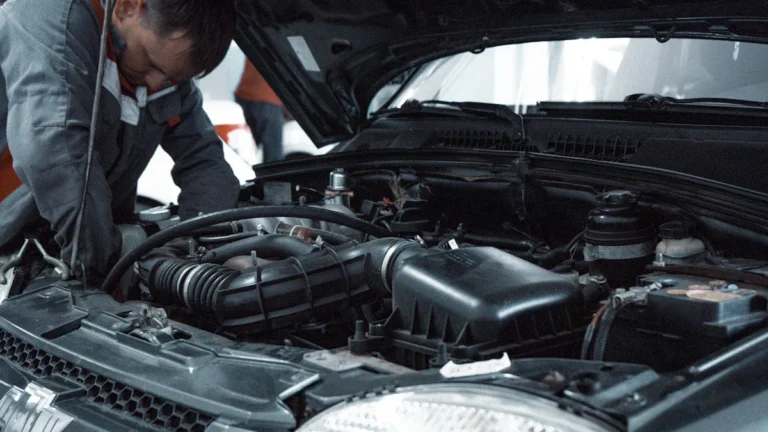
You’ll often feel bad injectors through your car initially. You could notice engine misfires, rough or shaky idle, or jerking and hesitation as you press the gas. The RPM needle can bounce around, and the engine might crank a long time or not start. You may smell fuel, see damp spots near the rail, or notice black exhaust smoke and worse gas mileage. Keep going and you’ll see how each sign points to injector trouble.
Engine Misfires and Hesitation
Although it can feel scary at the time your car starts acting up, engine misfires and hesitation are often your car’s way of asking for help, not a sign that everything is ruined.
Whenever injectors get clogged or fail, your engine doesn’t receive steady fuel. You might feel sputtering, jerking, or a pause whenever you press the gas.
You could also see the check engine light and watch the tachometer jump around as RPMs rise and fall. That’s your car saying the fuel mix isn’t right. Should this keep happening, parts inside the engine can wear out faster.
Fuel injector cleaning sometimes restores smooth power. In case damage is deeper, injector replacement options help you protect performance and feel confident driving again.
Rough or Unstable Idling
While your car sits still at a stoplight but the engine feels jumpy, shaky, or like it could stall, rough idling can make you feel tense fast.
You expect calm, but instead the whole car starts to tremble, almost like it’s nervous too.
Rough or unstable idling often points to trouble in the fuel system, especially clogged or failing injectors.
Whenever they don’t deliver the right amount of fuel, the air-fuel mix gets off balance and the engine struggles to stay steady.
You may notice:
- The steering wheel or seats vibrating at idle
- RPMs bouncing up and down on the gauge
- Stuttering or brief pauses while you sit parked
- A check engine light tied to misfires
- Improvement after proper injector cleaning
Noticeable Drop in Fuel Economy
Whenever you notice your gas tank emptying faster than usual, it can feel frustrating and a little stressful, especially in case money’s already tight.
A weak or leaking fuel injector can quietly lower your miles per gallon, so you end up paying more at the pump even though you’re driving the same routes.
In this section, you’ll see how bad injectors hurt MPG, which fuel-wasting signs to watch for, and at the point it’s time to get your car checked before costs climb higher.
Why Injectors Affect MPG
Fuel injectors play a huge role in how far you can go on a tank of gas, so at the moment they start to fail, your MPG often tells the story primarily.
As soon as you care about fuel injector maintenance and performance improvement, you’re really protecting your place in the community of smart drivers who look out for their cars.
A struggling injector throws off the air fuel mix, and your engine burns more gas just to keep up. You may notice it quietly at the outset, then at the pump.
Here’s how bad injectors steal MPG:
- Clogged tips cause a rich mixture
- Dirty injectors force the engine to add fuel
- Leaks send extra fuel into cylinders
- Misfires waste unburned fuel
- Skipped service intervals slowly drain economy
Common Fuel-Wasting Symptoms
A sudden drop in miles per gallon can feel confusing and a little stressful, especially as you’ve been driving the same way and your commute has not changed. At this time, your fuel injectors could be wasting fuel instead of using it wisely. Leaking or clogged injectors can create a rich fuel mix, so your engine burns more gas than it needs. You may observe misfires, jittery RPMs, or the fuel gauge dropping faster than usual.
| What you notice | What it could mean | How it affects you |
|---|---|---|
| Lower MPG | Rich fuel mixture | More gas station stops |
| Rough idle | Misfires from bad spray | Car feels unsettled |
| RPM surging | Erratic fuel delivery | Harder to drive smoothly |
| Dark exhaust smoke | Excess fuel burning | Wasted money and fuel |
Regular fuel injector cleaning and injector performance testing help you protect both mileage and peace of mind.
When to Seek Service
Noticing your gas tank empty much faster than it used to can feel frustrating, especially at the time you haven’t changed your driving habits.
At the time your fuel economy suddenly drops, your car is telling you something, and you don’t have to figure it out alone.
If your MPG falls from about 10 percent or more, it’s a good time to plan a visit with a trusted shop. You’re simply noticing a pattern and choosing to protect your engine and your wallet.
Here are signs it’s time to seek service:
- You track MPG and see a clear drop
- You fill up more often on the same routes
- You smell extra fuel from the exhaust
- Your normal service intervals are overdue
- You’ve never cleaned the injectors around 25,000–30,000 miles
Erratic or Fluctuating RPM Needle
One of the most confusing warning signs you could see while driving is an RPM needle that jumps around at the moment it should stay steady.
Whenever you feel the car shake a little and see RPM fluctuations, it can make you worry fast. You’re not alone in that.
Often, this jumpy needle points to dirty or clogged fuel injectors. They don’t deliver the right mix of fuel, so combustion becomes uneven.
That leads to misfires, rough idle, and a twitchy RPM gauge. Your ECU then tries to fix things through changing injector timing, which makes the needle move even more.
Simple injector cleaning and regular checks can calm the needle, protect the engine, and help you feel in control again.
Hard Starting or No-Start Condition
Whenever your engine cranks but just won’t start, weak or faulty fuel injectors can keep the cylinders from getting the fuel they need to light off.
You may notice long cranking times, a strong fuel smell, or even flooding, all of which point to injectors that aren’t opening, closing, or spraying correctly.
In the next part, you’ll see how these injector problems affect starting and how you can begin tracking down no-start issues with simple checks and smart testing.
Why Injectors Affect Starting
Even though it feels like your car should just start whenever you turn the key, the engine only wakes up provided the fuel injectors do their job at the exact right moment.
Whenever they don’t, it can leave you feeling stuck and alone in a quiet driveway. Injectors must spray the right amount of fuel, at the right time, with the right fuel pressure. Should that balance be off, the engine struggles to fire.
Here’s how that shows up for you:
- Clogged injectors starve the engine of fuel, causing long cranking.
- Sticking injectors flood cylinders, making starting harder.
- Leaking injectors lower fuel pressure and create a no-start.
- Bad wiring or solenoids stop fuel flow completely.
- Skipped injector cleaning lets small issues slowly turn into hard starts.
Diagnosing No-Start Injector Issues
A stubborn no start can feel scary, especially at the moment you hear the engine cranking but nothing actually fires. You’re not alone during that occurrence, and it often points to a fuel delivery problem.
First, listen as the engine cranks. Should it spin easily but never catches, the injectors mightn’t be spraying enough fuel for combustion. This is where simple injector testing matters. A shop can check injector pulse, wiring, and the solenoid that opens each injector.
Next, scan for trouble codes. Misfire or lean codes often reveal weak fuel delivery before anything else does.
From there, regular fuel system cleaning, fresh filters, and replacing clogged injectors help you protect your engine and avoid that silent, lonely crank.
Check Engine Light and Stored Trouble Codes
Instead of guessing why your engine feels off, your car often tries to tell you through the check engine light and stored trouble codes. As soon as that light comes on, you’re not alone or lost. Your powertrain control module is watching your fuel injectors and speaking through those trouble codes.
Here’s how it helps you protect your engine and your wallet:
- It turns on the check engine light as it senses injector misfires or circuit issues.
- It stores trouble codes like P0201 to P0208 for specific injector circuit problems.
- It lets you use an OBD II scanner so you can see what your engine is feeling.
- It gives you prompt warning, so you can fix small issues before they grow.
- It helps your trusted repair shop pinpoint failing injectors faster.
Fuel Odors and Visible Fuel Leaks
Sometimes your car speaks louder through your nose than through a warning light. Should you catch a strong gasoline smell while the engine’s running or right after parking, your fuel injectors could be leaking. A stuck-open injector lets fuel flow nonstop, so unburnt fuel slips into the engine bay or exhaust and creates that sharp odor you can’t ignore.
When you look under the hood, you might even see damp spots or shiny puddles around the injector rail. Cracked rubber seals often cause these visible leaks. They waste fuel, hurt performance, and raise fire risk.
Over time, fuel can thin your engine oil and damage internal parts. Caring about fuel injector maintenance and smart fuel leak prevention helps protect both your car and your peace of mind.
Black Smoke or Unusual Exhaust Emissions
At the time dark, thick smoke rolls out of your tailpipe, your car is trying to tell you it’s burning way too much fuel, and that often points straight at the fuel injectors.
Whenever injectors leak or don’t spray evenly, the fuel combustion process gets messy. Too much fuel enters the cylinders, doesn’t burn fully, and turns into black smoke.
You may notice this most whenever you hit the gas and see a cloud behind you. That smoke can make you feel embarrassed, but it’s also a helpful warning sign.
Here’s what that black smoke can mean for you:
- Overly rich fuel-air mixture
- Incomplete burning during fuel combustion
- Misfires and shaky, rough idling
- Higher pollution that breaks emission standards
- A clear signal to inspect injectors soon
Loss of Power and Poor Acceleration
Thick black smoke is one warning sign, but feeling your car lose power is the one that really makes your stomach drop. You press the gas, expecting a smooth surge, but instead the car feels lazy, like it’s dragging an invisible weight. That sinking feeling in your chest is real, and you’re not imagining it.
Whenever a fuel injector starts failing, it couldn’t deliver enough fuel to the cylinders. Then your engine struggles, misfires, and accelerates slowly. You might feel hesitation, jerking, or flat spots as you try to speed up, especially while passing or climbing hills.
Injector cleaning and thoughtful performance tuning can often bring that lost power back, so you can trust your car again and feel confident driving with everyone you care about.