

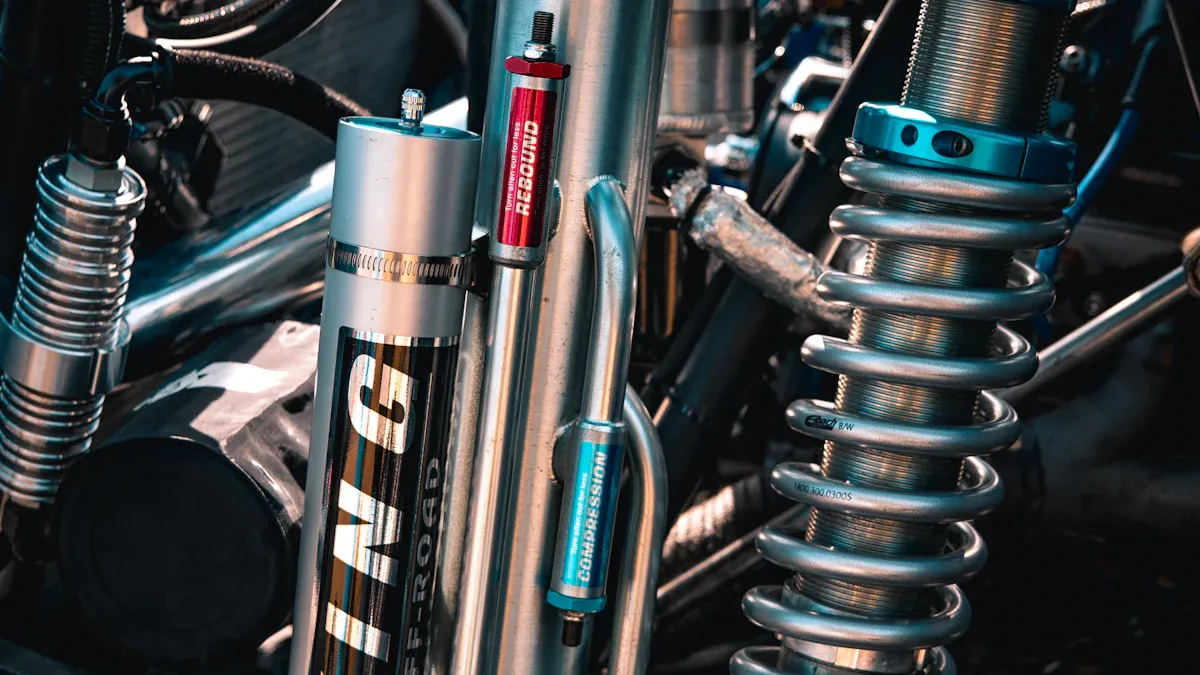
Do you ever wonder why some bumps feel jarring, or why your car leans into turns? Your car’s suspension system is the unsung hero working beneath you. It keeps your tires firmly on the road, ensuring vehicle control and enhancing your comfort.
While specific suspension failures are hard to isolate in accident statistics, mechanical issues, including suspension problems, contribute to traffic accidents. Understanding how car suspension works also helps you avoid costly repairs, which can range from $500 to $5,000. This guide will break down the 10 core mechanics of suspension for new drivers.
Key Takeaways
Your car’s suspension keeps tires on the road. It helps you control the car. It also makes your ride comfortable.
Springs, shock absorbers, and struts work together. They absorb bumps and smooth out your drive. This prevents your car from bouncing too much.
Control arms, ball joints, and bushings connect parts. They allow wheels to move. They also reduce noise and vibrations.
Sway bars limit how much your car leans in turns. Steering knuckles hold your wheels and brakes. Wheel bearings let your wheels spin freely.
Proper suspension alignment is important. It helps your car steer straight. It also makes your tires last longer.
How Car Suspension Works: Core Purpose
Tire Contact and Stability
Your car’s suspension system plays a vital role in keeping your tires firmly on the road. This constant contact is crucial for stability and control. Suspension systems, like the double wishbone or multi-link designs, precisely control wheel angles such as camber, caster, and toe. This ensures a maximized tire contact patch throughout the suspension’s movement. For instance, double wishbone systems offer excellent control over these geometries.
This is critical for maximizing grip. Independent suspension systems allow each wheel to move on its own. This is important when one wheel hits a bump. It prevents that bump from affecting the other wheels’ contact with the road. Engineers also tune suspension components like spring rates, damping settings, and anti-roll bar stiffness. This optimizes tire contact. For example, negative camber is a key engineering principle. It improves tire contact during cornering. While it might reduce straight-line grip slightly, it significantly enhances the contact patch when your car leans heavily into a turn. This ensures the tire maintains maximum grip during dynamic conditions.
Absorbing Road Imperfections
Another core purpose of your car’s suspension is to absorb road imperfections. Think about potholes, speed bumps, and uneven surfaces. Without suspension, every jolt and vibration would transfer directly to your car’s chassis and, more importantly, to you. The suspension system acts like a buffer. It allows the wheels to move up and down over obstacles. This movement isolates the main body of the car from the harshness of the road. This action prevents your car from bouncing uncontrollably. It also helps maintain predictable handling.
Enhancing Ride Comfort
By absorbing road imperfections, your car’s suspension significantly enhances your ride comfort. It smooths out the journey. You experience fewer jarring jolts and vibrations. This makes long drives much more pleasant. A well-functioning suspension system creates a more stable and comfortable cabin environment. It reduces fatigue for you and your passengers. This is how car suspension works to make your driving experience much more enjoyable and less stressful.
Springs: The First Mechanic
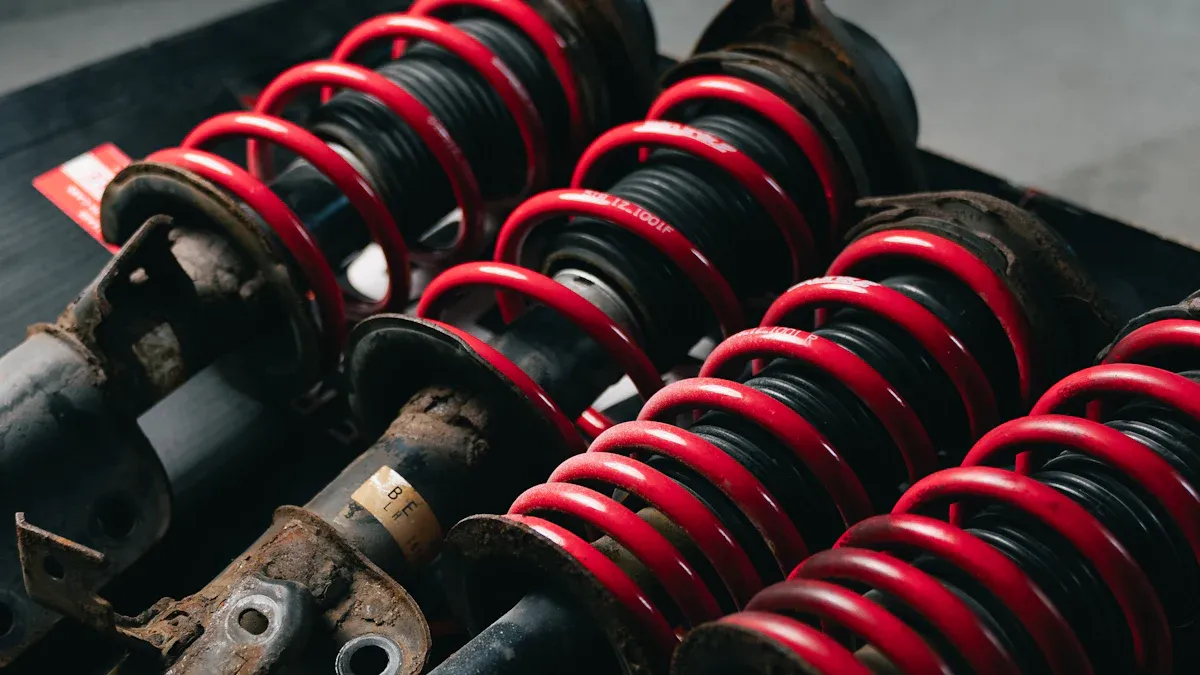
Springs are the first part of your suspension system to react to the road. They allow your wheels to move independently. This absorbs the initial shock from bumps. They keep your vehicle balanced for better handling.
Coil Springs
Coil springs look like giant Slinkys. They compress and expand to absorb impacts from the road. This action helps to smooth out your ride. Manufacturers use various materials to make these springs. High carbon spring wire is common for many uses. Stainless steel wire resists corrosion in almost any environment.
Carbon and alloy wire are general-purpose spring materials. Hard drawn wire is known for its strength. You might find high-temperature alloy wire in specific applications. Alloy steel wire helps achieve specific characteristics like stiffness. Non-ferrous alloy wire, like copper or brass, can be non-magnetic. Titanium is used for heavy-duty springs. Even plastics are now used in spring manufacturing.
Leaf Springs
Leaf springs are long, flat pieces of metal stacked together. They look like a bow. They are very strong and can handle heavy loads. You often see them in trucks and heavy commercial vehicles. They provide strength and durability for these vehicles. Trailers also widely use leaf springs. They handle varying loads reliably. Many off-road vehicles and SUVs use leaf springs for their ruggedness. They perform well on uneven terrain. Railway carriages also employ them to cushion loads.
Torsion Bars
Torsion bars are long metal rods. They twist to absorb shock from the road. They offer several advantages over coil springs in some vehicles. They are space-efficient. This means they take up less room. This allows for better placement of other suspension parts. You can also easily adjust your car’s ride height with torsion bars. This is helpful for towing or off-road adventures. Adjusting them can extend their lifespan. This maintains proper ride height and prevents alignment issues. They are durable and often used in heavier vehicles like trucks.
Shock Absorbers: Damping Motion
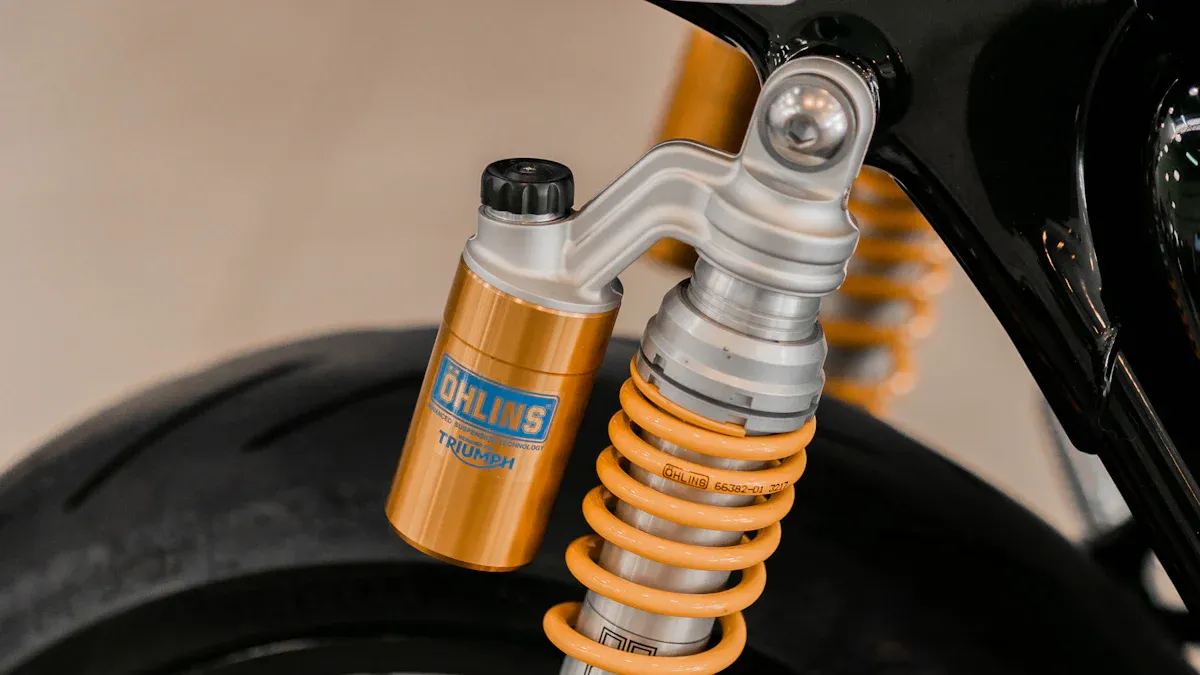
After springs absorb the initial impact, shock absorbers take over. They are crucial components in your car’s suspension system. You will find them working alongside the springs. They control the movement of your car’s body and wheels.
Damping Oscillations
Imagine hitting a bump. Your springs compress and then expand. Without shock absorbers, your car would bounce up and down many times. This uncontrolled bouncing is called oscillation. Shock absorbers stop this motion.
They “damp” these oscillations. Inside a shock absorber, fluid moves through small valves. This movement creates resistance. This resistance converts the kinetic energy of the bouncing motion into heat. The heat then dissipates. This process quickly settles your car after a bump. You experience a much smoother ride.
Controlling Spring Movement
Shock absorbers work directly with your springs. Springs absorb the energy from road imperfections. Shock absorbers then control how fast those springs compress and rebound. They prevent the springs from over-compressing or over-extending. This control keeps your tires firmly on the road surface. When your tires maintain constant contact, you have better steering and braking. This also improves your car’s stability. You feel more in control, especially when driving over uneven roads or around corners. They ensure a smooth and stable transition after any road disturbance.
Struts: Integrated Support
Struts are a common type of suspension component. They combine two key parts into one unit. This makes them very efficient.
Spring and Shock Integration
Struts integrate your car’s spring and shock absorber. The coil spring typically sits around the shock absorber. This creates a single, compact assembly. This design saves space. It also simplifies the suspension system. You often find struts in the front suspension of many cars. This integration helps your car handle bumps smoothly. It also keeps your tires on the road.
Vehicle Structural Support
Struts do more than just absorb bumps. They also provide structural support for your vehicle. A common type is the MacPherson strut. This design uses an upper mount with a bearing for pivot. It includes a shock absorber and a coil spring. The upper strut mount attaches directly to your car’s body. The lower end attaches to the steering knuckle. The knuckle then connects to a lower control arm. This setup means the strut is a key part of your car’s structure. It supports the vehicle’s weight. It also helps maintain wheel alignment.
Many vehicles use MacPherson struts. You can find them in a wide range of cars. This includes the Porsche 911 and the Honda Civic Type-R. This design is popular because it is simple, effective, and costs less to manufacture. While other systems, like double wishbone suspension, offer more adjustability, MacPherson struts provide good steering stability and compact packaging. This is how car suspension works with integrated components to give you a stable ride.
Control Arms: Wheel Connection
Control arms are vital links in your car’s suspension system. They connect the wheel assembly to the car’s frame. Think of them as strong, movable levers. They allow your wheels to move up and down. At the same time, they keep your wheels in the correct position relative to your car.
Chassis Connection
Control arms form the crucial connection between your wheel and your car’s chassis. They pivot at both ends. One end attaches to the wheel hub or steering knuckle. The other end connects to the car’s frame. You will find control arms in various suspension setups.
For example, in MacPherson strut independent front suspensions, they often run perpendicular to your car’s axis. People call these track control arms. In double wishbone designs, both upper and lower control arms work together. They precisely position the wheel. Torsion bar suspension systems also use control arms. The torsion bar’s outboard end connects to the control arm’s inboard bearing. This helps transfer suspension loads.
Vertical Wheel Movement
Control arms allow your wheels to move vertically. This means your wheels can go up and down over bumps. They do this while keeping the tire flat on the road. This movement is essential for a smooth ride and good handling. Control arms must be very strong. Manufacturers use different materials to build them. Steel offers high strength and is cost-effective.
Aluminum alloy is lighter and resists corrosion well. Forged aluminum provides even greater strength with very little weight. Cast iron is very strong for heavy-duty vehicles. Composites are also used for their light weight and high corrosion resistance. For ultimate durability, some control arms use DOM tubing. This steel tubing eliminates weak points found in welded tubing. Chromoly steel alloys offer superior tensile strength and fatigue resistance. Billet aluminum components are also lighter and offer precise fitment. These materials ensure your control arms can handle constant stress. They keep your wheels moving correctly.
Ball Joints: Pivoting Action
Ball joints are critical components in your car’s suspension system. They act like flexible hinges. These joints connect your control arms to the steering knuckles. This allows for movement in multiple directions.
Steering Pivots
Ball joints make steering possible. They allow your wheels to turn left and right. Think of them as the pivot points for your steering. Tie rod end ball joints are essential for this. They transfer your steering input directly to the knuckle when you turn the wheel. This ensures your car responds precisely to your commands. Some ball joints, called guiding type suspension ball joints, primarily transmit forces that push or pull the wheel. They handle longitudinal and lateral forces. They carry only a small amount of the vertical weight.
Wheel Articulation
Ball joints also allow your wheels to move up and down. This movement is called articulation. It helps your car absorb bumps and keep your tires on the road. You find different types of ball joints depending on their job.
Follower Ball Joints: These do not carry the vehicle’s weight directly, except during braking and steering. They help maintain precise wheel position. You often find them in MacPherson strut systems or as upper ball joints on SLA (Short-Long Arm) suspensions.
Load-Bearing Ball Joints: These joints carry the vehicle’s weight. They can be tension-loaded, meaning force pulls on them, or compression-loaded, where force pushes on them. You typically see these as lower ball joints on SLA systems.
When ball joints wear out, you might notice some problems. You could hear loud clunking or knocking noises from the suspension. Your steering might feel loose or dysfunctional, making it hard to drive straight. This is disrupted steering control. Worn ball joints also cause rapid tire degradation. They lead to uneven tire wear because the wheel-to-road contact becomes inconsistent. This reduces grip and affects braking. In severe cases, completely damaged ball joints can cause a wheel to separate while you are driving. This is extremely dangerous. Always pay attention to these warning signs to keep your car safe.
Bushings: Noise and Vibration Control
Bushings are small but mighty parts in your car’s suspension system. They act as cushions between metal components. You find them at mounting points where parts connect. These rubber or polyurethane pieces absorb impacts and vibrations. They make your ride much quieter and smoother.
Noise and Vibration Reduction
Bushings work hard to reduce noise and vibration. They provide compliance, which means they can flex and absorb energy. This action stops harsh road impacts from reaching your car’s cabin. Most factory vehicles use rubber bushings. Rubber offers great flexibility. It excels at isolating high-frequency road noise and harshness. This directly leads to a quieter ride. Studies show a 15% increase in customer satisfaction in premium cars due to better vibration isolation. This means effective bushing designs make a real difference in cabin noise levels. Custom urethane bushings also lower noise by absorbing vibrations more effectively than traditional rubber.
Cushioning Components
Bushings cushion the metal parts of your suspension. This prevents metal-on-metal contact. Most suspension bushes have a metal outer part, often steel or aluminum. The inner part uses silicone or nitrile rubber. This rubber must resist wear, extreme temperatures, and contaminants. Different grades of bushes exist based on the rubber’s softness or hardness, called ‘shore hardness’. A soft bush reduces noise. A hard bush improves handling but can increase noise.
You can also find bushings made from high-grade polyurethane elastomers. These materials, like RevPoly™, are very stretchy. Manufacturers can tune them for different hardness levels. RevPoly™ is elastic and absorbs trauma without permanent damage. It resists water, oil, gasoline, and most solvents. It is also lighter than aluminum and rubber.
Here is how common bushing types compare:
Property | Rubber Bushings | Urethane / Polyurethane Bushings |
|---|---|---|
Flexibility | More flexible, ideal for comfort | Stiffer, provides better control |
Vibration & Noise Isolation | Very good, superior NVH reduction | Moderate, more road feel and noise |
Sway Bars: Anti-Roll Stability
Limiting Body Roll
Sway bars are also known as stabilizer bars or anti-roll bars. They are simple devices. They bolt to your car’s chassis. They run across the axle lines. They connect to each side of your suspension. This design links the suspension on one side of your vehicle to the other. It controls body roll. It still allows each wheel to move on its own. This is how car suspension works to keep your car stable. Sway bars function by twisting. They do not compress. Their stiffness determines how much they limit body roll.
When you turn, your car leans. The outside suspension compresses. The inside suspension extends. The sway bar’s lever arm on the outside twists upward. The lever on the opposite side twists downward. The bar resists this twisting. This resistance is called torsional rigidity. It limits body roll. A stiffer anti-sway bar transfers more force across the chassis. This helps keep the inside suspension loaded. It maintains tire contact.
This redirection of load reduces body roll. It helps keep load on the inside tires during cornering. A larger diameter bar significantly increases this twisting resistance. For example, a 17.5mm bar is much stiffer than a 15mm bar. However, a bar that is too stiff can reduce the independent action of each wheel. This might cause the inside tire to lift in slower, sharp corners.
Opposite Wheel Connection
An anti-roll bar is a U-shaped metal bar. It links both wheels on the same axle to the chassis. Its ends connect to the suspension. Its center connects to your car’s body. When both wheels move together, the bar simply rotates on its central mounts. When the wheels move relative to each other, the bar twists. Each end of the bar connects to an end link. This link connects to a point near a wheel or axle. This setup transfers forces from the heavily loaded side of the suspension to the opposite side.
Sway bars are not just bent metal. They are a system of parts. The main part is a spring-steel rod. It can be hollow or solid. The middle section attaches to the chassis using bushings. These bushings allow the bar to pivot. Rubber bushings absorb noise. Stiffer polyurethane bushings offer a sharper response.
End links connect the bar’s ends to a moving part of the suspension. This could be your lower control arms. When one wheel moves up or down, the end link transfers this motion to the sway bar. This causes it to twist. You can find hollow sway bars. They can be lighter than solid ones. A 1 3/8-inch hollow bar can be 6% stiffer and 43% lighter than a 1 1/4-inch solid bar. This is because the material in the center of a solid bar does little to resist twisting. Hollow bars put the material where it works best.
Steering Knuckles: Wheel Mount
Steering knuckles are crucial components in your car’s suspension system. They serve as the central hub where many vital parts connect. Think of them as the strong, multi-functional brackets that hold everything together at each wheel.
Wheel and Brake Mount
Your steering knuckle provides the mounting point for your wheel hub and brake assembly. This means it directly supports the wheel and allows it to rotate. It also holds the brake caliper and rotor, which are essential for stopping your car. Manufacturers use various materials and processes to create these strong parts. For example, you might find knuckles made from:
Forged Steel: This offers maximum strength, making it ideal for heavy-duty vehicles like Silverado pickups. It is very heavy and needs a coating to prevent corrosion.
Ductile Cast Iron: This provides high structural strength and is more affordable than forged steel. It resists stress and deformation well, making it suitable for sedans and midsize cars.
Aluminum Alloys: These significantly reduce weight, sometimes up to 40% lighter than steel. This improves fuel efficiency and handling. Modern casting and forging technologies have made them strong enough for lighter vehicles, EVs, and performance cars. However, they can be more vulnerable to fatigue under extreme loads.
The manufacturing process for knuckles involves several steps:
Design Phase: Engineers ensure the knuckle meets vehicle standards for dimensions and material.
Material Selection: High-quality raw materials are chosen for sturdiness.
Casting: Molten metal forms the desired shape, often using sand casting for complex shapes or die casting for precision.
Trimming and Finishing: Excess material is removed, and a protective coating is applied.
Machining: Drilling and boring create tight tolerances for perfect alignment with the wheel hub and suspension.
Quality Control: The final product is inspected for defects to meet specifications.
Steering Input Pivot
The steering knuckle also acts as a pivot point for your steering. It connects to the control arms and ball joints, allowing the wheel to turn when you steer. This connection is vital for precise handling. Engineers design knuckles to withstand significant forces from braking, steering, and road impacts. They ensure sufficient stiffness and durability. They calculate the strength under vehicle service loads and examine durability. This verifies that strain or deformation remains within allowable values. If stiffness is reduced, it can lead to excessive deformation, negatively affecting your ride and handling. Material selection, like using aluminum for lightweight design, and structural optimization techniques are critical. These considerations ensure the knuckle can handle various loading conditions, such as hitting a pothole or cornering hard, without compromising your safety or control.
Wheel Bearings: Smooth Rotation
Wheel bearings are small but mighty parts. They let your wheels spin freely. They also support your car’s weight. You find them inside your wheel hubs. They are essential for a smooth and safe ride.
Smooth Wheel Rotation
Wheel bearings allow your wheels to rotate with very little friction. They contain small balls or rollers. These parts roll between two rings. This design lets the wheel turn smoothly around the axle. Without good bearings, your wheels would grind. They would create a lot of heat. This smooth rotation is key for good fuel economy. It also makes your car easy to drive. When bearings work well, you experience a quiet ride. You feel less vibration.
Vehicle Weight Support
Wheel bearings do more than just allow rotation. They also support the entire weight of your vehicle. They handle forces from all directions. This includes bumps, turns, and braking. Because they carry so much load, wheel bearings can wear out. Several things can cause them to fail:
Improper lubrication, either too little or too much.
Damage to the cage that holds the balls or rollers.
Dirt, sand, or water getting inside, causing contamination and corrosion.
Electric current passing through the bearing.
Poor fitting, like an oversized or undersized shaft.
Fatigue, which means the running surfaces crack or break.
Brinelling, which are permanent indentations from heavy loads or vibrations.
Misalignment from bent shafts or non-square nuts.
Issues with seals, like inadequate sealing or damage.
Too much load on the bearing.
Improper handling or storage, exposing them to dampness or dust.
Not enough internal clearance, leading to too much heat.
You can help prevent these problems. Always mount and align bearings correctly. Use the right tools. Flush and clean them with lubricant after installation. Lubricate them according to your car’s guidelines. Use the correct type and amount of lubricant. Avoid mixing lubricants. Prevent operational stress by ensuring appropriate load. Isolate vibrations. Consider environmental influences. Use proper sealing against dust, dirt, or water. Taking these steps helps your wheel bearings last longer. They keep your ride smooth and safe.
Suspension Geometry: Alignment Basics
Suspension geometry refers to the angles and positions of your car’s wheels and suspension components. These precise settings are crucial for how your car handles, steers, and wears its tires. Proper alignment ensures your car drives straight and responds predictably.
Caster Angle
Caster angle refers to the forward or backward tilt of your steering axis. Imagine a line through your steering pivot points. This line slopes either towards the front or the rear of your car. This design helps your steering feel stable. It gives your steering a self-centering effect. This means your steering wheel wants to return to the straight-ahead position after a turn. This improves your vehicle’s control. It also enhances directional stability. You will not need to constantly adjust your steering wheel.
Positive caster means the steering pivot line slopes towards the rear of your vehicle. This increases tire lean when you turn. It helps the tire return to an upright position when you drive straight. This is generally good for stability. Negative caster means the steering pivot line slopes towards the front. This can reduce steering effort. However, your car might drift when you drive straight. Racing cars often use large caster angles, sometimes over 7 degrees. This improves grip during cornering. However, too much caster can make steering heavier. You might need power steering to manage this effect.
Camber Angle
Camber angle describes the vertical tilt of your wheels when you look at your car from the front. If the top of your wheels tilt inward, you have negative camber. If they tilt outward, you have positive camber. Incorrect camber causes uneven tire wear. Your tires will wear on only one edge. Negative camber typically wears the inside edge of your tire. Positive camber wears the outside edge.
Excessive amounts of either negative or positive camber lead to poor handling. They also create safety concerns. A small amount of negative camber can improve grip when you corner hard. A small amount of positive camber can help with faster acceleration. However, it might reduce your car’s maneuverability. Proper camber settings ensure your tires make full contact with the road. This maximizes grip and extends tire life.
Toe Angle
Toe angle refers to how much your wheels turn inward or outward when you look down at them from above. If the front of your wheels point slightly inward, you have “toe-in.” If they point slightly outward, you have “toe-out.”
Toe-in helps your car track straight. It improves stability. However, too much toe-in can cause your tires to scrub. This leads to wear on the outer edges. Toe-out makes your car more responsive to steering inputs. It helps with turning. But too much toe-out can make your car feel unstable. It can also cause wear on the inner edges of your tires. Correct toe settings are crucial for straight-line stability. They also prevent premature tire wear.
Types of Suspension Systems
You will find different ways cars manage their suspension. These systems fall into two main categories: dependent and independent. Each type has its own strengths and weaknesses.
Dependent Systems
In a dependent suspension system, the wheels on the same axle connect rigidly. This means when one wheel hits a bump, the other wheel on that axle also reacts. This design is quite simple. It often leads to a lighter overall weight for the suspension parts. You will find these systems are very strong. They handle heavy loads well.
This makes them popular for trucks and off-road vehicles. They are also easier to maintain. However, dependent systems offer less comfort. They also provide poorer handling stability, especially on uneven roads. The limited wheel articulation means one wheel’s movement affects the other. This can reduce traction on rough terrain. It can also cause uneven tire wear.
Independent Systems
Independent suspension systems allow each wheel to move on its own. When one wheel hits a bump, the other wheel on the same axle does not directly react. This design offers much better ride comfort and handling.
MacPherson Strut: This system is common. It combines the spring and shock absorber into one unit. It is cost-effective and simple to build. It saves space, which is good for smaller cars. However, it offers limited adjustment.
Multi-link: This system uses several arms to connect the wheel to the car’s frame. It gives you superior handling and comfort. It keeps your tires in better contact with the road. This system is more complex and costs more to make.
Double Wishbone: This system uses two A-shaped arms for each wheel. It provides precise control over wheel movement. You get excellent handling and ride comfort. Like multi-link, it is also more complex and expensive.
Front vs. Rear Suspension
Cars often use different suspension types for the front and rear axles. Your front suspension usually handles steering and most braking forces. It often uses independent systems like MacPherson struts or double wishbones for better steering precision. The rear suspension supports the car’s weight and propulsion. It can be independent for comfort, or dependent for heavy loads. For example, many trucks use dependent leaf spring systems in the rear for their strength.
Impact on Driving Experience
Your car’s suspension system profoundly affects how you feel behind the wheel. It changes everything from how comfortable your daily commute is to how confidently you take a sharp turn. Understanding these impacts helps you appreciate this vital system.
Comfort and Smoothness
A well-tuned suspension system makes your ride incredibly smooth. It absorbs bumps and dips in the road before they reach you. This means you feel fewer jolts and vibrations. Engineers use specific measurements to ensure your comfort. They look at acceleration and jerk, which are fundamental parameters for evaluating driving comfort. They calculate the Root Mean Square Value of Acceleration (CA) and the Root Mean Square Value of Jerk (CJ) to quantify how smooth a ride is. Experts also use a Driving Comfort Evaluation Score (DCES) and the SAE’s Combined Jerk Metric (AJV) to combine objective measurements with how people actually feel. Other metrics like Equivalent Acceleration and Motion Sickness Dose Value (MSDV) also help engineers design systems that reduce fatigue and motion sickness. This careful design ensures you enjoy a pleasant journey, even on rough roads.
Responsiveness and Control
Beyond comfort, your suspension system dictates how your car responds to your commands. A good suspension keeps your tires firmly on the road. This gives you better grip for steering and braking. When you turn the steering wheel, a responsive suspension allows your car to change direction quickly and precisely.
It minimizes body roll, which is the leaning sensation you feel in corners. This stability makes you feel more confident and in control, especially during sudden maneuvers or when driving at higher speeds. You can steer accurately and maintain your intended path. This direct connection between your input and the car’s movement makes driving safer and more enjoyable.
You now understand the ten core mechanics: springs, shocks, struts, control arms, ball joints, bushings, sway bars, steering knuckles, wheel bearings, and suspension geometry. Each part plays a vital role in how car suspension works. A well-functioning system gives you a safer, more comfortable, and controlled driving experience. Pay attention to your car’s suspension. Regular service extends its lifespan and reduces repair costs by over 20%. It also improves fuel efficiency by 15%. Seek professional help for any issues. Understanding your vehicle empowers you on the road.



