

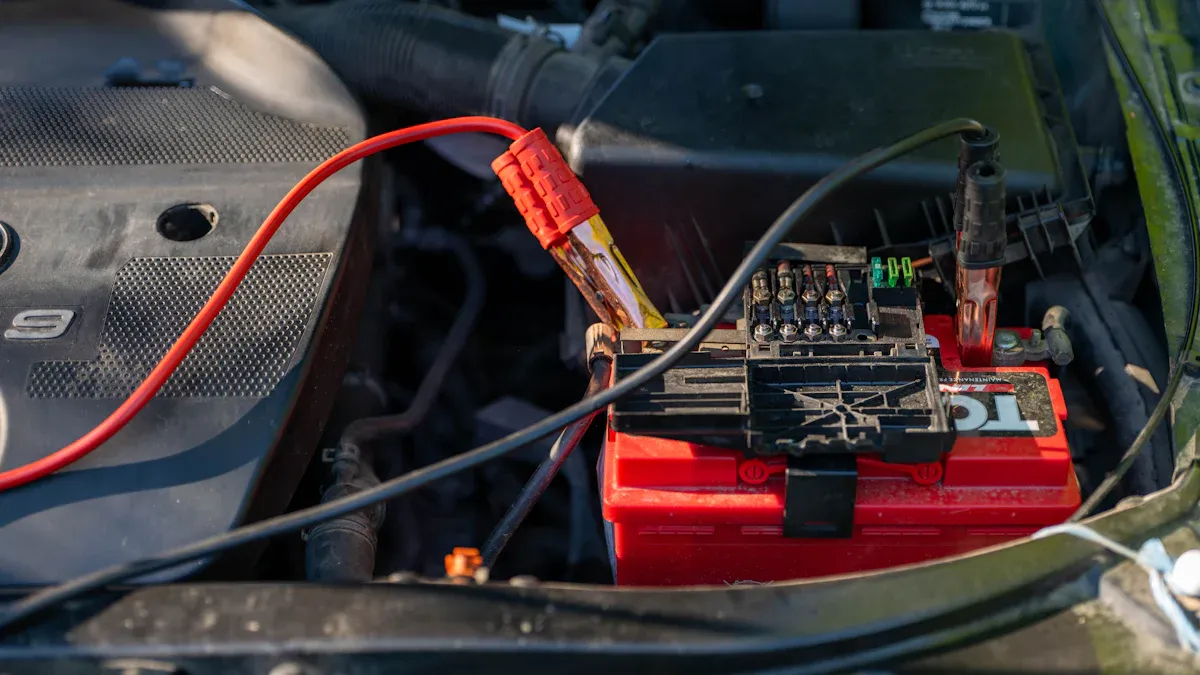
For petrol and diesel vehicles in 2025, you can generally expect your car battery to last 3-5 years. You might wonder how long does a car battery last in modern cars. Electric car batteries, however, boast a significantly longer expected lifespan. Many electric car batteries last 8-15 years, and some can even reach 20 years or 200,000 miles. Government mandates an 8-year or 100,000-mile warranty for EV battery life. California requires 10 years or 150,000 miles. Studies show an average battery capacity loss of 2.3% per year, and some research suggests a car battery could last around 280,000 miles. This blog explores factors influencing your car battery lifespan and how to extend it, considering technological advancements in your vehicle’s battery.
Key Takeaways
Gas car batteries usually last 3 to 5 years. Electric car batteries last much longer, often 8 to 15 years.
Hot weather, short trips, and leaving your car unused can make your battery die faster.
You can make your battery last longer. Check it often, charge it correctly, and drive your car regularly.
Watch for signs like slow starting or dim lights. These mean your battery might need replacing.
Factors Affecting Car Battery Lifespan
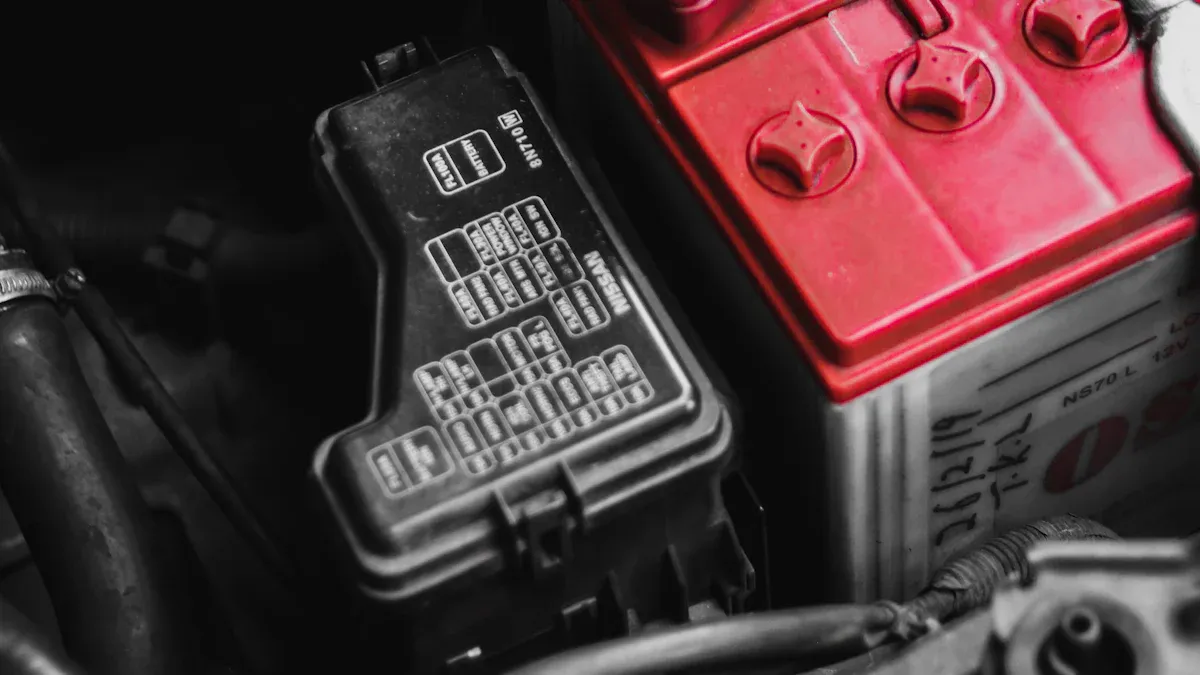
Many elements influence how long your car battery lasts in 2025. Understanding these factors helps you make informed choices.
Battery Type and Technology
The kind of battery your car uses plays a big role in its lifespan. Different battery types offer varying levels of durability and power.
Absorbent Glass Mat (AGM) batteries: These batteries use a fiberglass mat to absorb electrolyte. They are spill-proof and rugged. You can expect AGM batteries to last 5 to 7 years. Top-tier models might even reach 10 years.
Enhanced Flooded Batteries (EFB): These are wet-filled batteries, similar to standard flooded batteries. EFB batteries offer increased durability, greater energy storage, and a longer lifespan. They typically last 3 to 5 years.
A standard flooded battery is a lead-acid battery. It starts car engines and powers standard accessories.
Technological advancements contribute to longer battery life. Modern vehicles have improved components that reduce stress on the car battery.
Improved Alternators: Newer alternators charge batteries faster and more evenly. This reduces the time your battery spends in a low state of charge. It also minimizes stress from fluctuating power.
Efficient Starter Motors: Modern starter motors need less power to turn over the engine. This is especially true during cold starts. It reduces the demand on the car battery during each ignition cycle.
Synergy Effect: When high-quality alternators combine with efficient starters and optimized wiring, your battery experiences less strenuous usage. This happens during charge and discharge cycles. It extends the battery lifespan.
Modern cars also use less power for their systems.
LED and HID Lighting: These modern lighting systems use up to 85% less energy than old incandescent bulbs. This significantly reduces battery drain during regular driving.
Optimized Onboard Systems: New cars feature efficient systems. Climate control cycles compressors more effectively. Infotainment displays dim or sleep when not in use. Power windows and locks have optimized motors. Fuel injection systems need minimal electrical input. These systems collectively reduce the electrical load on the battery.
Sophisticated battery management systems (BMS) also protect your car battery.
Sophisticated Battery Management Systems (BMS): These systems act as a ‘sentinel.’ They constantly monitor voltage, amperage, charge state, temperature, and overall health. They make precise adjustments. This prevents damage and optimizes service life.
Smart Charging Features: Modern vehicles include smart charging. This optimizes charging during smooth driving conditions. It uses regenerative charging during braking or deceleration to recover wasted energy. This ensures the battery receives only the necessary charge when needed.
Overcharge Protection: Newer systems charge with precision. They halt current flow once the battery is fully charged. This prevents internal overheating and wear caused by older charging mechanisms.
Deep Discharge Prevention: Current management systems actively prevent batteries from draining too low. They monitor power draw. They alert users before critical levels are reached. This guards against damage to internal battery materials.
A new polymer coating also helps. This plastic coating is 10,000 times thinner than a strand of hair. It can be precisely applied to battery components like electrodes or mineral particles. This polymer is electrically conductive. It ‘shrink wraps’ electrode particles. This keeps them morphologically and electrically intact. This significantly enhances battery life. This technology is also cost-effective. It adds only 1%-3% to the total cost of a battery cell when scaled up. This helps your car battery last longer.
Driving Habits and Usage
Your driving habits greatly influence how long your car battery lasts.
Frequent short trips lead to premature battery failure. This happens due to constant power drain and insufficient recharging time. If your car sits idle for extended periods after short trips, the battery slowly discharges. This weakens it. A long drive can fully recharge the battery. This counteracts these effects.
Starting the engine requires significant power. The battery does not get enough time to fully recharge from the alternator during short trips.
Cold weather makes this issue worse. Engine starts demand even more power in the cold.
Modern vehicles with Auto Start-Stop features can show a battery issue if the feature is not engaging. This suggests insufficient charge due to short trips.
Long periods of vehicle inactivity also weaken a car battery over time. Infrequent driving is a key factor that shortens battery life.
Climate and Temperature
Extreme temperatures significantly affect your car battery’s lifespan and battery performance.
Temperature (°C) | Effect on Battery Performance & Longevity |
|---|---|
+20 | Optimal performance; chemical reactions are at their ideal rate. |
> +20 | Accelerates aging, increases self-discharge, and causes damage like grid corrosion. Chemical reactivity doubles for every 10°C increase. |
< +20 | Slows down chemical reactions, reducing performance. |
+10 | Chemical reaction drops to 50% of optimal. |
0 (Freezing Point) | Chemical reaction drops to 25% of optimal. |
Hot temperatures significantly shorten battery lifespan. They increase the speed of chemical reactions within the battery. This leads to faster degradation. Cold weather slows chemical reactions. This can prolong battery life by reducing degradation. However, it may expose existing battery issues. High temperatures also increase the battery’s self-discharge rate. If a battery is left at a low state of charge in hot conditions, it can suffer irreversible damage. This includes sulfation, paste shedding, and buckling.
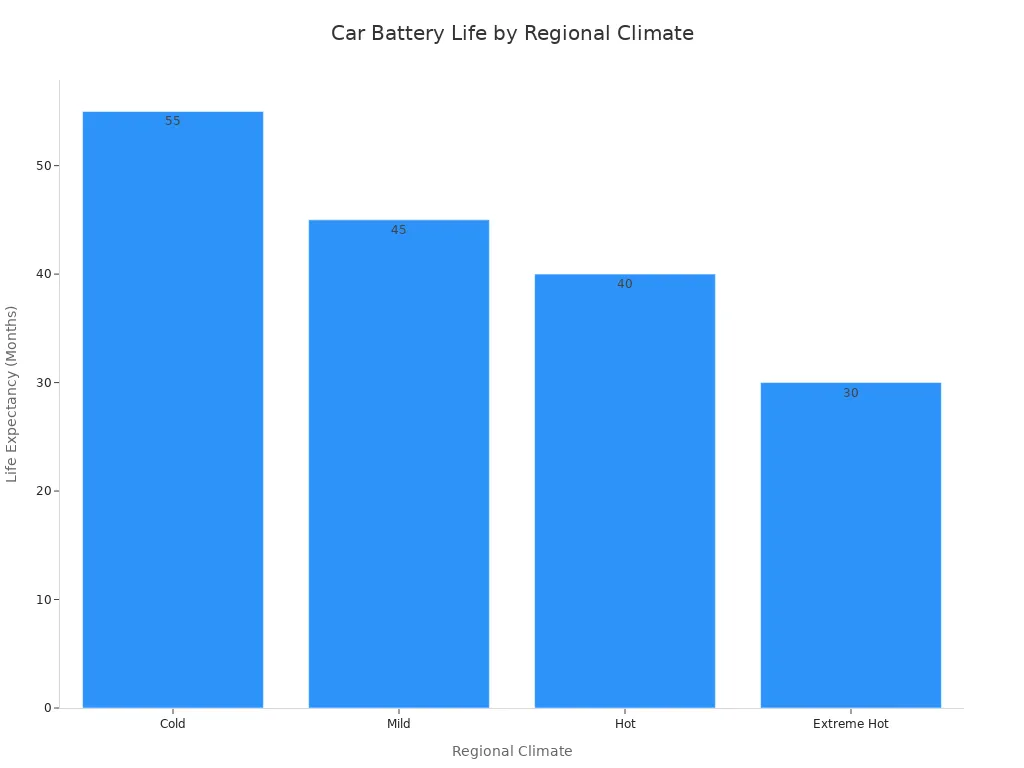
While car batteries typically last 3 to 5 years in most climates, their lifespan can be reduced in intensely hot regions. For example, in Arizona, a car battery might last only 2 to 3 years. This happens even with regular maintenance. Extreme heat causes an accelerated natural aging process.
Heat accelerates the evaporation of water within the battery. This leads to damage and reduced power.
High temperatures can cause battery swelling.
Heat promotes corrosion on battery posts. This deteriorates the internal structure.
You can see how climate affects battery life expectancy:
Vehicle Electronics and Demands
Modern cars have many electronic features. These features place greater demand on your car battery.
Start-stop systems in modern cars have both positive and negative effects on battery longevity.
Positive Effects:
It prevents deep discharges by prioritizing battery charge level.
It offers enhanced charging opportunities. This is especially true with regenerative braking during deceleration.
Negative Effects:
It significantly increases the number of discharge and recharge cycles. This leads to more wear and tear.
It imposes a higher starting load on the battery due to increased starter workload.
It causes thermal changes in extreme temperatures (hot and cold) due to frequent cycling. This impacts battery health.
Vehicles with start-stop systems use specific battery types. These include EFB (Enhanced Flooded Battery) and AGM (Absorbent Glass Mat) batteries. These batteries are designed to withstand the added demands of frequent starting cycles.
Advanced infotainment systems also impact your car battery.
Modern vehicles have a higher electrical load. This is due to many electronic features. This places greater demand on the battery.
Advanced infotainment systems continue to draw power even when your vehicle is turned off. This results in parasitic drain. This can deplete the battery over time.
Extending Your Car Battery’s Life
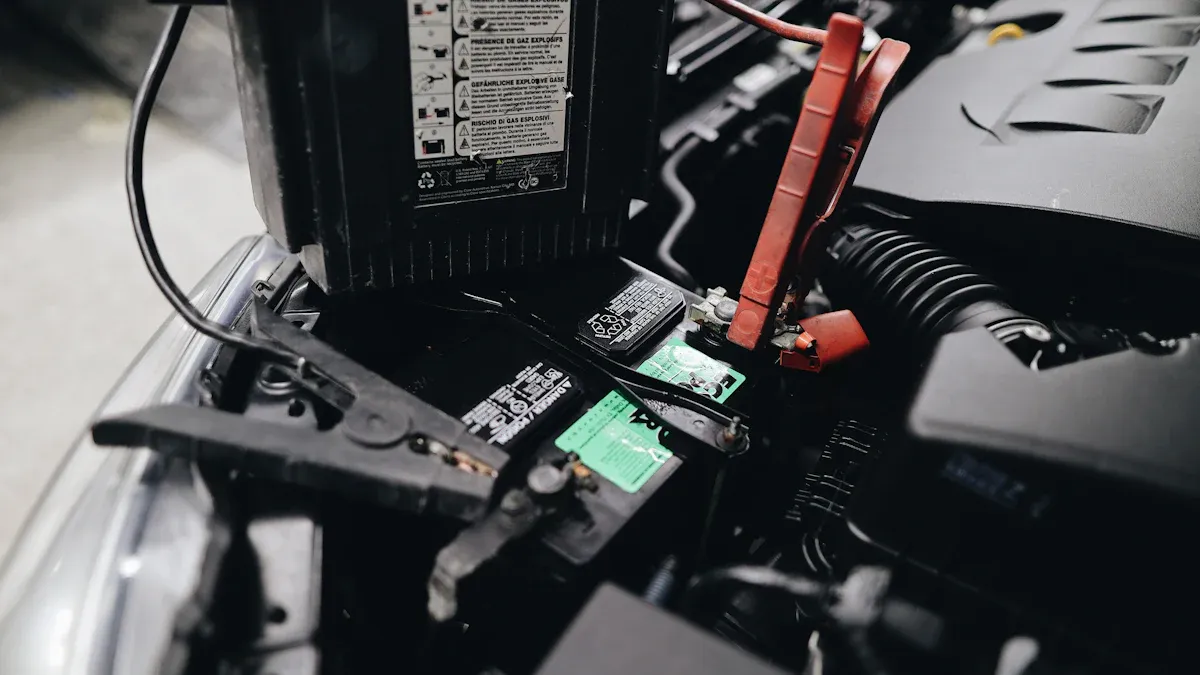
You want to know how to extend your car battery life. You can make your car battery last longer. This section gives you actionable advice. It helps you get the most out of your car batteries. You can improve battery longevity with simple steps.
Regular Battery Testing and Inspection
You should regularly test and inspect your car battery. This helps you extend its life. Routine checks for voltage and physical condition are important. You can do these checks every three months. You can also do them with each seasonal change. This accounts for temperature changes. Perform checks immediately if your car shows early warning signs of battery issues. Check your unit before long road trips. This minimizes breakdown risks.
Here are the routine checks you should perform:
Visual Inspection: Look for corrosion around the terminals. This looks like white or bluish build-up. Check for cracks, leaks, or bulging in the casing. Inspect for fraying or loose cables.
Voltage Measurement (Engine Off): Use a digital multimeter. Measure the voltage. A healthy, fully charged unit should read between 12.6 and 12.8 volts. A reading below 12.4 volts means you need to recharge or replace the battery.
Load Test (Optional): Connect a load tester if you have one. A healthy unit should stay above 9.6 volts under load. For example, turn on your lights briefly.
Electrolyte Level Check (for units with removable caps): Check the electrolyte level in each cell. It should cover the metal plates. Add distilled water if the level is low. Wear protective gear when you do this.
Voltage Measurement (Engine Running): Start your vehicle. Re-test the voltage. A healthy charging system should show 13.7 to 14.7 volts.
Clean & Secure: Neutralize and remove corrosion. Use a wire brush and a baking soda paste. Then tighten all cable connections.
You can perform routine battery tests and visual inspections. This gives you two or more opportunities per year for maintenance. Some places, like Hunter’s Garage, offer a complimentary battery test with every oil service. This emphasizes regular testing during maintenance visits. This helps you keep your car battery in good shape.
Proper Charging Practices
Proper charging practices are key to extending your car battery’s life. If you store your vehicle for extended periods, use smart chargers. Smart charging is very helpful. Cars are parked 96% of the time. Smart chargers allow for scheduled charging sessions. You can schedule charging during off-peak hours. Electricity is cheaper then. Smart charging also maximizes battery longevity. You can set a start time and a maximum charge level. This prevents overcharging. It reduces the aging process of lithium-ion batteries. This aging happens with every charge-discharge cycle.
For hybrid vehicles, follow specific charging advice. Consult your vehicle’s owner’s manual. It has specific maintenance requirements and charging guidelines. Drive regularly to keep the hybrid battery charged and balanced. Aim for at least once a week, especially for plug-in hybrids. Vary your driving patterns. Drive on highways and in the city. This promotes balanced charging and discharging. Monitor battery health. Use onboard diagnostics or dedicated monitoring devices.
Avoid deep discharges. Do not let the battery go below 20% state of charge. This prevents accelerated wear and degradation. Do not overcharge. Avoid leaving the battery plugged in for long periods when it is fully charged. This is especially true in hot conditions. Use smart charging systems or timers. Prioritize frequent partial charges. Do this instead of occasional deep discharge cycles. This extends battery life. Avoid extreme charge states. This minimizes stress on battery chemistry.
For plug-in hybrids, avoid frequent charging to 100% capacity. Prevent the battery from sitting at full charge for long periods. Use charge-limiting features. For example, set it to 80% or 90% capacity for daily use. Maximize regenerative braking opportunities. Drive smoothly and anticipate stops. This provides gentle charging. Manage temperature during charging. Park in shaded areas in hot weather. Avoid charging immediately after aggressive driving. For plug-in hybrids, charge during off-peak electricity rate periods. This reduces operating costs. It also helps maintain charge levels between 20% and 80% for optimal longevity. You should also drive your hybrid for more than 30 minutes at least once every three months. This maintains the battery’s state of charge.
Minimizing Parasitic Drain
Parasitic drain happens when your car draws power when it is off. This can shorten your car battery’s life. Many things can cause this.
Common sources of parasitic drain include:
Faulty Electrical Components: These components draw power when they should not.
Interior Lights Left On: Dome lights, map lights, or even glove box lights can stay on.
Faulty Relays: Relays can get stuck in the ‘on’ position. They continuously draw power.
Aftermarket Accessories: Improperly installed accessories can cause drain. These include alarm systems, fog lights, or stereos.
ECU or Computer System Issues: The Electronic Control Unit might not enter a low-power state when the vehicle is off.
Parasitic Draw from USB Devices: Devices plugged into USB sockets, or the USB port itself, can draw power.
Corroded or Dirty Connections: Corrosion on battery terminals can create a small current draw.
Damaged or Worn Wiring: Short circuits in wiring harnesses can happen due to wear or damage.
Faulty Door or Window Sensors: Malfunctioning sensors can keep interior lights on or continuously draw power.
You can reduce unnecessary power draw. Regularly clean battery terminals. This removes corrosion and ensures proper electrical flow. Check your battery voltage. A healthy car battery should be around 12.6 volts when the engine is off. Replace old batteries. Do this typically every three to five years. This maintains electrical system health. Unplug unnecessary accessories. These include phone chargers and dash cams. Turn off all lights. Make sure doors and the trunk are fully closed. Take regular 15-minute drives at least once a week. This recharges the battery. Clean battery connections to prevent corrosion. For long periods of inactivity, use a trickle charger. Or disconnect the negative battery terminal. Prioritize regular vehicle maintenance. This includes inspecting the charging system.
Consistent Driving Patterns
Consistent driving helps keep your car battery charged. It also extends its lifespan. Consistent driving allows the car battery enough time to fully recharge. This prevents a low-charge state. This low-charge state happens with frequent short trips. Full recharges reduce wear on the battery. This wear comes from repeatedly starting the car without enough recharging.
To prevent car battery issues from inactivity, drive for at least 30 minutes. This duration is important. It allows the alternator to adequately recharge the battery. This is especially true after a jump-start. It helps maintain the battery’s charge level and overall health. For overall vehicle health, drive for 30-60 minutes at least once a month. This helps warm up the engine. It also exercises critical components. This indirectly benefits the battery. This ensures how long does a car battery last for you.
Signs Your Car Battery Needs Replacement
You need to know when your car battery is nearing its end. Identifying these signs early helps you avoid being stranded. You can replace your car battery before it completely fails.
Slow Engine Cranking
Your car battery might be failing if your engine cranks slowly. You turn the key, but the engine sounds sluggish. It takes longer than usual to start. The engine cranks sluggishly. Your car starts inconsistently. Sometimes it starts fine, other times it struggles. You might find your vehicle starts with jumper cables. However, it will not restart after you turn it off. This means your car battery lacks the necessary amperage. It cannot crank the starter at its usual speed. This is a clear sign of a weak car battery.
Dim Lights and Electrical Issues
A weak car battery often causes electrical problems. You might notice dim headlights. They do not brighten even with full beam. Power accessories like your car audio, wipers, or electric side mirrors may have issues. They might work slowly or inconsistently. Your push-button ignition might respond erratically. Warning lights might not come on when you turn the ignition. You could hear clicking noises when you start the car. This happens because the starter solenoid gets insufficient electrical current. Transmission problems, like missing gears or delayed shifts, can also occur. This is due to insufficient power from the car battery.
Dashboard Warning Lights
Your dashboard has warning lights to alert you. A battery warning light signals a problem. This light looks like a rectangular battery symbol. It has a plus sign on the right and a minus sign on the left. It usually glows red. This light means your car is not getting enough voltage. An old, discharged, or weak car battery can cause this light to turn on. It indicates an issue with your vehicle’s electrical charging system. Old batteries or those exposed to extreme temperatures often trigger this warning.
Battery Age and Physical Condition
You should also check your car battery’s age and physical state. Most automotive experts agree car batteries typically last three to five years. You should consider replacing your car battery if it is older than five years. This is true even if it seems to work fine. Look for physical signs of wear. Excessive corrosion is a common sign. This appears as a powdery white or blue substance on the connection points. A greenish-grey crumbly buildup also indicates corrosion. Check for physical damage like a cracked battery case. This can happen from extreme cold or vibrations. Any damage means you need immediate replacement.
You learned that traditional car batteries in 2025 typically last 3-5 years. EV battery life, however, lasts much longer. Proactive maintenance significantly extends your car battery’s duration. Understanding influencing factors helps your car battery last. Proper care ensures reliable vehicle operation. It maximizes the life of your car battery. Your battery will serve you well. Regular checks keep your battery healthy. This ensures your car battery performs optimally. Every battery needs attention. Your vehicle’s battery is crucial. A well-maintained battery prevents issues.
FAQ
What is the average lifespan of a car battery?
A traditional car battery typically lasts 3 to 5 years. An electric vehicle (EV) battery can last much longer, often 8 to 15 years. Your driving habits and maintenance affect your battery’s life.
What causes a car battery to die prematurely?
Extreme heat or cold shortens your battery’s life. Frequent short trips prevent the battery from fully recharging. Leaving your car unused for long periods also harms the battery. Parasitic drain from electronics can also kill your battery.
What is the difference between an EV battery and a traditional car battery?
An EV battery is a large lithium-ion pack. It powers the entire electric car. A traditional car battery is a lead-acid battery. It starts the engine and powers accessories in gas cars. EV batteries have a significantly longer lifespan.
What should you do if your car battery dies?
You can try to jump-start your car. If your car still does not start, you likely need a new battery. Regular testing helps you replace a weak battery before it fails completely.



