

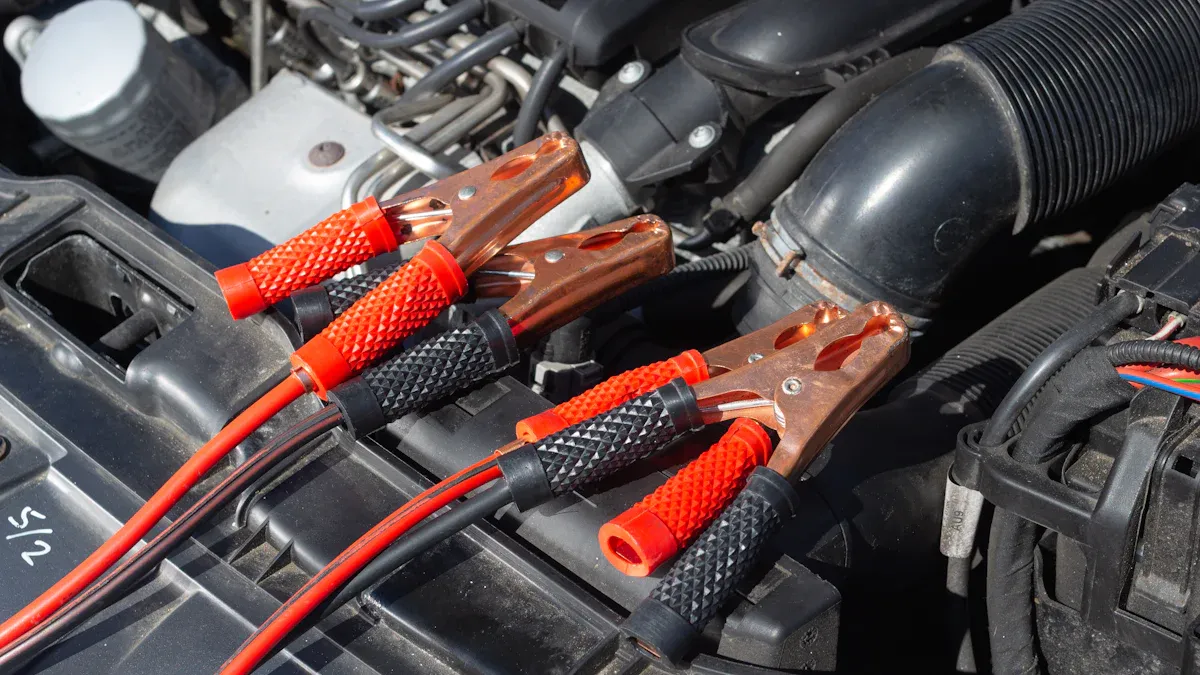
A dead car battery often causes unexpected trouble. Vehicle breakdowns frequently stem from car battery issues. In fact, battery failure accounts for a significant portion of roadside assistance calls: You can easily learn how to replace a dead car battery yourself. This saves you money. Comparing costs:
| Service Type | Cost |
|---|---|
| DIY Battery Replacement | $120 |
| Professional Battery Replacement | $200 |
Replacing your own dead car battery gives you satisfaction. Always prioritize safety. Follow proper procedures for a successful replace car battery.
Key Takeaways
- Replacing your car battery yourself saves money and gives you satisfaction.
- Always prioritize safety. Wear protective gear and disconnect the negative terminal first.
- Gather essential tools like a 10mm wrench and battery terminal cleaner before you start.
- Clean the battery tray and cable terminals. This ensures a strong connection for your new battery.
- Recycle your old car battery properly. It contains harmful materials and cannot go in the trash.
Tools and Safety Gear
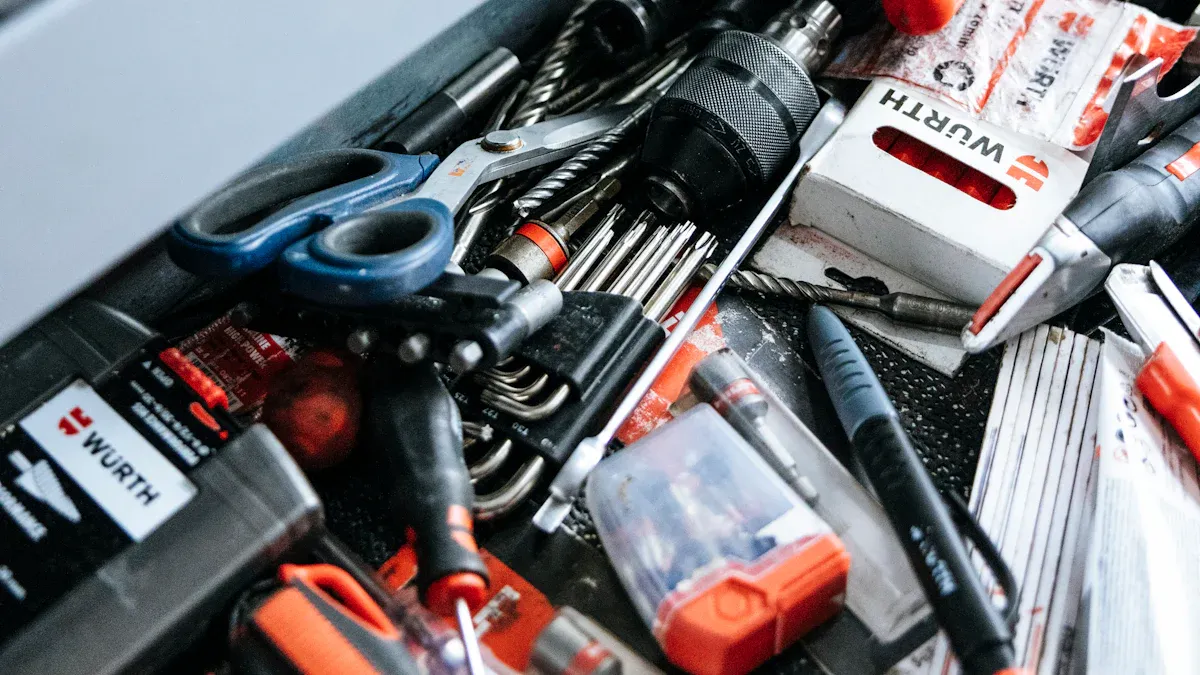
Before you begin to replace car battery, gather the right tools. You also need to understand important safety steps. Preparing properly makes the job easier and safer.
Essential Tools for Battery Replacement
You need specific items to successfully change your car battery. Make sure you have these tools ready:
- 10mm Wrench: This wrench helps loosen battery terminals.
- Battery Terminal Cleaner: Use this to clean corrosion from terminals.
- Wire Brush: A wire brush helps scrub away stubborn dirt.
- Battery Puller/Carrier: This tool makes lifting the heavy battery safer.
- Safety Glasses: Protect your eyes from acid splashes or debris.
- Gloves: Wear gloves to shield your hands from battery acid and dirt.
Prioritizing Safety
Your safety is the most important thing when working on your car. Follow these rules carefully:
- Turn Off Your Vehicle: Always make sure your car is completely off. Put the car in park and set the parking brake.
- Wear Protective Gear: Put on your safety glasses and gloves. This protects your eyes and skin from battery acid.
- Avoid Metal Contact: Do not let metal tools touch both battery terminals at the same time. This can cause a dangerous spark or short circuit.
- Work in a Ventilated Area: Battery gases can be harmful. Work in a place with good airflow.
Safety Tip: Car batteries contain sulfuric acid. This acid can cause severe burns. Handle the battery with care.
Disconnect Old Battery
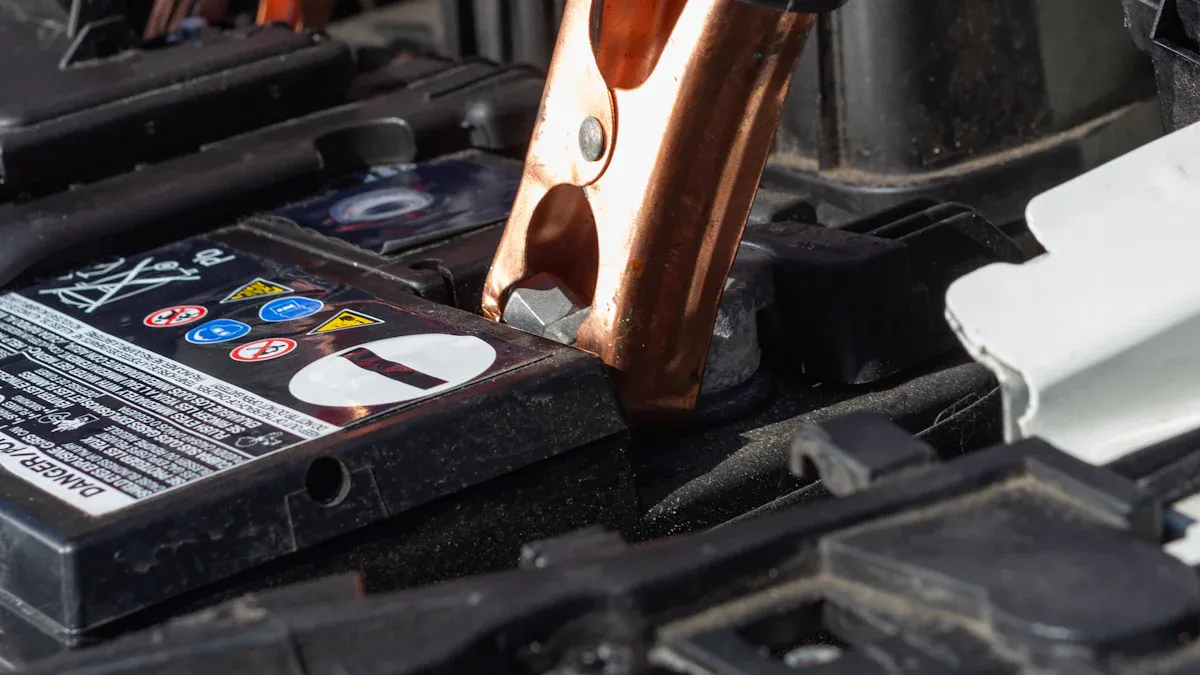
You are ready to remove your old battery. First, find your car battery. It is usually under the hood. Some cars have the battery in the trunk or under the back seat. Look for the positive (+) and negative (-) terminals on the battery. The positive terminal often has a red cover or a plus sign. The negative terminal usually has a black cover or a minus sign.
Disconnect Negative Terminal
You must disconnect the negative terminal first. This is very important for safety. Disconnecting the negative terminal first prevents electrical shorts. It stops sparks from flying if your wrench touches metal parts of the car.
- Grab your 10mm wrench.
- Loosen the nut on the negative terminal clamp. Turn the wrench counter-clockwise.
- Do not remove the nut completely. Just loosen it enough so the clamp moves freely.
- Wiggle the negative cable off the battery post.
- Move the cable away from the battery. Make sure it cannot accidentally touch the battery post again. You can tuck it away or secure it with a zip tie.
Disconnect Positive Terminal
Now you will disconnect the positive terminal. You have already made the car safe by removing the negative cable. This step is similar to the last one.
- Use your 10mm wrench again.
- Loosen the nut on the positive terminal clamp. Turn the wrench counter-clockwise.
- Wiggle the positive cable off the battery post.
- Move this cable away from the battery. Ensure it does not touch any metal parts of the car.
You have successfully disconnected the terminals from your dead car battery. This prepares your car for the next steps.
How to Remove a Car Battery
You have disconnected the cables from your dead car battery. Now you will physically remove it from your vehicle. This process involves loosening a clamp and carefully lifting the heavy battery.
Loosen Hold-Down Clamp
Your car battery sits in a tray. A hold-down clamp secures it. This clamp prevents the battery from moving while you drive. You must loosen this clamp to remove the old battery.
- Locate the hold-down clamp. It might be a strap over the top of the battery. It could also be a small bracket at the base. Many clamps use 10mm bolts.
- Use your 10mm wrench to loosen the bolts or nuts on the clamp. Turn them counter-clockwise.
- Remove the clamp completely. Set it aside.
Tip: Many cars use a toggle clamp. This clamp has an over-center locking mechanism. You typically unfasten its 10mm nuts or bolts to release it.
When you install your new battery, you will tighten this clamp. Proper torque ensures the battery stays secure. For example, a battery hold-down bolt often requires 16 N-m (142 in-lbs) of torque.
Lift Out Old Battery
Car batteries are heavy. They can weigh 30 to 60 pounds. Use caution when you lift your dead car battery.
- Attach a battery puller or carrier to the battery. This tool gives you a secure grip.
- Lift the battery straight up and out of the battery tray.
- Place the old battery on a flat, stable surface. Keep it away from your work area. You have successfully completed the steps for how to remove a car battery.
Inspect Battery Tray
After you remove the old battery, inspect the battery tray. This is the area where the battery sits.
- Look for signs of corrosion. Corrosion often appears as a white or blue-green powdery substance.
- Check for dirt, debris, or rust.
- Ensure the tray is not cracked or damaged. A clean and intact tray provides a stable base for your new battery. This inspection is an important step before you install the replacement.
Prepare for New Battery
You have removed the old battery. Now, prepare your car for the new one. This step ensures a clean and secure connection. It helps your new battery last longer.
Clean Battery Tray
You inspected the battery tray earlier. Now, clean it thoroughly.
- Remove any dirt, debris, or rust.
- Scrub away any corrosion. Use a wire brush if needed.
- Make sure the tray is dry before placing the new battery. A clean tray provides a stable base.
Clean Cable Terminals
Clean the battery cable terminals. This ensures a strong electrical connection. Corrosion can prevent your car from starting.
Here are the materials you need:
- Baking soda
- Petroleum jelly
- Anti-corrosion pads
- Stiff-bristle brush, wire brush, or professional tool
- Water
- Shop towels
Always wear proper rubber gloves and eye protection.
Follow these steps to clean the terminals:
- Mix Homemade Battery Cleaner: Combine one tablespoon of baking soda with one cup of water. Stir it well.
- Apply and Scrub: Apply the baking soda mixture to the terminals. Scrub with a stiff-bristle brush or wire brush. This removes corrosion.
- Rinse off Residue: Rinse the terminals with water. Use a spray bottle or a damp rag.
- Thoroughly Dry: Dry the terminals completely with shop towels.
Regularly check battery terminals for corrosion. Clean them as needed. Inspect the battery for damage or leaks.
Apply Anti-Corrosion
Protect your newly cleaned terminals. Apply an anti-corrosion product. This prevents future buildup.
- Apply anti-corrosion pads to the battery posts.
- Apply a generous layer of petroleum jelly to the terminals. This prevents corrosion and improves conduction. Do not apply too much. Too much can cause a poor connection.
- You can also use a specialized product. The CRC Battery Terminal Protector prevents corrosion on car battery terminals. It shields terminals from corrosion. This helps extend the battery’s lifespan. It ensures reliable starting performance. It reduces the need for frequent replacements. You can apply this product to battery posts, terminals, hold-downs, and casings.
Apply a protective coating and dielectric grease to terminals. This inhibits corrosion. It extends battery lifespan. Check and reapply regularly.
How to Change a Car Battery
You have prepared your car. Now you will install the new battery. This part of the process is straightforward. You will place the new battery and secure it.
Position New Battery
Carefully lift your new car battery. Use a battery carrier if you have one. This makes lifting safer.
- Place the new battery into the cleaned battery tray.
- Make sure the battery sits flat and securely in the tray.
- Check the orientation. The positive (+) terminal on the new battery should be on the same side as the positive cable in your car. The negative (-) terminal should align with the negative cable.
Avoid common mistakes when you install the new battery:
- Remove Side Caps: Some new batteries have small plastic caps on the sides. You must remove these caps. Leaving them on can cause damage over time.
- Do Not Sand Poles: Never sand the battery poles. This can damage the battery’s lifespan. Instead, apply special Vaseline or anti-corrosion grease to protect them.
Ensure the battery does not rock or move. It needs a stable base.
Secure Hold-Down Clamp
The battery needs to stay in place. You will now secure it with the hold-down clamp. This prevents the battery from shifting while you drive.
- Place the hold-down clamp back over the battery.
- Align the clamp with its original mounting points.
- Use your 10mm wrench to tighten the bolts or nuts. Turn them clockwise.
- Tighten the clamp until the battery is snug. It should not move if you try to wiggle it.
- Do not overtighten the clamp. Overtightening can damage the battery casing. A secure fit is enough.
You have now successfully placed and secured your new battery. This completes the physical part of how to change a car battery.
Connect New Battery
You have placed and secured your new car battery. Now, you will connect the battery cables. This is a crucial step. You must connect the terminals in the correct order. This prevents electrical shorts and ensures safety.
Connect Positive Terminal
Always connect the positive terminal first. This is a key safety rule when you learn how to reconnect a car battery.
- Take the positive (+) cable. This cable usually has a red cover.
- Place the positive cable clamp onto the positive post of the new battery.
- Use your 10mm wrench. Tighten the nut on the clamp. Turn it clockwise.
- Make sure the connection is very tight. The clamp should not move if you try to wiggle it.
Note: A loose connection can cause many problems. You might experience difficulty starting your vehicle. Your car’s lights could dim or flicker. Loose connections can also lead to other electrical problems, like malfunctioning radios or windows.
Connect Negative Terminal
Now, connect the negative terminal. This is the final step to attach the terminals to the battery.
- Take the negative (-) cable. This cable usually has a black cover.
- Place the negative cable clamp onto the negative post of the new battery.
- Use your 10mm wrench. Tighten the nut on the clamp. Turn it clockwise.
- Ensure this connection is also very tight and secure.
You have now completed how to reconnect a car battery. Loose battery cables can lead to a complete failure to start your car. Dimming headlights can occur if the positive cable is loose. Resistance can build up on a loose negative battery cable, potentially causing overheating. A loose starter cable can make the engine crank but not start. Always double-check both connections. They must be firm and secure.
How to Replace a Dead Car Battery: Post-Installation
You have successfully installed your new battery. Now, you need to confirm everything works correctly. This final check ensures your car is ready for the road.
Start Vehicle and Check Systems
You have completed the physical steps to replace car battery. Now, start your vehicle. Turn the key or push the start button. Listen for the engine. It should crank strongly and start smoothly. If your car does not start, recheck your battery connections. Ensure they are tight. Look for any loose cables. Sometimes, a loose connection is the only problem. Once the engine runs, check your dashboard lights. All warning lights should turn off. If a warning light stays on, consult your car’s owner’s manual. Test your headlights, turn signals, and wipers. Make sure they work correctly. Also, check your radio and power windows. This confirms your electrical system is functioning. You have learned how to replace a dead car battery. This step ensures your hard work paid off. Take your car for a short drive. This helps the car’s computer adjust to the new battery. Pay attention to how the car drives. Everything should feel normal.
Reset Vehicle Electronics
Disconnecting a dead car battery can reset some of your car’s electronic systems. Do not worry. This is normal. You might need to reset your radio presets. Your clock will likely need adjustment. Some cars require you to re-initialize power windows. Roll them all the way down, then all the way up. This often resets their memory. If your check engine light comes on, drive your car for a short period. Sometimes, the computer needs to relearn settings. The light may turn off on its own. If the light persists, consult a mechanic. Other systems like your navigation or seat memory might also need resetting. Refer to your car’s manual for specific instructions. For some vehicles, you might need a special code to reactivate the radio. Check your glove compartment for this code. You now know how to replace a dead car battery and handle these minor adjustments.
Change a Car Battery: Disposal
You have successfully installed your new car battery. Now, you have an old, dead battery. You cannot just throw it in the trash. Car batteries contain harmful materials. Proper disposal is very important for the environment.
Understand Recycling Rules
Many laws exist to ensure you recycle car batteries correctly. Federal regulations, like the Universal Waste Rule, require you to recycle used lead-acid batteries. You must send them for recycling. You cannot dispose of them in landfills.
The Universal Waste Rule (40 CFR Part 273) mandates that used lead-acid batteries be managed as Universal Waste. You must send them for recycling. This rule prohibits their disposal in regular trash.
Many states also have specific laws. For example, Arkansas, North Carolina, and Pennsylvania prohibit placing lead-acid batteries in municipal solid waste. They require you to deliver them to retailers or recycling facilities. Retailers often must accept your old battery when you buy a new one. The U.S. Environmental Protection Agency (EPA) works to develop better collection practices. This helps prevent critical materials from being lost. It also stops hazards like fires in waste management systems. When you change a car battery, you become part of this important recycling effort.
Find Recycling Center
Finding a place to recycle your old car battery is easy. Many options are available to you.
- Certified Battery Recycling Centers: Look for online directories. You can enter your zip code and select ‘car battery’. This helps you find local recyclers.
- Local Hazardous Waste Facility: Contact your city’s waste centers. They often have programs for household hazardous waste. Ask if they accept automotive batteries.
- Auto Parts Stores: Major stores like AutoZone, O’Reilly, and Advance Auto Parts usually accept old batteries for free. They might even give you store credit.
- Scrap Metal or Battery Recyclers: Search for ‘car battery scrap buyer near me’. Local metal dealers often buy spent car batteries for their materials.
- Retailers: In some states, retailers must accept your old car battery when you buy a new one. This is due to Extended Producer Responsibility (EPR) laws.
- Mechanics: If a professional replaced your battery, ask if they participate in EPA-certified recycling programs.
- Local Battery Recycling Events: Many cities and counties hold free collection events. These events often include drop-off stations for various types of batteries.
You successfully learned to replace a dead car battery. This task is simple and saves you money. You prioritized safety. Disconnect the negative terminal first. Then connect the new battery’s positive terminal first. This process empowers you. Feel confident tackling future car maintenance. You can handle a dead car battery with ease.
FAQ
How do you know if you have car battery issues?
Look for dim headlights or a slow engine crank. Your car might struggle to start. A swollen battery case or a rotten egg smell also indicates problems. These are clear signs you have car battery issues.
How long does a car battery last?
A car battery typically lasts three to five years. Driving habits and climate affect its lifespan. Extreme temperatures shorten its life. Regular maintenance helps you understand how long does a car battery last.
How much does a new car battery cost?
A new car battery usually costs between $100 and $250. The price depends on your car’s make and model. Installation fees add to the total if a professional does it. This answers how much does a new car battery cost.
Can a dead car battery be recharged?
Yes, you can often recharge a dead car battery. Use a battery charger or jump-start your car. If the battery is very old or damaged, recharging might not work. A severely dead car battery may need replacement.



