Hyundai’s value retention generally falls in the middle of the road. However, significant variations exist among specific models. New cars typically lose about 20% of their original value in the first year of ownership. This article provides data-driven insights into Hyundai depreciation, specifically focusing on how Hyundai value holds up over time. It compares Hyundai models to market averages. The analysis highlights specific Hyundai performance. Readers will find a detailed examination of factors influencing Hyundai’s resale value and overall depreciation.
Key Takeaways
Hyundai cars usually hold their value in the middle range compared to other car brands.
Some Hyundai models, like the Tucson, keep their value very well over time.
A car’s age, how many miles it has, and its condition greatly affect how much value it loses.
Keeping your Hyundai well-maintained and selling it at the right time can help you get more money for it.
Always check the specific model you are interested in, as different Hyundai models lose value at different rates.
Car Depreciation
What Is Depreciation
Car depreciation is the loss of a vehicle’s value over time. This process begins the moment a new car leaves the dealership. It is a natural part of owning any vehicle. This depreciation affects all cars, including a Hyundai. Understanding depreciation helps car owners make smart choices.
Factors Affecting Resale Value
Many factors influence a car’s depreciation and its eventual resale appeal. The car’s age is often the most important factor. Cars typically lose value quickly in their first few years. Mileage also significantly impacts depreciation. Lower mileage makes a car more appealing because it suggests less wear and tear. For instance, a car with 10,000 to 15,000 miles might lose 15% to 20% of its value. A car with 30,000 to 40,000 miles can see its value drop by up to 50%. Every 20,000 miles driven can lower a car’s value by approximately 20%. High mileage puts more strain on parts like the engine, transmission, and suspension. This leads to faster depreciation.
The car’s condition is crucial for its resale value. This includes both its mechanical state and its appearance. Regular maintenance, with all records kept, shows proper care. This boosts confidence in the car’s reliability. Stains, burns, or odors inside the car can reduce its appeal. Dings, dents, or scratches on the exterior also lower its grade.
Market demand also plays a role. Popular makes and models, like certain Hyundai vehicles, tend to hold their value better. Features such as advanced safety systems, good infotainment, and eco-friendly options can positively impact value. Neutral car colors like black, white, or silver also help maintain value. Aftermarket modifications or loud customizations can hurt a car’s depreciation rate. A car’s accident history can also significantly reduce its value.
Overall Hyundai Depreciation
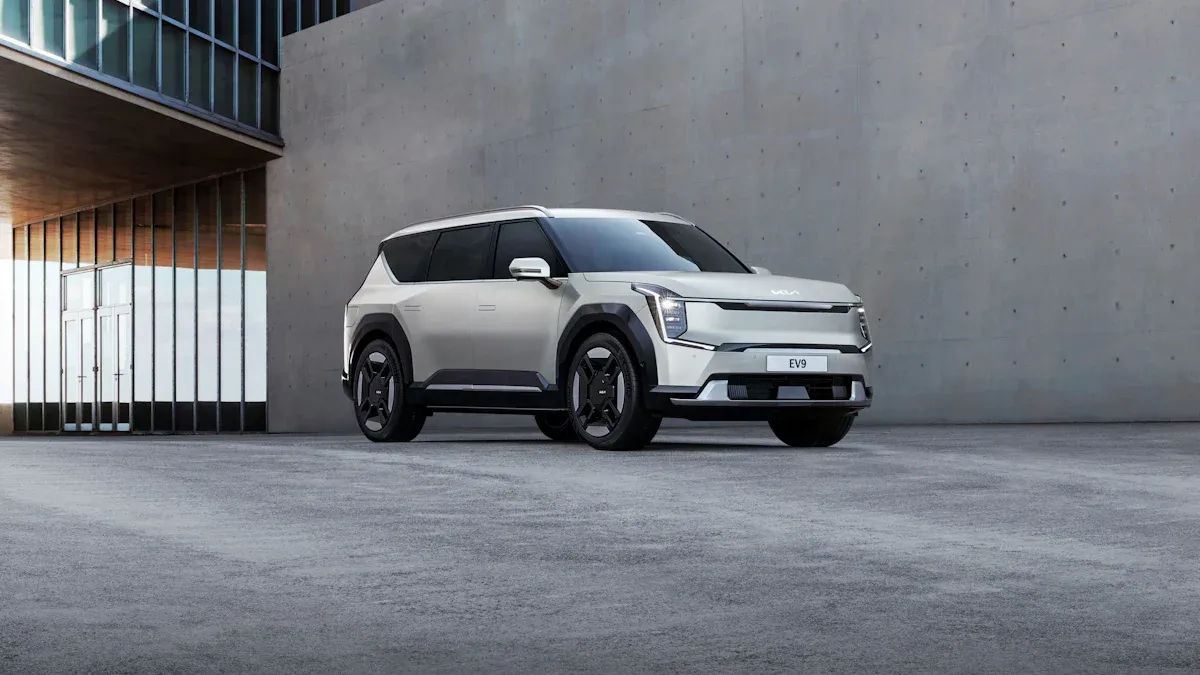
Hyundai’s Average Depreciation Rate
Hyundai vehicles show specific depreciation trends. MotorTrend reports an overall value retention of 47.1% for Hyundai. This figure represents how much value a Hyundai car keeps over a certain period. For a more specific look, data indicates a Hyundai experiences a 34.6% depreciation over three years. This means a car loses more than a third of its initial value in that timeframe.
Year | Depreciation |
|---|---|
2023 | 34.6% |
This rate helps buyers understand the potential loss in value. It also helps sellers set realistic prices.
Hyundai Value Compared to Market
Hyundai’s ability to hold value often sparks discussion. Some sources suggest Hyundai vehicles depreciate quicker than the market average. Other analyses consider Hyundai’s depreciation rate about average when compared to the broader automotive market.
Hyundai models generally offer excellent value retention. For example, the Elantra depreciates by approximately a quarter of its value within the first five years of ownership.
This performance is quite competitive. It shows that certain Hyundai models hold their value well. When comparing industry averages to Hyundai models, the brand often aligns closely with the general market trend. This makes a Hyundai a reasonable choice for many buyers concerned about long-term costs.
Hyundai Against Other Brands
When comparing Hyundai to other brands, its value retention places it in a mid-tier position. Several brands consistently outperform Hyundai in terms of retaining resale value over a five-year period.
Here is how Hyundai compares to some top brands in 5-year resale value:
Brand | 5 Year Resale Value |
|---|---|
Toyota | 63.60% |
RAM | 62.00% |
Honda | 60.70% |
Mazda | 60.40% |
Subaru | 58.90% |
FIAT | 57.10% |
GMC | 56.60% |
Mitsubishi | 55.40% |
Hyundai | 54.60% |
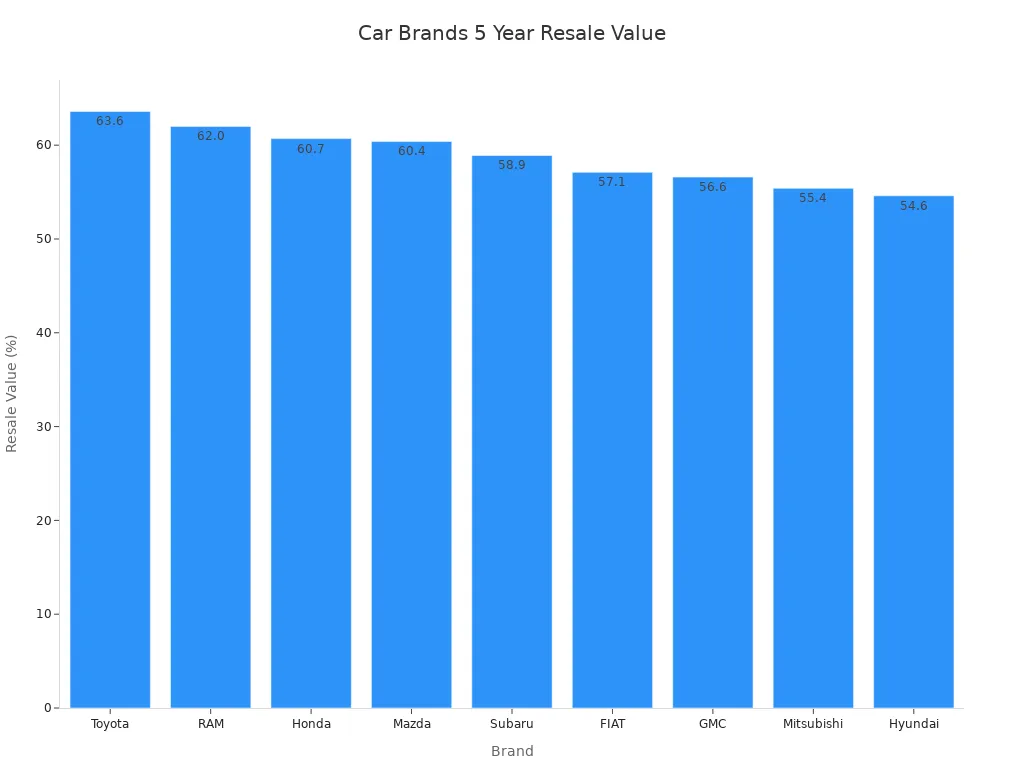
This table and chart show that while Hyundai performs well, brands like Toyota and Honda typically have higher resale values. MotorTrend’s data also provides a similar perspective on how much value cars keep:
Mini: 50.4 percent retained value
Mazda: 49.3 percent retained value
Kia: 47.7 percent retained value
Hyundai: 47.1 percent retained value
This data positions Hyundai slightly below some competitors in overall value retention. However, it still performs better than many other brands not listed among the brands with the best resale value. The overall hyundai depreciation rate is a key factor for buyers.
Top Models for Resale Value
Hyundai Models with Strong Retention
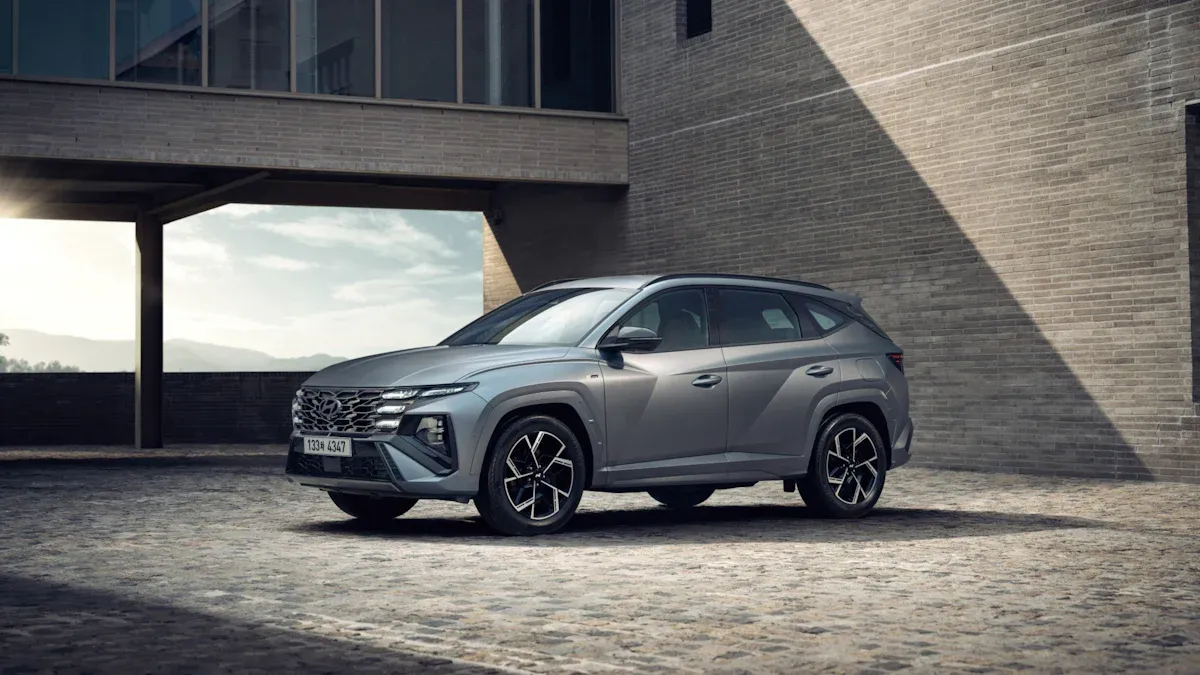
Some Hyundai models consistently show strong value retention. These vehicles often become popular choices in the used car market. The 2023 Hyundai Tucson is a prime example. It retains 81% of its value over three years. This figure comes from Kelley Blue Book. It shows a depreciation rate of only 19% during that period. This makes the Tucson a top performer for value.
Other Hyundai models also demonstrate excellent value retention. The Hyundai Venue is among cars with the best resale value after three years. This indicates its strong appeal to buyers. The Hyundai Palisade also leads in value retention. Three-year-old Palisade models command premium prices in the used car market. This shows its lasting demand.
The Hyundai Santa Fe maintains strong values. This is especially true for all-wheel-drive versions. These models do well in regions with demanding weather. The Hyundai Elantra defies market trends. It shows that reliability and low ownership costs are important to used car buyers. This contributes to its strong resale. These models prove that a hyundai can be a smart investment.
Features Boosting Resale Value
Several factors contribute to the strong performance of these Hyundai models. High demand plays a significant role. Popular models attract more buyers. This helps keep prices stable. Updated styling also helps. Modern designs keep cars looking fresh. Comprehensive safety features are another key factor. Buyers prioritize safety. Vehicles with advanced safety systems hold their value better.
Reliability is crucial for any car’s resale value. Hyundai vehicles have a reputation for dependability. This makes them attractive to used car buyers. Low ownership costs also boost value. Cars that are inexpensive to maintain appeal to a wider audience. Specific features can also make a difference. For example, all-wheel-drive in the Santa Fe adds value in certain areas. The combination of these features helps a hyundai achieve the best resale value. This ensures a strong best model year value for owners.
Hyundai Models with Faster Depreciation
Models with Lower Resale Value
Not all Hyundai models maintain their value at the same rate. Some experience faster depreciation. The 2023 Hyundai Palisade shows a notable drop in value. A 2023 Hyundai Palisade has depreciated $8,514 or 26% in the last 2 years. This depreciation rate is higher compared to some other Hyundai vehicles. This specific hyundai depreciation by model highlights variations. Another example is the Hyundai Venue. This Hyundai model also sees quicker depreciation. The Hyundai Venue shows a depreciation of 38.7% after five years. This results in a resale value of $12,391. This figure represents its resale value after 5 years. When considering a car’s long-term cost, understanding its 5 year resale value is important.
Reasons for Quicker Depreciation
Several factors contribute to faster depreciation for certain Hyundai models. Market saturation plays a role. If many similar models are available, demand for used cars can decrease. This affects their resale. Changing consumer preferences also impact depreciation. For instance, buyers might shift interest from smaller cars to larger SUVs. This affects the resale value of less popular segments. Intense competition from other car brands can also push down prices. A Hyundai model might offer fewer unique features compared to rivals. This makes it less desirable in the used car market. Initial pricing strategies can also influence long-term depreciation. A higher initial price might lead to a larger absolute depreciation amount. This affects the overall resale value after 5 years. This type of depreciation is common across many brands.
Maximizing Hyundai Value
Useful Lifespan and Reliability
Owners can take steps to keep their Hyundai in top condition. A well-maintained Hyundai often lasts a long time. Regular care helps the car perform reliably. This reliability makes the car more attractive to future buyers. A reliable car also means fewer unexpected repair costs for the owner.
Impact of Maintenance on Value
Consistent maintenance is the best way to maximize a car’s resale value. A car’s internal health is very important. A good service history shows this health. This practice ensures reliability. It also prevents costly repairs. A verifiable service history boosts buyer confidence. It leads to a higher offer when selling.
Type of Service History | Impact on Resale Value |
|---|---|
Full Service History (FSH) | Increase by up to 20% |
Partial Service History (PSH) | Decrease |
A car that does not break sells better. Buyers want peace of mind. They pay more for a reliable vehicle.
Regular maintenance stops small issues from becoming big, expensive problems.
A complete maintenance history builds buyer trust. It shows responsible ownership. It removes worries about hidden mechanical issues.
Following the maintenance schedule keeps the car’s warranty active. This protects against unexpected repair costs.
Best Time to Sell
To get the best resale value for a Hyundai, sell it within the first few years. A car’s age and mileage greatly affect its value.
Spring: This season is often ideal. Warmer weather and tax refunds increase buyer demand. Buyers look for sedans, SUVs, and family cars for summer plans.
Summer: This time peaks for convertibles and sports cars. Buyers want cars for summer fun.
Fall: This is a good time for winter-ready vehicles. Trucks, SUVs, and all-wheel-drive cars are popular. Buyers prepare for snow and ice.
Winter: This season is usually slower. Holiday expenses and cold weather reduce buying. Late December can see more sales for year-end deals.
Data Methodology for Depreciation
Sources and Data Collection
Car depreciation data comes from various trusted sources. CarEdge.com offers a ‘Car Depreciation Calculator’. This tool provides expected resale values for over 300 models. It projects values for the next decade. CarEdge also features historical depreciation curves. Some curves go back as far as 12 years. Black Book is another highly reputable source. Dealers rely on Black Book for insider data. They use it to assess trade-in and purchase values. These sources help track a car’s value loss over time.
How Depreciation Is Calculated
Automotive industry experts calculate car depreciation rates using specific methods. For tax purposes, they primarily use two methods. The Modified Accelerated Cost Recovery System (MACRS) is one method. It applies to vehicles used for business at least 50% of the time. MACRS classifies vehicles as five-year property. This depreciation can extend over six calendar years. Key factors for MACRS include the vehicle’s purchase price. The business use percentage and service date also matter. Straight-line depreciation is another method. It divides the depreciable basis evenly over the vehicle’s useful life. This method applies when business use is less than 50%. Experts refer to IRS Form 4562 and Publication 946 for guidance. IRS Publication 463 contains MACRS Depreciation Charts. This helps determine the estimated depreciation.
Limitations of Data Analysis
Depreciation data provides valuable insights. However, it has limitations. These analyses often use averages. An individual car’s actual depreciation can vary. Its condition, maintenance history, and specific features play a big role. Market conditions also influence values. Economic shifts, fuel price changes, and new model releases affect demand. Regional preferences can alter a car’s resale value. A popular model in one state might not be in another. Data offers a general guide. It does not predict the exact sale price for every vehicle.
Hyundai’s depreciation varies by model. Overall, its value retention is “middle of the road.” Some Hyundai models, like the Tucson, show strong performance. They offer the best resale value. Other Hyundai models, such as the Palisade and Venue, align with or fall below market averages. Buyers should research specific Hyundai models and trim levels. Understand the 3-5 year depreciation factor. Sellers must maintain their Hyundai vehicle and time the sale well. Careful research helps make smart Hyundai purchases or sales.
FAQ
Does Hyundai have good resale value?
Hyundai’s resale value is generally considered middle-of-the-road. Some models, like the Tucson, show strong value retention. Other models may depreciate at an average or slightly faster rate compared to the market.
Which Hyundai model holds its value best?
The Hyundai Tucson often holds its value very well. For example, the 2023 Hyundai Tucson retains about 81% of its value over three years. The Hyundai Venue and Palisade also show strong value retention in certain segments.
What factors help a Hyundai keep its value?
Several factors boost a Hyundai’s resale value. High demand, modern styling, and comprehensive safety features are important. Reliability and low ownership costs also make a Hyundai more attractive to buyers.
Why do some Hyundai models depreciate faster?
Market saturation can cause faster depreciation. If many similar models are available, demand for used cars decreases. Changing consumer preferences and strong competition from other brands also play a role.