

Do you ever feel lost when a mechanic talks about your car? Understanding your car’s parts empowers you. This blog demystifies 15 essential exterior and interior terms. You will learn about key car body parts. Knowing these basic car parts helps you communicate better with mechanics. It makes your car driving safer. You will also appreciate your car more. This knowledge of essential exterior and interior terms makes you a more confident car owner.
Key Takeaways
Knowing car parts helps you talk better with mechanics. It makes you a more confident car owner.
Exterior parts like headlights, grilles, and bumpers keep you safe. They also help your car work right.
Interior parts like the dashboard, steering wheel, and pedals help you control the car. They also make your ride comfortable.
Car seats and headliners protect you inside the car. They are important for safety during a crash.
Essential Exterior Car Body Parts
You now understand the importance of knowing your car’s basic parts. Let’s explore the essential exterior and interior terms that make up your vehicle’s outer shell. These car body parts protect you and help your car function safely.
Car Headlights
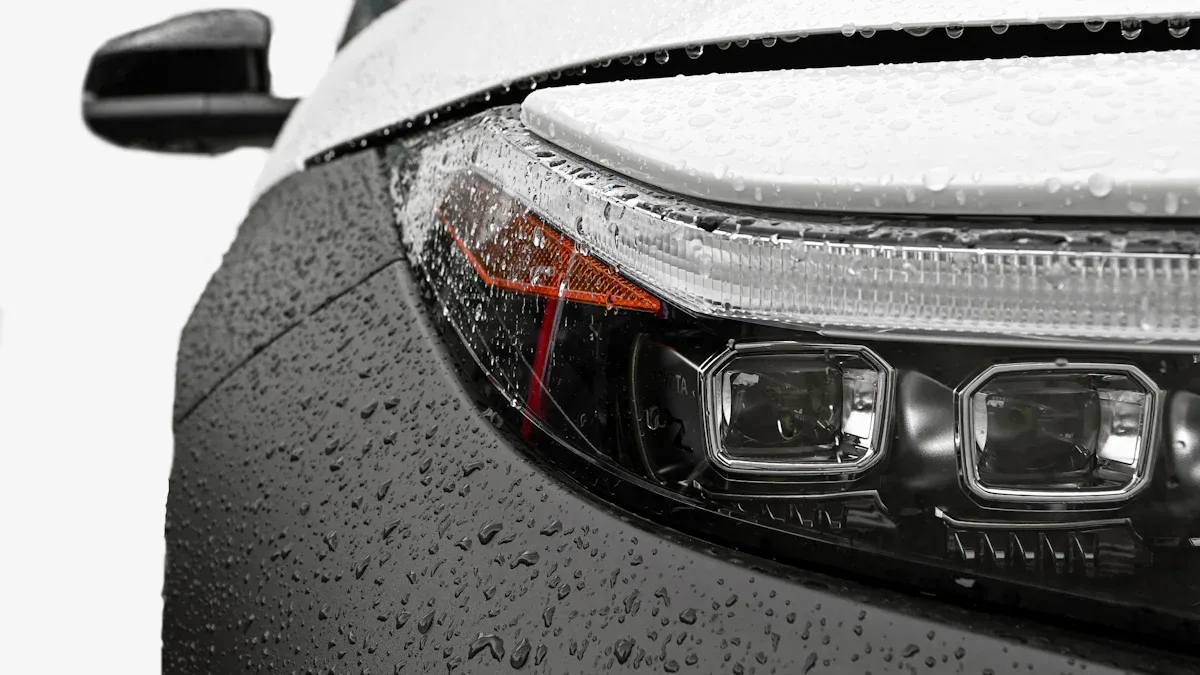
Your car headlights are crucial for safe driving. They sit at the front of your car. You use them to light up the road ahead, especially at night or in bad weather. Headlights also make your car visible to other drivers. Did you know different types of lights serve different purposes?
Headlight Type | Primary Use | Range | Angle |
|---|---|---|---|
Low Beams (Dims) | Normal nighttime driving, dim conditions (tunnels, parking lots) | Short-range (40 meters) | Angled towards the road to avoid blinding others |
High Beams (Brights) | Very dark areas with no oncoming traffic (country roads) | Long-range (100 meters) | Angled upwards to illuminate a wider and further area |
You also have signal lights on your car. These tell others when you plan to turn. Your car also has tail lights and brake lights at the back. These lights show your car’s presence and when you slow down.
Car Grille
The car grille sits at the front of your car, usually below the hood. Its main job is to cover an opening in the car’s body. This opening lets air flow into the engine bay. This airflow cools the radiator and engine. The grille protects these vital engine parts from road debris. While a car’s grille adds to its look, its primary function is to admit cooling air to the engine.
Manufacturers use many materials for grilles. Each material offers different benefits:
Material | Key Characteristics | Reasons for Use |
|---|---|---|
ABS (Acrylonitrile Butadiene Styrene) | – High impact resistance | – Widely used in automotive grilles due to its balance of properties and cost-effectiveness. |
PP (Polypropylene) | – Lightweight | – Often used in lower-end or less visible grille components due to its lower rigidity and aesthetic appeal compared to ABS. |
Metal (Aluminum, Stainless Steel) | – High strength and durability | – Used in premium or luxury vehicles for a high-end look and feel. |
Car Bumper
Your car bumpers are structures at the front and rear of your car. A front bumper and a rear bumper protect your car. They absorb impact during minor collisions. This absorption helps minimize repair costs. Car bumpers also protect other car body parts by spreading out the energy from an impact. They also help reduce injuries to pedestrians. Modern bumpers use softer materials and sit lower to the ground for this reason.
Windshield & Wipers
The windshield is the large window at the front of your car. It protects you from wind and flying debris like dust or rocks. Your windshield also plays a big role in safety.
Protection: Windshields shield occupants from wind and flying debris like dust, insects, and rocks.
Airbag Support: They provide crucial support for the passenger-side airbag during deployment. An improperly installed or damaged windshield can prevent the airbag from deploying correctly, increasing injury risk.
Impact Absorption: The laminated safety glass, with its plastic layer between two sheets of glass, absorbs the impact if an occupant is thrown forward in a collision. This design allows the plastic to flex, reducing overall impact.
Occupant Containment: Windshields are designed to keep individuals inside the vehicle during an accident. If the windshield separates, occupants can be ejected, significantly increasing the chance of bodily harm.
Roof Support: Modern windshields are integral to supporting a vehicle’s roof, preventing it from collapsing in a rollover accident. This is a critical safety function, as many vehicles no longer rely solely on steel pillars for roof support.
Wipers sit on the outside of the windshield. You use them to clear rain, snow, and dirt, keeping your view clear.
Car Mirrors
Your car mirrors give you important views around your car. You have side view mirrors on each side of your car. You also have a rearview mirror inside. These mirrors help you see traffic behind and beside you. This helps you change lanes and park safely. Modern car mirrors offer advanced safety features:
Auto-Dimming: This feature automatically adjusts brightness. It reduces glare from other car headlights. This improves night-time driving visibility and safety.
Blind Spot Detection: Sensors identify vehicles or obstacles in your blind spots. They display warnings to help you avoid lane-change accidents.
Integration with In-Car Displays: Some mirrors provide live camera feeds. These feeds show wide-angle views for parking or 360-degree views. This improves your awareness during maneuvers.
These advanced mirrors make driving safer.
Car Doors
Car doors allow you to enter and exit your car. They also protect you inside the car’s body. Each car door has many parts. You find door locks and latches on car doors. These secure the door to the car body. You can operate them manually or with a remote. Rear car doors often have child safety locks. Door switches connect to the interior lights. They also connect to warning systems. These systems tell you if a door is not closed. Most car doors have a window that moves up and down. You can operate this window manually or electrically. Car doors also have door brakes. These slow the door before closing. They also stop it from opening too far.
Car Wheels & Tires
Your car wheels and tires are essential for movement. The wheels are the round metal parts. The tires are the rubber parts that go around the rims. Your car engine relies on these parts to move the car. The engine converts fuel into energy. This energy turns the wheels. This makes the car move. Wheels reduce friction. They rotate around axles instead of sliding. This means less friction than dragging something on the ground. Wheels also provide leverage. Larger diameter wheels act like bigger levers. They multiply the pushing or pulling force. This makes it easier to turn the car wheel rims.
Trunk
The trunk is the largest storage area on your car. It sits at the rear of the car’s body. You use it to carry luggage, groceries, and other items. The trunk is an enclosed and lockable storage compartment. It is separate from the passenger cabin. Its design helps securely hold your belongings. Your car’s tail lights are often integrated into the trunk area or the rear bumper.
Key Interior Car Terms
You have learned about the essential exterior car parts. Now, let’s move inside your vehicle. Understanding these interior parts helps you control your car. It also makes your driving experience comfortable and safe. These are crucial essential exterior and interior terms for every driver.
Dashboard
The dashboard is the panel directly in front of you as you sit in the driver’s seat. It is like your car’s command center. You look at the dashboard to get important information. It shows your speed, fuel level, and engine temperature. Warning lights on the dashboard tell you if something needs attention. For example, a light might tell you to check your engine or that your oil is low. You also find controls for your radio, air conditioning, and navigation system on the dashboard. This central hub helps you monitor your car’s status and control many functions easily.
Steering Wheel
The steering wheel is the round control you hold to direct your car. You turn it left to go left and right to go right. This is your primary tool for controlling the car’s direction. Modern steering wheels do much more than just steer. They often have buttons for your radio, cruise control, and phone calls. This lets you keep your hands on the wheel and your eyes on the road. For added safety, many steering wheels include advanced features. Some have haptic systems. These systems use vibrating motors. They give you tactile alerts for things like lane departure or upcoming turns. This feedback works with driver assistance systems. It helps you stay aware and reduces distractions. Your steering wheel also contains an airbag. This airbag deploys from the top side of the wheel in a crash. It covers the display to protect you. Some steering wheels even have Hands-On-Detection (HOD) zones. This software detects your hand position. It can even recognize gestures.
Gear Shifter
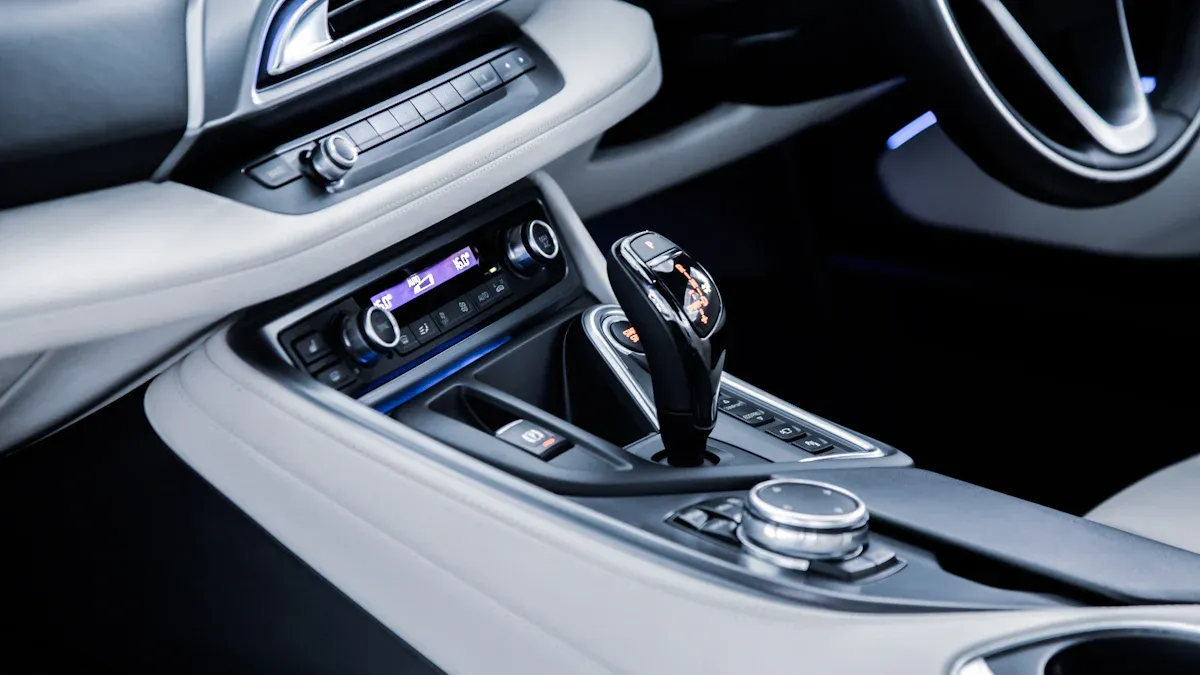
The gear shifter is the lever or button you use to select your car’s driving mode. You move it to put your car in Park (P), Reverse (R), Neutral (N), or Drive (D). In automatic cars, you usually just select “D” to go forward. In manual cars, you use the gear shifter to change gears as you drive. This controls how much power goes from the engine to the wheels. The gear shifter is vital for controlling your car’s movement. It lets you start, stop, and back up safely.
Pedals
Your car has at least two pedals on the floor. These are the accelerator and the brake pedal. In automatic cars, you use your right foot for both. You press the accelerator pedal to make the car go faster. You press the brake pedal to slow down or stop the car. Manual cars also have a third pedal on the left, called the clutch. You press the clutch pedal when you change gears. These pedals are fundamental parts of controlling your car’s speed and movement. They allow you to drive safely and react to traffic.
Car Seats
Car seats are where you and your passengers sit. They provide comfort and support during your drive. More importantly, car seats are crucial for safety. They hold you in place, especially during sudden stops or collisions. Modern car seats offer many features for comfort and safety.
Safety Standards: All car seats must meet federal safety standards. You should register your car seat for recall notices.
Appropriate Fit: The car seat must fit the occupant’s age, weight, and height. Always follow the manufacturer’s guidelines.
Ease of Use: A good car seat is easy to install and adjust. It should be compatible with your car.
Crash Test Ratings: Check crash test performance from organizations like NHTSA or IIHS.
For children, car seats have special safety features. Rear-facing seats often have load legs and anti-rebound bars. Load legs reduce forward rotation in a crash. Anti-rebound bars protect against rearward rotation. Many seats have a 5-point harness. This harness attaches at the shoulders, hips, and between the legs. It provides secure restraint. Car seats come in various upholstery materials. These include many types of automotive vinyl, such as Classic Automotive Vinyl, SIERRA, and MADRID. You can also find imitation suede and assorted body cloth.
Door Panels
The door panels are the interior coverings on your car doors. They make the inside of your car look finished. Door panels also serve many practical purposes. You often find armrests and door handles on them. They house the controls for your power windows and door locks. Inside the door panels, you find important components. These include electrical wiring for windows and door locks. Motors for these features are also inside. Impact-absorbing foam blocks are there for safety. Door panels also provide storage areas, like map pockets.
Headliner
The headliner is the fabric or material covering the inside of your car’s roof. It gives the interior a clean, finished look. The headliner does much more than just look good. It plays several important roles:
Insulation: The headliner insulates your car’s cabin. It keeps the car cooler in summer by blocking heat from the sun. It keeps it warmer in winter by holding in heat. It also helps prevent condensation from dripping inside.
Noise Reduction: It absorbs road noise, wind, and other outside sounds. This creates a quieter ride. The foam or padding layer dampens sound waves.
Aesthetics: A clean headliner makes your car’s interior look better. It can make the car feel newer. You can customize it with different colors and fabrics.
Preventing Damage: The headliner protects the bare metal roof from dust and dirt. It also shields wiring and other parts in the roof from heat and moisture.
Occupant Protection: In a crash, the headliner provides cushioning. This reduces the risk of head injuries. It prevents you from hitting the hard metal roof. This is very important in rollover accidents.
You now understand many essential exterior and interior terms. Knowing these car parts makes you a more confident car owner. This knowledge helps you make better maintenance decisions for your car.



