You are likely wondering about the wheel bearing replacement cost. For most vehicles, this can range from $250 to $500 per wheel. Luxury cars might even exceed $700. Your vehicle type, such as a truck or SUV, also affects the final cost. These often use more expensive parts than smaller cars. However, understanding the critical signs of a failing wheel bearing is key. Early detection helps you avoid higher repair costs and ensures your safety on the road. Ignoring a worn bearing can lead to serious safety issues. Recognizing these signs can save you money and prevent dangerous situations caused by a failing wheel bearing.
Wheel Bearing Replacement Costs Explained
You can expect a wheel bearing replacement cost to fall between $350 and $650 per wheel. Front wheel bearings often cost 15-20% more than rear ones. This is due to their more complex design and greater stress.
Cost Breakdown: Parts Versus Labor
The total cost for a wheel bearing replacement breaks down into parts and labor. A single wheel bearing unit typically costs you $50 to $200. Labor charges usually range from $250 to $500 per wheel for front wheel bearing work. This labor cost covers the mechanic’s time and expertise. Replacing a wheel bearing requires specialized tools and knowledge.
Cost Factors: Vehicle, Location, Mechanic
Several factors influence the final cost. Your vehicle’s make and model significantly affect the wheel bearing replacement cost. Dealerships often charge more for this service.
The style of the wheel bearing also plays a role. Traditional cone or roller wheel bearings are generally inexpensive, with parts costing $5-$30. However, labor costs are still a factor. All-wheel-drive (AWD) and four-wheel-drive (4WD) vehicles have higher labor costs. They require more complex disassembly of the hub. Newer cars often use hub-style bearings. These units require replacing the entire assembly. Parts for these cost $80-$300. You pay additional cost if the unit includes integrated ABS sensors. Some German and Japanese cars use pressed-on units. The bearing itself is cheaper, costing $20-$50. But these demand significant labor, often 2-4 hours. This translates to $150-$600 in labor. Mechanics must remove the entire knuckle for this type of bearing. Your geographic location also impacts the cost. Shops in areas with a higher cost of living charge more.
DIY Versus Pro Replacement: Cost-Benefit
You might consider a do-it-yourself (DIY) wheel bearing replacement to save money. While this can reduce your cost, it carries significant risks. Improper torquing of axle nuts is a common mistake. Failing to tighten axle nuts to manufacturer specifications can cause problems. Over-torquing puts excessive load on the new bearing. Under-torquing reduces bearing lifespan or can cause the assembly to fall apart.
Using cheap replacement parts is another risk. Low-quality or undersized wheel hub assemblies lead to premature failure. They negatively impact car performance. These parts prove less cost-effective than OEM-grade parts in the long run. Excessive force used during the removal of press-in bearings can damage the knuckle. For vehicles with performance upgrades like forged wheels, incorrect wheel bearing installation can result in more severe consequences. A professional mechanic ensures the job is done correctly. This prevents further damage and ensures your safety. Trusting a professional for your wheel bearing needs is often the best choice.
Why Early Detection of Wheel Bearing Wear Matters
Consequences of Ignoring Wheel Bearing Failure
Ignoring a failing wheel bearing creates serious problems. A wheel bearing failure can lead to severe damage to your vehicle. You face significant safety risks. Driving with a worn wheel bearing makes steering unpredictable. You might find it hard to control your car, especially during sudden turns or at higher speeds. A complete wheel bearing failure can even cause the wheel to separate from your vehicle. This leads to a dangerous loss of control. This type of failure is extremely hazardous. Imagine losing a wheel while driving; this is a real possibility with a neglected bearing issue. Continued driving with a bad bearing harms other parts. It damages the axle, hub assembly, and suspension components. This results in more expensive repairs and additional safety concerns. You must address any wheel bearing issue quickly. This prevents a catastrophic failure.
How Early Detection Saves Money
You save money by detecting wheel bearing wear early. Early detection prevents a small problem from becoming a huge cost. A minor wheel bearing issue is cheaper to fix. If you wait, the component’s failure spreads damage. This means you pay more for repairs. For example, a simple bearing replacement turns into replacing the entire hub assembly. You avoid replacing other parts like the axle or hub assembly. These parts become damaged when a wheel bearing failure occurs. Fixing a worn part early protects your wallet. It also ensures your safety on the road. You prevent a complete bearing breakdown and avoid further system failure. This saves you from much higher repair bills later. You also avoid potential towing fees and the inconvenience of a roadside breakdown.
12 Critical Signs of Wheel Hub Wear
You need to recognize the critical signs of a failing wheel bearing. Early detection helps you prevent more serious damage and ensures your safety. Here are 12 key indicators that your wheel bearing may need attention.
Grinding, Growling, or Humming Noises
You often hear a humming or grinding noise when a wheel bearing starts to fail. This sound usually gets louder as your vehicle speeds up. It might also change when you turn the steering wheel. For example, a failing left front bearing might make more noise when you turn right. This puts more load on that side.
Loose Steering or Wheel Play
You might notice your steering feels less precise. You could also feel excessive play in the wheel itself. This happens when the internal components of the wheel bearing wear out. This wear creates extra space within the assembly.
Uneven Tire Wear
A bad wheel bearing can cause your tires to wear unevenly. You might see cupping or feathering patterns on your tires. This happens because the worn bearing allows the wheel to wobble slightly. This wobble prevents the tire from making even contact with the road.
ABS or Traction Control Light
You might see your ABS or traction control light flash on your dashboard. A flashing ABS light at vehicle startup often signals a malfunction within the anti-lock brake system. The most frequent cause for a flashing ABS light is a malfunctioning wheel speed sensor in one of the four-wheel assemblies. If your vehicle has traction control, a malfunctioning wheel speed sensor would likely also trigger the traction control light. Excessive lateral end play in a wheel bearing can affect the tolerance between the sensor and the exciter ring. This leads to erratic speed sensor signals that impact the ABS system. Other factors like damaged wiring, corroded electrical connections, or debris on the magnetic encoder can also influence speed sensor output.
Vehicle Pulling to One Side
Your vehicle might pull to one side while you drive. A failing wheel bearing can cause this. It creates an imbalance in the suspension geometry. This imbalance can also lead to uneven tire wear, which further makes the pulling sensation worse. The car may pull to one side, especially during turns, when faulty wheel bearings begin to fail.
Steering Wheel or Floorboard Vibrations
You may feel vibration through your steering wheel or the floorboard. Moderate to advanced bearing wear, characterized by a growling or rumbling noise, can cause these vibrations. Front wheel bearing issues often manifest as noise felt through the steering wheel. They can cause steering wheel vibration, especially during turns. Rear wheel bearing problems can lead to noise felt through the seat or floor. Severe wear or damage leading to wheel wobble, which is excessive play in the wheel assembly, results in steering wheel shake. This happens particularly at highway speeds or during braking. Bad wheel bearing components can cause the steering wheel to vibrate. You also feel vibrations in the seats and floorboards. The intensity of these vibrations increases with vehicle speed and when turning.
Clicking or Clunking Sounds
You might hear clicking or clunking sounds. These noises often occur when you turn or go over bumps. They indicate excessive play within the wheel bearing assembly. This play allows components to move more than they should.
Wheel Wobble When Jacked Up
You can check for wheel wobble by jacking up your vehicle. Rock the jacked-up wheel at the 6 and 12 o’clock positions. Excessive play during this test often indicates a failing bearing. You can also spin the wheel to listen for grinding noises. This test helps you identify a bad wheel bearing before it causes more problems.
Excessive Heat From the Wheel Hub
You might notice excessive heat coming from the wheel hub. You can carefully touch the hub after a drive. If it feels much hotter than the other hubs, this signals a problem. Bearing temperatures between 250 and 300 degrees F indicate an alarm condition. This suggests the bearings are likely in some stage of failure. Temperatures exceeding 300 degrees F indicate a shutdown condition. This signifies the bearings are likely in the final stages of failure.
Brake Pedal Pulsation
You might feel your brake pedal pulsate. This can happen even if your brake rotors are in good condition. A worn wheel bearing can cause the rotor to wobble slightly. This wobble creates an inconsistent surface for the brake pads. This leads to the pulsating feeling.
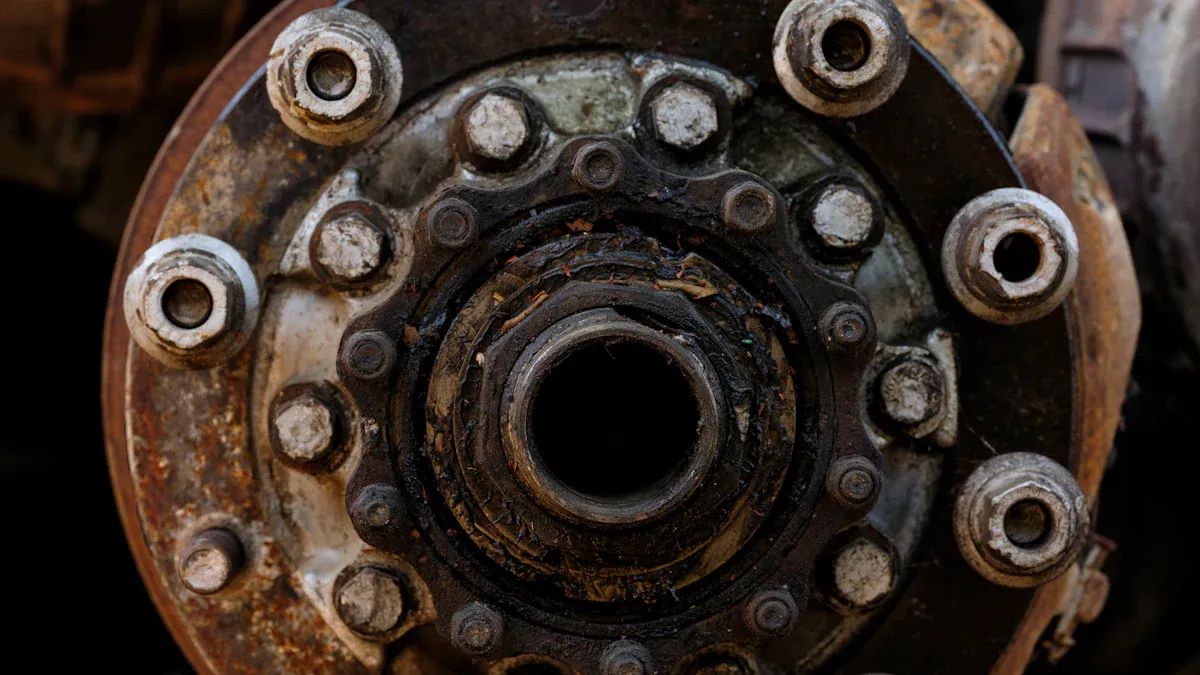
Grease Leaks Around the Hub
You might see grease leaking around the hub. A leak, often caused by a compromised axle seal, indicates a loss of lubrication integrity. This allows lubricant to escape. Contaminants like water and debris can then enter. This damages the bearing’s smooth surfaces. Such leaks are a common trigger for bearing and lubrication failure. Inspect for gear oil residue, metallic dust, or discoloration around the hub. This is a diagnostic step for a failing wheel hub. Ultimately, a leak signifies a loss of bearing precision and lubrication integrity. This can lead to total hub collapse if you do not address it.
Tip: Different greases exist for different applications. General Multi-Purpose Grease is water-resistant but not for high temperatures. High Temperature Multi-Purpose Grease is silicone-based and stable. Moly-Grease contains molybdenum for higher pressure. Marine Grease is ideal for vehicles exposed to water. Always check your owner’s manual for the correct type.
A Burning Smell
You might notice a burning smell coming from the wheel area. This smell often indicates overheating. The bad wheel bearing creates excessive friction. This friction generates heat. The heat can burn the grease inside the bearing. This produces a distinct burning odor. This is one of the more critical signs of severe wheel bearing failure.
What to Do When You Notice Signs
Immediate Action: Professional Inspection
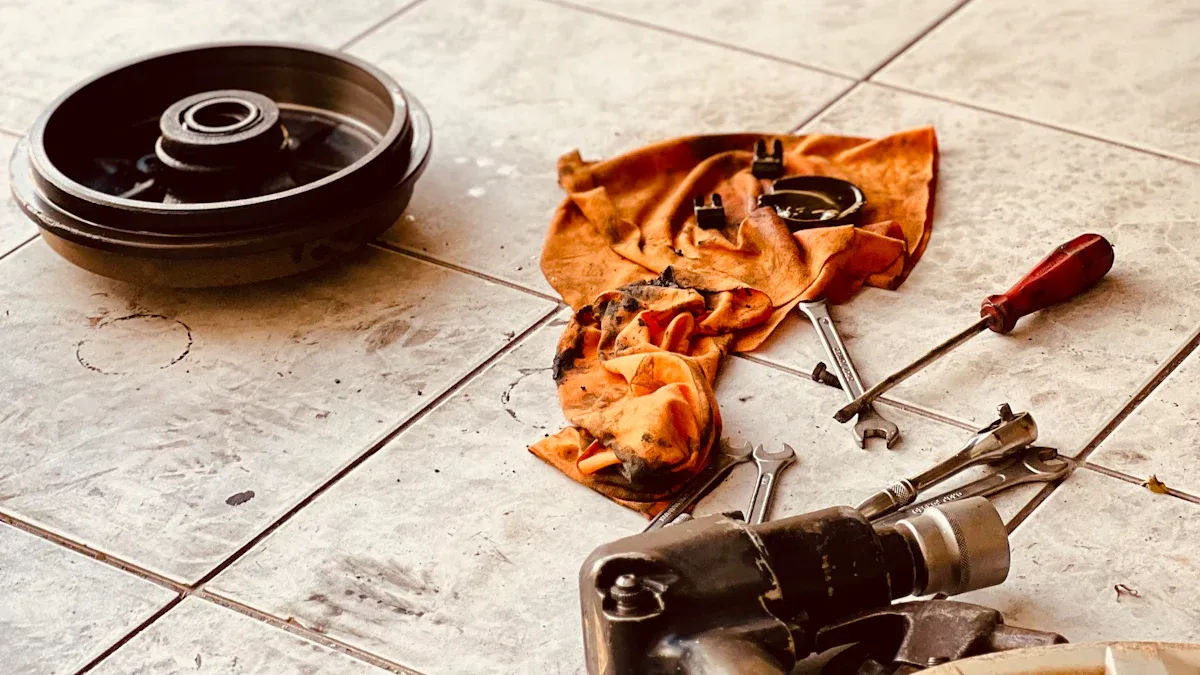
You must act quickly when you notice signs of a bad wheel bearing. Seek a professional inspection right away. Mechanics use specific steps to confirm a problem. They will first take your car for a road test in a quiet area. They listen for humming or growling noises. These sounds often get louder when turning away from the side with the issue. They also check for wheel play. They jack up your vehicle and secure it. Then, they grip the tire at the 12 and 6 o’clock positions. They push and pull it back and forth. Excessive wobble or looseness indicates a worn-out component. Mechanics spin the wheel by hand. They listen for grinding, rumbling, or clicking sounds. The wheel should spin smoothly. Resistance or roughness suggests a bad bearing. They also inspect the area. They use a flashlight to look for visible damage. This includes leaking grease, rust, corrosion, or heat discoloration. If needed, they might remove the wheel. They gently push or pull the hub with a tool to check for looseness. Significant movement confirms a problem. Sometimes, they use a mechanic’s stethoscope. This helps pinpoint the exact problematic area.
Importance of Timely Repair
You save yourself from bigger problems with timely repairs. Ignoring a failing bearing has serious consequences. You face an increased risk of the wheel detaching from your vehicle while driving. This can cause a catastrophic accident. A bad wheel bearing also puts extra stress on other parts. This includes your suspension and steering system. This added stress can lead to premature wear on these components. It can damage brake components too. This results in reduced braking efficiency. You might find your brakes do not work as well. Delaying repair means more costly and extensive work later. Other parts become affected and need replacement. You prevent these issues by fixing the problem promptly. This protects your safety and your wallet.
You now understand the typical wheel bearing replacement cost and the 12 critical signs of hub wear. Recognizing these indicators early ensures your safety and prevents more expensive repairs. Proactive maintenance protects your vehicle’s integrity. It also saves you money in the long run. Act promptly if you suspect a bad bearing. This protects your personal safety on the road. Addressing a failing bearing quickly is always the best approach.
FAQ
What causes wheel bearings to fail?
Wheel bearings fail from normal wear and tear. Poor road conditions, hard impacts, and incorrect installation contribute. Lack of proper lubrication or exposure to water and dirt also causes damage. Regular vehicle maintenance helps prevent early problems.
Can I drive with a bad wheel bearing?
You should not drive with a bad wheel bearing. It is unsafe. A failing bearing can cause your wheel to detach. This leads to a dangerous loss of control. Get it inspected and repaired immediately for your safety.
How long do wheel bearings last?
How long do wheel bearings last varies greatly. They often last between 85,000 and 100,000 miles. Your driving habits, local road conditions, and vehicle type all impact their lifespan. Regular checks help you monitor their health.
What happens if a wheel bearing completely fails?
If a wheel bearing completely fails, your wheel can lock up or detach. This causes a severe accident. It also damages your axle, hub, and suspension. You face very expensive repairs and serious safety risks.