

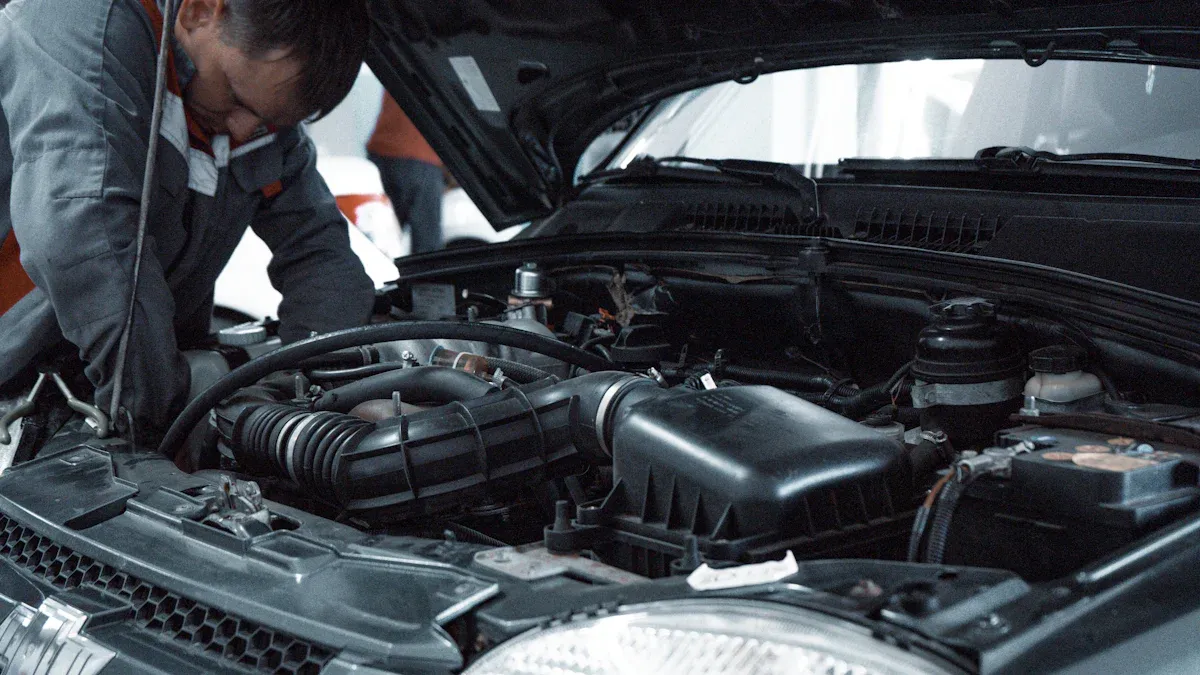
A fuel leaking issue is extremely serious. It demands your immediate attention. Any fuel leak presents significant safety hazards and severe risks. For instance, repairing a gas leak can cost you anywhere from $150 to over $1,500. This depends on how bad the leak is. You face potential vehicle damage and fire dangers. Your safety is paramount. You must address this fuel problem quickly. You need to know when to fix a gas leak yourself or when to contact professionals.
Key Takeaways
A fuel leak is very serious. It can cause fires or explosions. You must fix it right away.
Fuel leaks harm the environment. They also make you breathe bad fumes. This can make you sick.
Look for signs of a leak. These include a gas smell, puddles under your car, or a ‘Check Engine’ light. Fix the leak quickly.
Do not drive with a fuel leak. Pull over safely and get help. Call a mechanic if you are not sure how to fix it.
Causes of Fuel Leaking
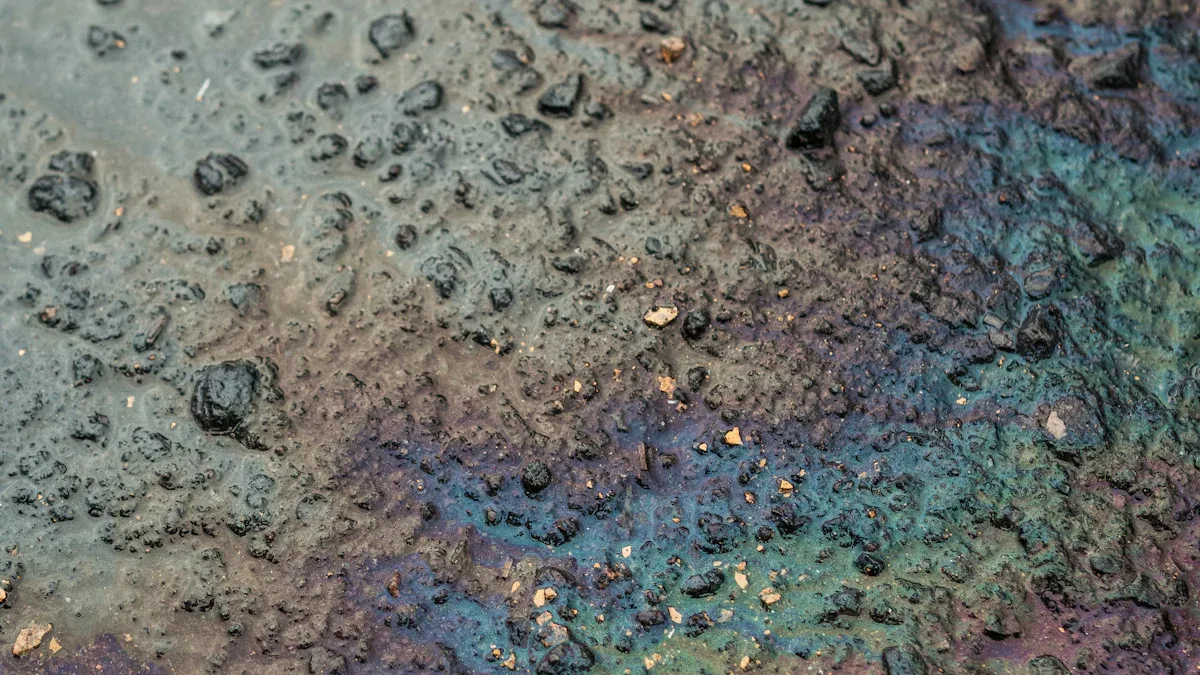
Many issues can cause fuel leaking. Understanding these helps you identify and repair the problem.
Damaged Fuel Lines
Your vehicle’s fuel line carries fuel from the tank to the engine. Road debris, corrosion, or simply age can damage this line. A damaged fuel line often results in a noticeable leak.
Faulty Fuel Tank
The fuel tank stores your vehicle’s fuel. Rust, punctures from road hazards, or manufacturing defects can cause a fuel tank to leak. Even small cracks in the fuel tank lead to a persistent leak.
Loose or Damaged Fuel Cap
A loose or damaged fuel cap is a common cause of a gas leak. This can happen due to a cracked cap, a worn-out gasket, or if you do not tighten the cap enough. Dirt, debris, or corrosion can make the cap difficult to remove. A clogged or damaged vent inside the cap can also cause pressure issues. Sometimes, you might simply lose the cap.
Worn Fuel Injector Seals
Fuel injectors deliver fuel into your engine. The seals around these injectors wear out over time. Worn seals allow fuel to escape, creating a leak. You might notice a fuel smell or visible fuel around the engine.
Malfunctioning Fuel Pump
The fuel pump moves fuel from the fuel tank to the engine. A faulty fuel pump can cause a leak or other problems. You might notice your engine sputters at high speed or loses power under load. Difficulty starting or sudden stalling while driving are also signs. An unexplained drop in fuel efficiency or a noisier fuel pump can indicate a problem. You might hear an unusual whining noise from the fuel tank area.
Corroded Fuel Filter
Your fuel filter cleans the fuel before it reaches the engine. Corrosion can damage the filter, leading to a leak. Water and acid mixtures in the fuel tank cause corrosion. Chemical corrosion from sulfuric acid can damage components. Rust and deposits can block the filter, creating sludge. This requires prompt repair.
Dangers of a Gas Leak
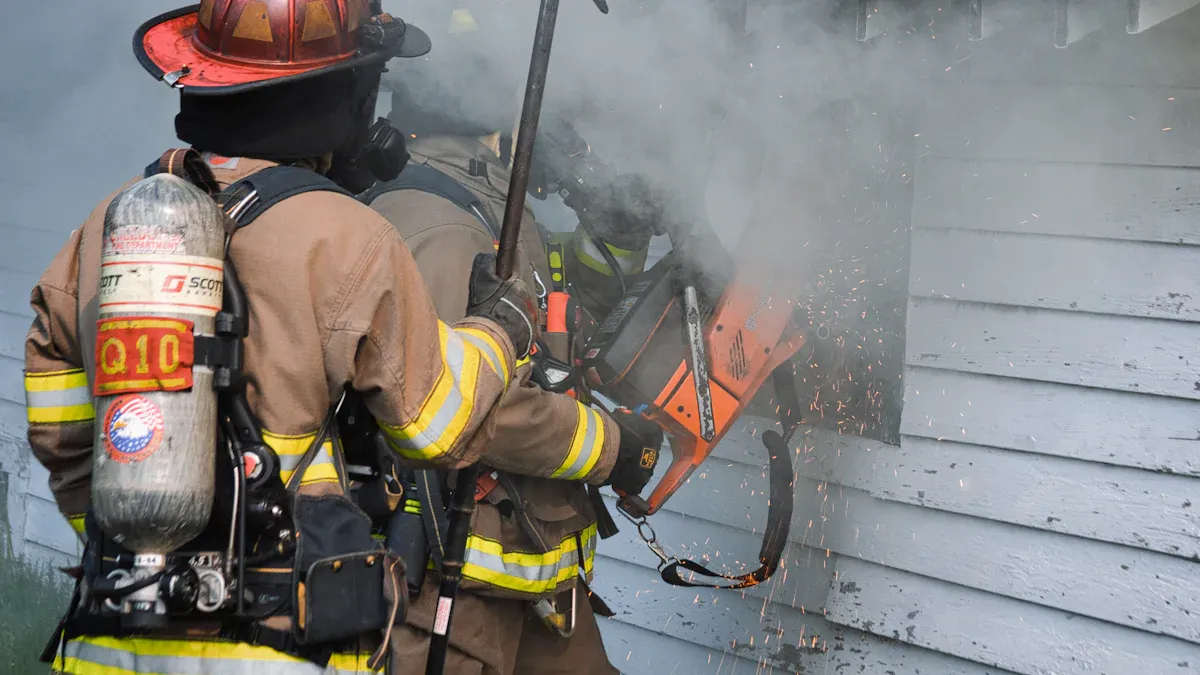
A gas leak presents many serious dangers. You must understand these dangers. This knowledge helps you take proper action. Ignoring a leak can lead to severe consequences.
Fire Hazard
A fuel leak creates an extreme fire hazard. Fuel vapors are highly flammable. They can ignite very easily. Even a small spark can cause a fire or an explosion. This risk is present whenever fuel escapes your vehicle. You must act quickly to prevent dangerous situations.
Consider the flash points of common fuels:
Fuel | Flash point |
|---|---|
Petrol (gasoline) | −43 °C (−45 °F) |
Coleman fuel (White Gas) | −4 °C (25 °F) |
Ethanol (70%) | 16.6 °C (61.9 °F) |
Jet fuel (A/A-1) | >38 °C (100 °F) |
Kerosene | >38 °C (100 °F) |
Diesel (2-D) | >52 °C (126 °F) |
Biodiesel | >130 °C (266 °F) |
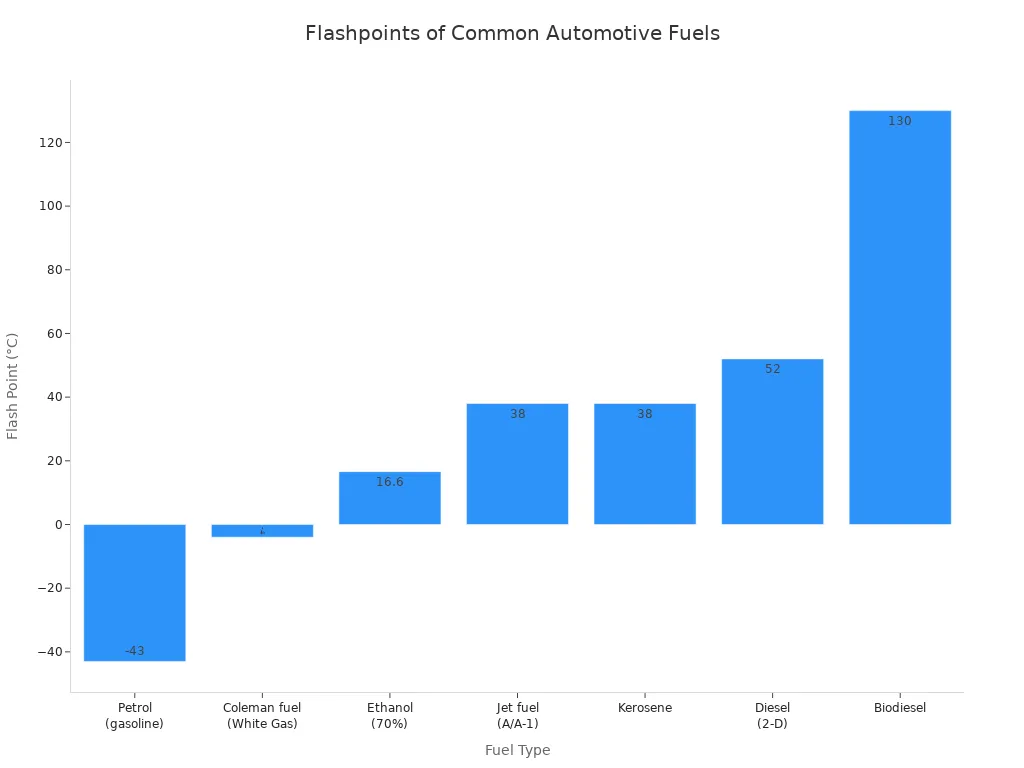
Gasoline has a very low flash point. This means it can ignite at extremely cold temperatures. This makes a gas leak particularly dangerous. You face significant risks of fire and explosions. Your safety depends on addressing this issue immediately.
Environmental Contamination
A fuel leaking vehicle harms the environment. Fuel spills contaminate soil and water. This pollution can spread quickly. It damages ecosystems and harms wildlife.
💡 Environmental Regulations:
The Oil Pollution Act of 1990 (OPA90) changed how the U.S. handles oil spills.
This act set rules for liability and cleanup costs.
It created the Oil Spill Liability Trust Fund (OSLTF).
The EPA also has rules like the Spill Prevention, Control, and Countermeasure (SPCC) rule. This rule prevents oil discharges into navigable waters.
You have a responsibility to prevent environmental damage. A leaking fuel tank or line can cause widespread contamination. The risks extend beyond your vehicle.
Health Risks
Inhaling fuel vapors poses serious health risks. You can experience immediate and long-term health problems. Fuel fumes are toxic.
⚠️ Health Effects of Fuel Vapors:
Short-term exposure: You might feel dizzy, get headaches, or experience nausea. Carbon monoxide poisoning can occur in confined spaces. This can lead to brain damage.
Long-term exposure: This can cause serious lung damage. It can also contribute to lung cancer. Harmful chemicals enter your bloodstream. They can hinder oxygen transport and damage tissues.
You must take precautions. Avoid breathing fuel vapors. Ensure good ventilation if you work near a leak. Your health and safety risks increase with exposure. Always ventilate the space when dealing with a gas leak.
Vehicle Damage
A persistent leak can cause significant damage to your vehicle. Fuel can corrode components. It can also mix with other fluids. This leads to costly repairs.
🛠️ Common Vehicle Damage from Fuel Leaks:
Engine Lubrication and Components: Fuel mixing with engine oil reduces lubrication. This causes increased friction. Parts like pistons and bearings wear out faster. You might need an engine rebuild or replacement.
Engine Overheating and Cooling System: Too much fuel in the engine makes it run rich. This creates excessive heat. It stresses parts like the head gasket. This can lead to catastrophic failure.
Internal Engine Components and Seals (Corrosion): Unburned fuel and gasoline contaminate motor oil. This creates acidic byproducts. These attack metal parts inside the engine. This includes the oil pan and seals. Parts fail prematurely.
Fuel Delivery System and Performance Components: Issues with the fuel delivery system reduce pressure. This affects fuel injection. Your engine’s power output drops. Combustion efficiency decreases. You will notice sluggish acceleration and worse fuel economy.
Fuel Pump and Catalytic Converter: Ignoring a leak can worsen problems. You might need to replace entire engine systems. This includes the fuel pump and the catalytic converter.
You face substantial repair costs. A small leak can lead to major accidents and system failures.
Reduced Fuel Efficiency
A gas leak directly impacts your vehicle’s fuel efficiency. You lose fuel that your engine never uses. This means you spend more money on gas. Your vehicle consumes more fuel than it should. This is a clear sign of a problem. You are literally watching your money drip away. This inefficiency also contributes to environmental issues. It can also indicate other underlying problems that could lead to dangerous situations or even explosions. You must address any leak to save money and prevent further accidents.
Identifying a Fuel Leak
You need to know how to spot a fuel leak. Early gas leak detection helps you prevent bigger problems. Look for these signs.
Visual Inspection
You can often see signs of a leak. Look under your parked car. You might see visible fuel puddles or wet spots. If you see liquid pooling or streaking under the car, especially near the center or rear, you likely have a leak. Fresh fuel feels slick and oily. It also evaporates quickly. Make sure to check your parking spot regularly, especially overnight.
You should also inspect specific parts of your vehicle. Common leak points include:
Faulty Seals/Gaskets: Check the large O-ring that seals the fuel pump assembly to the fuel tank. Also, look at smaller O-rings inside the assembly or where fuel lines connect.
Cracked Pump Housing: Look for stress cracks in the plastic housing of the pump assembly. Metal parts like pump brackets can also rust or crack.
Leaking Fuel Lines: High-pressure fuel lines, return lines, or vapor lines can loosen. Rubber hoses can crack from heat. Metal fuel lines can corrode.
Damaged Fuel Filler Neck: Leaks can happen at the filler neck or its rubber hoses that connect to the tank.
Failed Welds: Corrosion at weld points on the fuel tank can cause holes.
Smell of Fuel
A strong, persistent gasoline smell is a clear sign of a leak. You might notice this smell inside or around your vehicle. It can be strongest after you start or park your car. Any gasoline smell you detect requires your immediate attention. This specific smell can point to issues like a leaking fuel injector or a faulty fuel pressure regulator. The smell’s intensity can range from faint to very strong. The type of odor might resemble gasoline or diesel.
Drop in Fuel Economy
You might notice your car uses more fuel than usual. A sudden drop in fuel economy can signal a fuel leaking problem. Your vehicle burns fuel, but some fuel also escapes. This means you fill up your tank more often.
Check Engine Light
Your car’s computer can detect a problem. The Check Engine Light on your dashboard can turn on. This light often signals an issue with your fuel system. Specific codes can point to a leak. For example, code P0455 means a large leak in the evaporative emission system (EVAP). This system captures fuel vapors. Common causes include a loose gas cap or a cracked EVAP hose. Code P0440 is a general EVAP system issue. It can also mean a faulty gas cap or a leaking EVAP hose. These codes tell you to investigate further for a gas leak.
Fixing a Fuel Leak: DIY vs. Professional Help
You must address a fuel leak immediately. This section guides you through immediate safety measures. It also covers potential temporary fixes. You will find detailed steps for common repairs. We clearly distinguish between tasks suitable for DIY and those needing expert intervention.
Safety First: Immediate Actions
Your safety is the top priority when you discover a fuel leak. You must take immediate action.
Pull Over and Turn Off the Engine: If you are driving, pull over to a safe location. Turn off your engine at once. This stops the fuel pump from sending more fuel.
Turn Off the Gas Supply: If possible and safe, you should turn off the gas supply. Some vehicles have a fuel pump shut-off switch. Consult your owner’s manual for its location.
Evacuate the Area: Move yourself and any passengers away from the vehicle. Fuel vapors are highly flammable. You need to evacuate the area quickly.
Avoid Sparks and Flames: Do not smoke. Do not use your phone near the leak. Avoid any ignition sources. Even a small spark can cause a fire.
Call for Help: If the leak is significant, or you feel unsafe, call emergency services. Then, call a professional mechanic. These safety precautions protect you and others.
Temporary Fixes (Use with Caution)
You might consider temporary fixes for a fuel leak. These solutions are only for emergencies. They help you get your vehicle to a repair shop. They are not permanent solutions.
Fuel tank repair kits can offer a very temporary patch. However, these kits have many limitations and risks:
They cannot permanently fix significant damage.
They are unsuitable for plastic tanks.
The repair is temporary.
Fuel additives can cause chemical degradation.
Temperature sensitivity can lead to softening or brittleness.
Vehicle vibrations and stress make them vulnerable.
They lack long-term durability.
They create a false sense of security.
They can mask bigger underlying problems.
They pose serious safety hazards like fire and explosion.
They can lead to environmental contamination.
They might increase future repair costs.
You could face legal and insurance liabilities.
You should use these temporary fixes with extreme caution. Always plan to get professional repair as soon as possible.
Replacing Damaged Fuel Lines
You cannot patch a leaking fuel line. Replacement is necessary. You need to identify the compromised line. Then, you must replace it with a new one. This task requires some mechanical expertise.
You will need specific tools for this repair:
Fuel Line Quick Assembly Tool (AFP-1000): This tool helps you repair nylon fuel lines quickly. It inserts connectors and barb fittings without heating. You can make custom-sized lines.
Fuel Line Assembly Tool (AFT-2000): You use this tool to attach repair assemblies to nylon fuel lines. It fixes splits in 5/16” and 3/8” nylon lines. You can use it on or off the car. It includes a 9/16” ratcheting wrench.
Quick Disconnect Retainer Removal Tool (DT-1B): This tool is for 5/16” or 3/8” quick disconnect retainers.
If you are unsure, call a professional. They have the right tools and expertise.
Repairing or Replacing the Fuel Tank
A faulty fuel tank often requires professional attention. Small punctures or cracks might be repairable. However, extensive damage usually means replacing the entire fuel tank. Ignoring a fuel tank leak can lead to serious safety hazards. These include fire and environmental contamination.
Professionals recommend repair services for a suspected fuel tank leak. This ensures proper repair. It minimizes future leaks. It also ensures compliance with environmental regulations. This enhances safety and is cost-effective in the long run. You need specialized expertise for this job.
Tightening or Replacing the Fuel Cap
A loose or damaged fuel cap is a simple fix. First, check if the cap is tight. Turn it until you hear a click. If the cap is cracked or the gasket is worn, you need to replace it. This is an easy DIY task. It can fix a gas leak and prevent fuel evaporation.
Replacing Fuel Injector Seals
Replacing fuel injector seals can fix a gas leak around the engine. This task requires careful work and specific safety precautions.
First, you must ensure safety:
Always disconnect both negative battery cables first.
Work only on a completely cool engine to avoid burns.
Be aware of high-pressure hazards. Modern systems can hold up to 30,000 PSI. A pinhole leak can inject fuel through your skin. Never place your hands near pressurized lines.
Follow the manufacturer’s procedure to relieve all fuel system pressure. Do this before disconnecting any lines.
Work in a well-ventilated area. Keep the workspace clean to prevent fire and slip hazards.
Eliminate all ignition sources. Keep a fire extinguisher nearby.
Here are the steps for replacing the seals:
Remove the fuel rail: Relieve fuel pressure. Remove the fuel pump relay. Start the engine until it dies. Disconnect injector plugs and harness. Blow out injector pockets with compressed air. Carefully remove the fuel rail. Secure plastic spacers.
Clean injector ports: Vacuum any debris from the injector ports. Scratch loose any stubborn junk. Ensure no dirt enters the engine.
Replace injector seals: One by one, remove the O-ring and rubber seal from each injector. Lubricate and install new seals and O-rings. Clean carbon buildup from injector tips if necessary.
Reinstall fuel rail: Lubricate and place new intake seals into the intake pockets. Carefully insert each injector into the intake seals. Position the fuel rail. Install plastic spacers. Tighten the four bolts.
Final connections and test: Reconnect the harness and all plugs. Align injector plugs with fuel rail tabs. Reinstall the fuel pump relay. Cycle the key a few times to prime the fuel system. Then, start the engine. Test for leaks by spraying brake cleaner around the injectors. The idle speed should remain stable.
This repair requires precision and adherence to safety precautions. If you lack confidence, seek professionals.
When to Call a Professional Mechanic
You should call a professional mechanic for many fuel leak situations. Their expertise ensures proper diagnosis and repair.
Consider calling professionals if:
You suspect a fuel tank leak. Professional repair services are recommended. They address the issue promptly and effectively.
The leak is significant.
You cannot identify the source of the leak.
The repair involves high-pressure fuel systems.
You lack the proper tools or expertise.
You feel uncomfortable performing the repair yourself.
Ignoring a fuel tank leak can lead to serious safety hazards. These include fire and environmental contamination.
Professional repair ensures proper repair. It minimizes future leaks. It ensures compliance with environmental regulations. It enhances safety. It is cost-effective.
For complex issues or if you are unsure, always trust professionals. They have the expertise to handle any gas leak repair safely.
Never ignore fuel leaking. It is a serious issue, no matter its size. Prompt identification and repair protect your safety, the environment, and your vehicle’s longevity. You must take immediate action to fix a gas leak. Seek professionals when needed. This prevents severe consequences from any fuel leak. Your quick repair ensures your safety.
FAQ
Is a small fuel leak dangerous?
Yes, even a small fuel leak is very dangerous. Fuel vapors are highly flammable. They can ignite easily from a spark or heat source. This creates significant fire and explosion risks. You must address any leak immediately.
How can I tell if my car has a fuel leak?
You can often smell gasoline around your car. Look for puddles or wet spots under your vehicle. Your fuel economy might drop suddenly. The “Check Engine” light could also turn on. These are all signs of a potential leak.
Can I drive with a fuel leak?
No, you should not drive your car with a fuel leak. Driving with a leak increases the risks of fire and explosion. It also harms the environment. You should pull over safely and turn off your engine. Call for professional help.
What should I do immediately if I smell gas?
If you smell gas, pull over to a safe spot. Turn off your engine right away. Move away from the vehicle. Avoid any open flames or sparks. Do not smoke. Call a mechanic or emergency services for assistance.



