

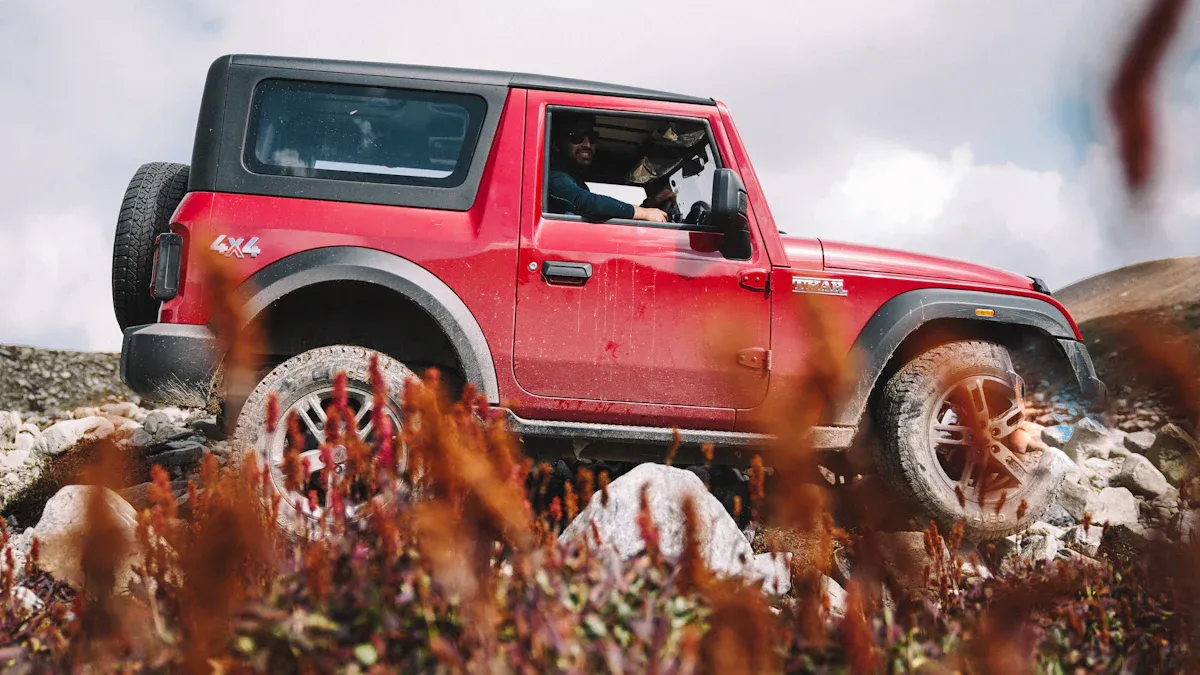
Many off-road enthusiasts often confuse all-wheel drive (AWD) and four-wheel drive (4WD). Both systems provide enhanced traction. They aim for maximum traction when needed. However, their underlying mechanics and off-road capabilities vary greatly. Understanding these major differences helps you choose the right vehicle. You can then tackle challenging off-road trails and conditions safely. This guide clarifies the difference between AWD and 4WD, outlining 9 crucial distinctions for successful off-roading.
Key Takeaways
AWD systems work automatically. They improve traction for daily driving and light off-road use.
4WD systems offer manual control. They have low-range gears for serious off-road challenges.
AWD vehicles are better for paved roads and mild conditions. 4WD vehicles are built for extreme off-road terrains.
4WD vehicles often cost more to buy and maintain. They have heavy-duty parts and use more fuel.
Choose AWD for safety in bad weather. Choose 4WD for rugged trails and tough off-road adventures.
Understanding AWD: The Basics
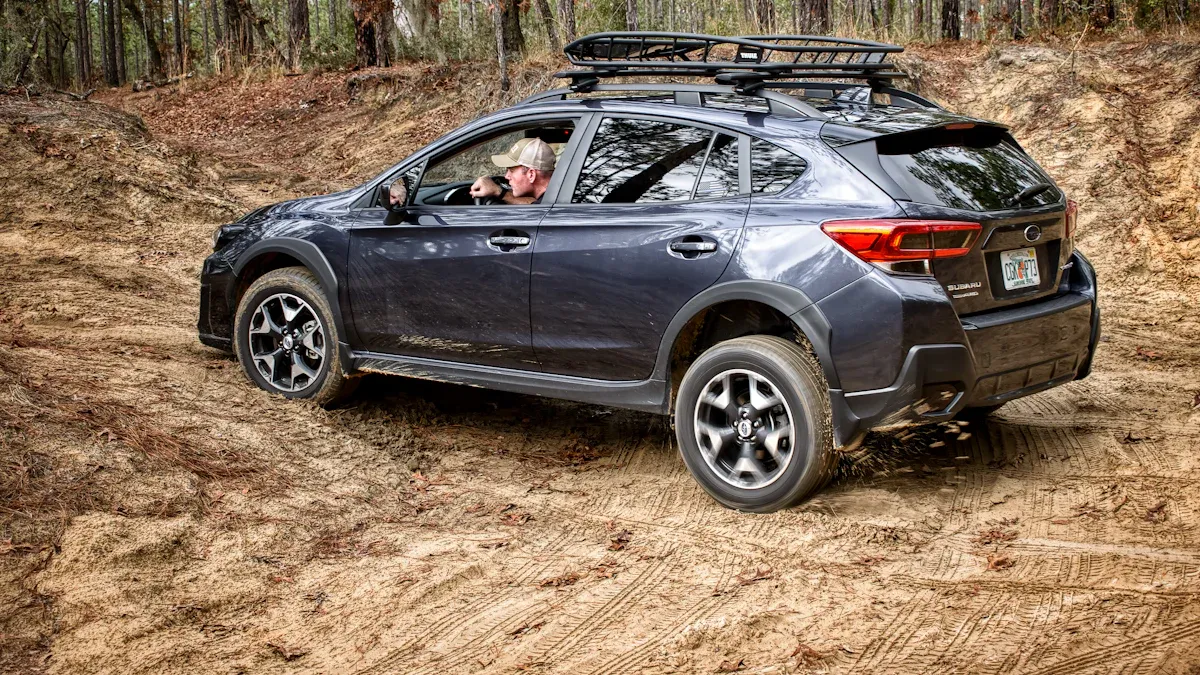
You often hear about all-wheel drive (AWD) in many vehicles today. An awd system sends power to all four wheels. This improves your vehicle’s grip on various surfaces. The front and rear differentials can spin at different speeds. This is important for smooth driving, especially when turning.
How AWD Systems Function
Your awd system operates automatically. A computer controls it. This system constantly monitors wheel speed and other factors. It decides where to send power. A key component is the center differential. This part acts as the primary power-splitting mechanism. It distributes engine torque between the front and rear axles. This allows axles to rotate at different speeds. This prevents drivetrain binding during turns. Some older awd systems use a viscous coupling. This sealed housing contains silicone fluid and plates. When one axle spins faster, the fluid thickens. This links the plates and transfers torque to the slower axle. This automatic operation makes awd well-suited for everyday driving. It also improves handling on paved roads or during light off-roading.
Types of AWD Systems
You will find two main types of awd systems. Full-time awd is continuously active. It always sends power to all four wheels. This provides excellent traction in all conditions. It operates seamlessly without your input. However, it can use more fuel. On-demand awd systems work differently. They primarily operate in two-wheel drive. They automatically engage awd when they detect wheel slip. This offers convenience and better fuel economy than full-time awd.
Common AWD Vehicles
Many popular vehicles feature awd. You can find awd vehicles across various brands. Mercedes-Benz offers 4MATIC systems in models like the C-Class and GLC. Subaru is famous for its symmetrical all-wheel drive in vehicles like the Outback and Forester. Acura uses SH-AWD in models such as the TLX and MDX.
Audi’s S and RS models also feature advanced awd technology. BMW’s xDrive systems are in their 3 Series and X models. Genesis offers awd in the GV70 and GV80. Volvo’s Instant Traction awd is in almost all their current models. These awd highlights show how common and beneficial these systems are for daily driving and improved safety.
Understanding 4WD: The Basics

You understand that 4wd also sends power to all four wheels. This system is specifically designed for off-road vehicles. It offers significant off-road capability. A four-wheel drive system, also known as 4×4 or 4WD, can deliver torque to all its wheels simultaneously.
How 4WD Systems Function
You can manually engage 4wd. This gives you more control. You often find options like 4-Hi and 4-Lo. A crucial component in this system is the transfer case. This part sends power to all four wheels. It often includes extra gear ranges.
Differentials are also essential parts of the drivetrain. These mechanical gadgets split the drive to power the front and back axles simultaneously. Drive shafts transmit the drive from the engine to the differentials. Axles are also key components of the drivetrain. This manual control is especially useful in challenging terrain scenarios.
Types of 4WD Systems
You will find different types of 4wd systems. These are often called part-time or full-time 4WD. They are primarily built for rugged, off-road conditions. These systems feature a transfer case for even power distribution to axles. You can manually engage or disengage the system. This includes low-range gearing for extreme terrains. 4wd is known for robust construction and driver control. It often has selectable drive modes.
Common 4WD Vehicles
Many popular 4wd models are available. You can find 4wd in trucks and off-road SUVs. Examples include the Ram 1500 and Jeep Wrangler. Other common 4wd vehicles are the Ford F-150 and Chevrolet Silverado 4WD. The Toyota Tacoma 4WD is also a popular choice. For SUVs, you might see the Jeep Grand Cherokee. These 4wd highlights show the range of vehicles designed for tough conditions. These vehicles provide excellent traction when you need it most.
Major Difference 1: Engagement & Operation
AWD’s Automatic Engagement
You will notice one of the most significant differences in how you engage the system. An awd system operates automatically. It requires no input from you. Awd systems constantly monitor road conditions. They adjust power between the front and rear wheels as needed. This happens seamlessly.
Full-time all-wheel drive keeps all four wheels engaged constantly. It varies power splits, giving you immediate traction benefits. This system is always on and ready. It automatically adjusts power. On-demand awd primarily uses two-wheel drive for better fuel efficiency. It engages the other wheels only when sensors detect slipping or hard acceleration. This gives you awd benefits when you need them.
This results in better grip on slick roads. You get more stability in corners and confident acceleration from a stop. This is true even in snowstorms. When wheels spin on ice, awd minimizes wheelspin. It distributes power across all four wheels. This makes accelerating from a standstill on slippery surfaces straightforward. This advantage helps in mud and rain. It provides grip to navigate standing water and unpaved roads.
4WD’s Manual Control
In contrast, 4wd offers manual, driver-controlled engagement. You decide precisely when to engage different modes. This gives you superior control in off-road scenarios. Four-wheel drive systems provide a simpler design.
This contributes to reliability. They offer high durability, ensuring longevity in demanding conditions. You will find a low failure rate, especially when used correctly. These systems give excellent performance in most off-road situations. You can choose between 4 High (normal default) and 4 Low. 4 Low provides fine-grained crawl control.
It also enables other features. You can engage differential locks, typically only in 4 Low, for enhanced traction. You can also disconnect the sway bar in 4 Low. This improves articulation over uneven terrain. You get multiple settings for traction control. This allows you to choose the level of intervention. This direct control is preferred by experienced off-roaders. They find mode-based systems limiting.
Difference 2: Low-Range Gearing
You will find low-range gearing is one of the major differences between these two systems. This feature significantly impacts a vehicle’s off-road capability.
Absence in Most AWD
Most awd vehicles do not have low-range gearing. Their design focuses on improving traction for everyday driving. They handle slippery roads, light snow, or gravel paths well. These systems are not built for extreme off-road challenges. Low-range gears would add complexity and cost. They are also unnecessary for the typical use of an awd vehicle. You will rarely need the extra torque at very slow speeds in a crossover or sedan.
Presence & Purpose in 4WD
In contrast, 4wd systems almost always include low-range gearing. This feature is essential for serious off-roading. Low gears increase engine power while reducing speed. This functionality is very useful when you drive on steep hills, tow heavy loads, or navigate tough terrain. Unlike higher gears designed for speed, low gears prioritize power.
They allow the engine to work harder and turn more often. This provides greater control. It makes driving safer and smoother in difficult situations. It also reduces reliance on brakes during descents.
Low-range gearing in 4wd systems sends more torque to the wheels at a slower speed. This increased torque is crucial for navigating challenging conditions. Think about rock crawling, descending steep grades, or traversing mud. You need a slow, careful speed without sacrificing power. It allows your vehicle to overcome obstacles with power, not just speed. This makes it ideal for speeds around 10 to 15 mph. It also prevents potential damage to your vehicle.
Low range gears make it easier for you and your vehicle to handle steep inclines. Using low range significantly reduces stress on the drivetrain. This prevents overheating, especially in automatic transmissions, during demanding climbs. When you travel downhill on steep tracks, low range offers more control. It reduces the need for extensive braking by using engine braking. This slows your vehicle’s forward movement.
Low range also helps in situations like exiting a beach or navigating slippery boat ramps. It provides added traction and engine braking. You should use it carefully and in straight lines to avoid drivetrain damage.
Difference 3: Locking Differentials
Limited Availability in AWD
You will find that most awd vehicles do not have locking differentials. This is one of the major differences between the two systems.
An open differential allows wheels on the same axle to spin at different speeds. This is good for smooth turning on paved roads. It prevents tire scrubbing and drivetrain stress. Awd systems prioritize this smooth operation for daily driving. They focus on improving traction in slippery conditions like rain or light snow. Locking differentials would add complexity and cost. They are also generally unnecessary for the typical use cases of an awd vehicle.
Commonality & Function in 4WD
In contrast, locking differentials are common in 4wd systems. They are crucial for serious off-roading. Locking differentials enhance 4wd performance. They form a physical connection between both axle shafts when engaged. This ensures 100 percent power goes to both wheels. This mechanism provides unmatched off-road traction. It works regardless of conditions like ice, snow, sand, or mud. It also helps when only a few tires are on the trail.
These differentials are engineered for maximum traction. They ‘lock’ both wheels of an axle together. This ensures all applied torque reaches the ground. This is critical for off-roading where ‘spinning isn’t winning.’ Locking differentials significantly enhance 4wd vehicle performance. They ensure all four tires receive power.
This prevents situations where a single wheel with no traction stops forward progress. Unlike open differentials that send power to the wheel with the least traction, lockers keep both wheels at either end of an axle turning. This effectively transforms a ‘pseudo 4×4 into a real four-wheel drive.’ This direct power delivery is crucial for maintaining momentum in challenging off-road conditions.
Difference 4: Off-Road Terrain Capability
You will find a major differences in what terrains each system can handle. This distinction is crucial for your off-roading adventures.
AWD for Light Off-Road Use
You can use awd for light off-road conditions. It works well on snowy, icy, or muddy roads. It also improves acceleration in slippery conditions. AWD vehicles are well-suited for challenging road conditions. These include “rugged, trenched, deep pothole-d road conditions” and “rough winter conditions” found in places like the Rocky Mountains. They offer “all-season confidence” and handle “most situations, on the road or off.” You can confidently drive on gravel roads or through light snow. Many awd systems offer various drive modes to help you:
Sport drive mode
Snow drive mode
Tow drive mode
Trail drive mode
Sand drive mode
These modes enhance traction and control for specific situations. For example, the snow mode helps when driving in snow.
4WD for Extreme Off-Roading
You need 4wd for serious off-roading. This system offers significant off-road capability. It is designed for challenging off-road conditions like deep mud, large rocks, and soft sand. A four-wheel drive vehicle excels on tough off-road trails. You can tackle:
Mud trails: Driving through muddy and slippery terrain often requires full-time four-wheel drive.
Sand and desert: Soft sand surfaces need wider tires and lower tire pressures. This maximizes traction and prevents getting stuck.
Snow: Similar to mud, snow off-roading involves tackling slippery conditions.
Rock crawling: This challenging activity involves navigating over rocks and boulders. It requires a modified off-roader with ample ground clearance and aggressive tires.
This robust system allows you to conquer extreme backcountry conditions. It gives you the power and control needed for true driving off-road.
Difference 5: On-Road Performance
AWD for Daily Driving
You will find that awd systems excel in daily driving. They offer versatility and convenience. These systems enhance stability and traction on various surfaces. An all-wheel drive vehicle provides superior traction and stability.
This reduces your risk of skidding. It also improves handling on wet or icy roads. You get enhanced acceleration and handling. This makes it suitable for high-performance driving in challenging conditions. For everyday winter driving, awd vehicles are a safe option. They offer enhanced traction on snow-covered roads.
However, you should understand some limitations. Awd improves traction by distributing power. It cannot create traction where none exists. This means it won’t help on pure ice or deep, slick mud. It also does not improve braking performance.
Braking depends on your tires and the road surface. You must also maintain your awd system properly. Mismatched tires with different diameters create false signals. This stresses the awd system. It can lead to transmission or differential problems.
All four tires must be the same size, brand, and model. Tread depth differences should not exceed 2/32 inch between any tires. You must also maintain equal tire pressure. Neglecting maintenance, like installing only two new tires, can lead to expensive repairs. For example, a $560 tire ‘saving’ once resulted in a $2,800 repair bill for center differential failure.
4WD for Dedicated Off-Road
Dedicated off-road vehicles with 4wd systems are primarily designed for serious off-road capability. This includes rock crawling and deep mud. This design choice significantly impacts their on-road performance. It makes them less efficient and more ‘truck-like’ on pavement. In four-wheel drive mode, especially when locked, the front and rear axles spin at the exact same speed.
While ideal for loose surfaces, this can cause binding and damage to the drivetrain on dry pavement. You must manually engage and disengage it. These vehicles typically feature higher ground clearance, skid plates, and off-road tires as standard. All these features contribute to their ‘truck-like’ feel and reduced on-road refinement.
Difference 6: Fuel Efficiency
Generally Better in AWD
You will notice a difference in fuel efficiency between these systems. Vehicles with an awd system generally offer better fuel economy. These systems are often lighter. They also have less complex components. Many all-wheel drive systems operate automatically. They only engage all four wheels when needed. This reduces constant drag on the engine.
It saves fuel during normal driving. For example, on-demand awd systems primarily use two-wheel drive. They only send power to all wheels when sensors detect slip. This smart operation helps you save money at the gas pump. You get improved traction without a huge penalty in fuel consumption.
Often Lower in 4WD
In contrast, a 4wd system typically has lower fuel efficiency. These vehicles carry heavier components. They include a robust transfer case and stronger axles. These parts add weight. They also create more friction within the drivetrain. This requires more power from the engine. A four-wheel drive system is built for extreme conditions. Its design prioritizes durability and off-road capability. Fuel economy is a secondary concern.
When you engage 4wd, the system constantly sends power to all four wheels. This uses more fuel. Larger, aggressive off-road tires also increase rolling resistance. Higher ground clearance adds to aerodynamic drag. All these factors contribute to lower miles per gallon. You trade some fuel efficiency for superior off-road prowess.
Difference 7: Durability & Robustness
You will notice a clear difference in how manufacturers build awd and 4wd systems. This affects their durability and robustness. Each system is designed for different demands.
AWD System Design
Awd systems are generally less robust than their 4wd counterparts. Engineers design them for lighter duty. They focus on improving traction for everyday driving. These systems often use lighter components. They also have more complex electronic controls. These parts are not meant for the harsh impacts of serious off-roading.
You will find that an all-wheel drive vehicle’s drivetrain can be more susceptible to damage on rough trails. This is because its components are not built to withstand extreme stress. They are perfect for paved roads and light gravel. They are not ideal for heavy rock crawling or deep mud.
4WD Heavy-Duty Components
Four-wheel drive systems are built for extreme conditions. They feature heavy-duty components. These parts withstand the rigors of off-road adventures. You will find these systems use stronger materials and designs. This ensures reliability in challenging environments. For example, 4wd vehicles often have:
Heavy-Duty Axles: These are crucial for 4wd vehicles. They handle larger tires and extra weight. They provide the necessary power and durability for tough terrains. Chromoly is a recommended material for optimal strength.
Winches: This is an essential recovery tool for off-roading. It allows you to pull your vehicle out of difficult situations. You consider pulling power, motor type, and line material when choosing one.
Recovery Straps: You use these with another vehicle to free a stuck 4wd. These heavy-duty straps have high load rates. They also feature reinforced stitching. This helps them withstand strong recovery forces.
Skid Plates: These protect the underside of your vehicle. They guard against damage from rocks, stumps, and other obstacles. Strong materials like steel or aluminum offer maximum protection.
Rock Sliders: These protect the sides of your vehicle. They prevent damage when you navigate rough terrain or narrow trails. High-quality rock sliders are typically made from heavy-duty steel. They endure significant impact.
These robust components make 4wd systems highly durable. They are ready for the toughest trails.
Difference 8: Vehicle Types & Use Cases
You will notice a clear distinction in the types of vehicles that use each system. This reflects their intended purpose and capabilities.
AWD in Crossovers & SUVs
You will find awd systems most commonly in SUVs, crossovers, and even performance sedans. An all-wheel drive system is excellent for everyday driving. It helps you on wet roads, in snow, and during light off-roading. AWD vehicles give you all-season confidence. They handle most situations on the road or off.
You get improved stability and cornering on dry roads. This makes your driving experience more controlled, especially on winding roads or during quick maneuvers. AWD is highly effective in diverse weather. In snowy and icy conditions, awd enhances traction. It distributes power to all four wheels. This reduces the chance of getting stuck. It also allows smoother movement on slippery hills or snow-covered roads.
For rainy and wet roads, awd improves grip. It minimizes the risk of hydroplaning. You feel more confident navigating puddles or slick surfaces. Remember, awd aids in acceleration and traction. It does not replace the need for appropriate winter tires in extreme conditions.
4WD in Trucks & Off-Roaders
You will typically find 4wd systems in trucks, Jeeps, and dedicated off-road SUVs. These are the primary 4wd vehicles. A four-wheel drive system is ideal for climbing steep hills. It helps you crawl over rocks. You can navigate deep snow or mud.
4wd provides superior traction and power in challenging environments. It is beneficial when you tow heavy loads in difficult conditions. You can use these vehicles in rural areas for unpaved roads. They offer maximum capability in severe weather or terrain. These 4wd systems are your best choice for off-road adventures. They are designed for rugged terrain and extreme conditions.
Difference 9: Cost & Maintenance
You will find that the initial purchase price and ongoing maintenance costs differ between these two systems. These financial aspects are important to consider when choosing your vehicle.
AWD System Costs
You will notice that vehicles with an awd system often have a slightly higher initial purchase price. This is compared to their two-wheel drive counterparts. The added mechanical components, such as the center differential and extra drive shafts, contribute to this cost. Maintenance for an awd system can also be a bit higher.
You need to perform regular fluid changes for the differentials and the transfer case. These services are crucial for keeping the system running smoothly and preventing premature wear. If a repair becomes necessary, it might be more complex due to the integrated electronic controls. This often translates to higher labor costs at the mechanic.
However, many drivers find the improved traction and enhanced safety on various road conditions make these extra expenses worthwhile. An all-wheel drive vehicle offers peace of mind in diverse weather.
4WD System Costs
A four-wheel drive vehicle typically carries a higher initial price tag. This is especially true for models designed for extreme off-road adventures. The robust construction and heavy-duty components, like stronger axles and a rugged transfer case, contribute significantly to this cost. Maintenance for a 4wd system is often more involved and can be more frequent. You will need to change fluids in the transfer case and both front and rear differentials regularly. Driving off-road puts significant stress on these parts.
This can lead to more wear and tear, potentially increasing the frequency of repairs or replacements. Furthermore, four-wheel drive vehicles generally have lower fuel efficiency. This adds to your ongoing running costs over time. Specialized off-road tires, which are often necessary for optimal performance, are also more expensive to purchase and replace. You make a larger investment for the unmatched capability and durability in challenging terrains.
AWD vs 4WD: Which is Better for Off-Roading?
You might wonder which system is truly better for off-roading. The answer depends entirely on your specific needs and the types of adventures you seek. Neither system is universally superior.
When AWD Excels Off-Road
An awd system is excellent for light off-road conditions. You get improved grip when driving in snow, on gravel roads, or through light dirt. It gives you confidence for daily driving and enhanced stability on slippery surfaces.
If your off-roading involves well-maintained dirt roads or occasional driving in snow, awd offers enough capability. It helps you maintain control without needing manual engagement. An all-wheel drive vehicle provides a good balance for varied conditions without the complexity of a full 4wd system.
When 4WD is Indispensable
For serious off-roading, a four-wheel drive system is often indispensable. It provides better control and traction in various off-road situations. You need 4wd when navigating challenging terrains like mud. It helps you power through soft spots.
Loose sand demands constant adaptation due to its shifting nature; 4wd is crucial here. Rocky terrains require precision and careful maneuvering. 4wd ensures each wheel actively contributes to forward momentum and provides necessary torque. Four-wheel drive is a basic requirement to effectively tackle off-road terrain. It is your best choice for tackling extreme backcountry conditions and challenging off-road trails.
Matching Drivetrain to Your Off-Road Style
You must match the drivetrain to your off-road style. If you mostly drive on paved roads but want extra safety in bad weather, awd is a good fit. If you plan to conquer rugged off-road trails, climb rocks, or cross deep mud, 4wd is the best off-road vehicle choice. Consider the type of off-roading you will do most often. This helps you choose the right system for your adventures.
You have now learned the major differences between AWD and 4WD. Neither system is inherently superior. Instead, each suits different off-roading demands. The best choice depends on your specific terrain, adventure frequency, and driving preferences.
Feature | AWD | 4WD |
|---|---|---|
Primary Use | Everyday driving, mild off-road | Tough off-road, towing/hauling |
Engagement | Automatic, computer-controlled | Manual (4-Hi, 4-Lo) |
Off-Road Use | Mild conditions (gravel, dirt trails) | Serious off-roading (rock crawling, deep mud) |
Key Feature | Automatic power distribution | Low-range gearing, durability |
For serious off-roading, a 4WD system is often essential. It offers robust design, low-range gearing, and common locking differentials. These provide superior off-highway performance. This difference between awd and 4wd is crucial. Assess your needs carefully. Choose a system that provides optimal capability, safety, and enjoyment for your off-road pursuits.
FAQ
Can I take an AWD vehicle off-road?
You can take AWD vehicles on light off-road trails. They handle gravel roads and dirt paths well. Do not use them for extreme conditions. AWD improves traction on slippery surfaces.
Do I need special tires for 4WD?
You should use off-road tires for 4WD. They give you better grip on tough terrain. All-terrain or mud-terrain tires improve performance. They also protect your vehicle. 🛡️
Is AWD better than 4WD in snow?
AWD is great for snowy roads and light snow. It works automatically. 4WD with proper tires excels in deep snow. You get more control with 4WD.
What is the main difference in cost?
AWD vehicles often cost less to buy and maintain. 4WD vehicles have higher initial costs. Their heavy-duty parts and lower fuel efficiency add to expenses.



