

You know the feeling. Your car struggles uphill, losing power when you need it most. This frustrating experience is often a clear sign of deeper mechanical issues affecting your car’s performance. Identifying the root cause is vital for your safety, your car’s longevity, and restoring your driving confidence. This guide will outline the top causes for a car struggling uphill and provide actionable fixes for each problem, ensuring your engine performs optimally.
Key Takeaways
Your car struggles uphill due to problems with fuel, ignition, air, or exhaust systems. It can also be due to transmission issues, bad sensors, or poor engine health.
Regular car maintenance helps prevent your car from struggling. This includes changing filters and checking spark plugs.
If your car struggles uphill, get it checked right away. This keeps you safe and prevents bigger, more expensive problems later.
Many issues, like a clogged air filter, are easy to fix yourself. Other problems, like transmission issues, need a professional mechanic.
Common Causes When Your Car Struggles Uphill

When your car struggles uphill, it often signals an underlying problem. You need to understand these issues to get your vehicle running smoothly again. Here are the common causes that lead to a significant loss of power, especially on inclines.
Fuel Delivery Problems
Your engine needs a steady supply of fuel to create power. If your car struggles uphill, fuel delivery issues are a common culprit. A weak fuel pump cannot deliver fuel at the right pressure. This prevents your injectors from spraying enough fuel. You will notice a power loss, especially when you try to accelerate. Low-quality fuel can also cause carbon deposits to build up on your fuel injectors. These dirty fuel injectors disrupt the precise fuel spray needed for proper combustion. This leads to reduced performance.
A clogged fuel filter also restricts the amount of fuel reaching the engine. This causes power loss during acceleration and can make your car jerk while accelerating. Other fuel blockages, like clogged injectors from contaminants, lead to poor acceleration and engine misfires. A faulty fuel pump can cause sputtering at high speeds and a drop in fuel efficiency. Contaminated fuel with water or dirt also causes sputtering and hesitation. If your fuel pressure regulator malfunctions, it creates an imbalance in the fuel-air mixture, reducing performance. When fuel pressure is low, your engine produces less power. This makes your car feel sluggish and unresponsive. You might feel hesitation when accelerating or a noticeable lag when climbing hills. Poor fuel delivery can even cause engine misfires or stalling, especially when your engine works hard on an incline.
Ignition System Faults
The ignition system creates the spark that ignites the fuel-air mixture in your engine. If this system has problems, your engine cannot produce full power. Malfunctioning ignition components are a common fault. A bad ignition coil or worn out spark plugs can cause an engine misfire. Worn spark plugs have a wider gap between their electrodes. This forces the spark to work harder, often resulting in a weaker or inconsistent ignition. A weak spark leads to incomplete combustion. This reduces power output and wastes gas because unburned fuel goes out the exhaust. This inefficiency directly impacts your fuel economy. Faulty spark plugs cause uneven fuel combustion, making your engine work harder and use more gas. If a spark plug fails to ignite properly, it interrupts the combustion cycle, wasting gas and reducing engine efficiency.
Restricted Air Intake
Your engine needs a lot of clean air to burn fuel efficiently. If the air intake is restricted, your engine cannot get enough oxygen. This directly reduces its ability to make power. A clogged or dirty air filter is a very common cause of restricted air intake. It blocks airflow and increases pressure within the intake system. Other parts like the airbox, airflow meter, intake plumbing, throttle body, and intake manifold can also cause restrictions. Manufacturers sometimes design factory intake systems with restrictions to meet emission rules or reduce noise.
A clogged air filter causes airflow restriction. This makes your engine components work harder and leads to poor combustion. To make up for this, your engine uses more fuel to create the same power. This results in reduced acceleration and less horsepower. If your car feels sluggish or unresponsive when you accelerate, it could be due to dirty air reaching the engine. Your engine performs poorly with dirty air and cannot produce enough power. If your car jerks while accelerating, it might not be getting enough oxygen. Engine horsepower depends entirely on the amount of oxygen it receives. Less oxygen means less horsepower. This leads to poor performance.
Exhaust System Blockage
After fuel burns in your engine, the exhaust gases need to leave quickly. If the exhaust system is blocked, these gases cannot escape efficiently. This creates back pressure, which prevents your engine from taking in fresh air and fuel. This reduces engine power. One of the most common exhaust system blockages is a blocked catalytic converter. When your catalytic converter gets clogged, it restricts exhaust flow. This makes your car struggle uphill because the engine cannot breathe properly.
Transmission Malfunctions
The transmission transfers power from your engine to your wheels. If it is not working correctly, your car will lose power, especially when under load like climbing a hill. Common transmission malfunctions include slipping gears, which means the transmission is not engaging properly. Low transmission fluid can also cause problems. Faulty torque converters, malfunctioning transmission control modules, and issues with shift solenoids can all lead to power loss. These problems prevent your car from effectively using the power your engine produces.
Faulty Engine Sensors
Modern cars rely on many sensors to tell the engine’s computer how to run. If these sensors fail, the computer gets bad information. This leads to incorrect fuel delivery and ignition timing, causing power loss. The Throttle Position Sensor, Mass Airflow Sensor, and Oxygen Sensor are critical. They provide data for fuel delivery, ignition timing, and the air-fuel ratio. Incorrect data from them can cause your engine to hesitate or surge. An inaccurate Oxygen Sensor can make the engine control module (ECM) incorrectly adjust fuel mixtures. This causes the car to run too rich (too much fuel) or too lean (not enough fuel). Both conditions reduce power. A dirty or malfunctioning Mass Airflow (MAF) Sensor can result in power loss, engine misfiring, and a sudden drop in fuel efficiency. It can even cause the engine to stall under load. A faulty camshaft sensor can lead to degraded engine operation and a slight loss of power. A malfunctioning oxygen sensor can cause the fuel mixture to vary wildly. This leads to fluctuating engine power, especially at higher RPMs. It can also cause rough idling, poor acceleration, and reduced power. Your engine struggles to perform optimally without accurate air-fuel mixture readings.
Poor Engine Compression
Engine compression is vital for creating power. When the piston moves up in the cylinder, it compresses the fuel-air mixture before the spark plug ignites it. If your engine has poor compression, it cannot create enough force to burn the fuel efficiently. This leads to a significant loss of power. Primary causes of poor engine compression include holes in the piston, leaking valves, or a blown head gasket. Worn piston rings are another common cause. They allow combustion gases to leak past the piston, reducing compression. Damaged valve springs, seats, and retainers can also prevent valves from closing completely, causing gas leaks. When piston rings fail, combustion gases leak past, and oil gets into unintended areas, causing a loss of engine power. Your engine’s performance rapidly declines when piston rings do not properly seal. This forces the engine to work harder or stop working.
Turbo/Supercharger Issues
Turbochargers and superchargers force more air into your engine, increasing its power. If these systems have problems, your engine will not get the extra air it needs. This results in a significant power loss. Common issues include a lack of boost pressure, which means you get no increase in power or acceleration. This can be due to intercooler leaks, a faulty wastegate, or damaged compressor blades. Excessive smoke from the exhaust can indicate oil leaks or coolant burning. Unusual whistling, siren, whining, or grinding noises can signal damaged blades, shafts, or bearings. Oil leaks also suggest damaged seals. A failing turbocharger leads to a significant decrease in engine power, especially under load. The boost pressure does not reach its intended levels. This results in sluggish acceleration and difficulty maintaining speed on inclines. Air leaks, restricted turbines, or oil starvation can severely impact turbo performance. If your car suddenly stops accelerating or feels very weak, especially uphill, a turbo issue could be the cause.
Brake Drag
Brake drag happens when your brake components do not fully release after you take your foot off the pedal. This causes continuous friction between the brake pads and rotors. Even when you are not braking, your car is constantly fighting against this resistance. This forces your engine to work harder to maintain speed. This directly reduces fuel efficiency and overall performance. Causes of brake drag include a master cylinder push rod that is too long, a caliper piston that does not release, or misalignment of the caliper. Collapsed flex hoses can trap fluid pressure. Incorrect brake pedal adjustment or kinked brake lines can also cause drag. Poor lubrication on sliding brake parts can lead to binding. This constant resistance requires your engine to constantly overcome it, diminishing vehicle performance and fuel economy over time. This means your car uses more gas than it should.
Engine Overheating
An engine that overheats loses power and risks severe damage. When your engine gets too hot, its components expand, and its ability to function correctly decreases. A significant loss of engine power is a critical symptom of an overheating engine. This leads to decreased performance and sluggish acceleration. Frequent causes include a faulty radiator, leaks in the cooling system, low oil levels, or a faulty water pump. A clogged air filter can also contribute to overheating. Low coolant levels mean there is not enough fluid to absorb and transfer heat. A bad thermostat stuck in the closed position prevents coolant from circulating. An overheated engine can warp critical components, leading to head gasket failure. This mixes oil and coolant, causing severe internal damage. Extreme heat can also cause the engine block to crack. Overheating causes engine oil to lose its viscosity and lubricating ability. This accelerates wear on internal parts and compromises long-term power output. If your car struggling uphill also shows signs of overheating, address it immediately.
10 Fixes for a Car Struggling Uphill

When your car struggles uphill, it signals a need for attention. You can take specific steps to diagnose and fix these issues. Some fixes you can do yourself, while others require a professional mechanic.
Address Fuel System Issues
If your car struggles uphill due to fuel delivery problems, you need to ensure a clean and consistent fuel supply. Start by checking your fuel filter. A clogged fuel filter restricts fuel flow. Replacing it is often a simple DIY task. You should also consider cleaning your fuel injectors. Over time, dirty fuel injectors can reduce fuel atomization and cause power loss. You can use a fuel system cleaner, but severely clogged injectors might need professional cleaning or replacement.
To properly diagnose fuel system issues, you can perform several tests:
Fuel pressure test: Measure the system’s pressure using a fuel pressure gauge. This identifies deviations from manufacturer specifications.
Fuel flow test: Measure the volume of fuel flowing through the system. This detects restrictions or blockages.
Injector resistance test: Check the electrical resistance of the fuel injectors. This identifies malfunctioning units.
Visual inspection: Examine fuel lines, hoses, and connections for signs of leaks, cracks, or damage.
If these tests show problems with your fuel pump or pressure regulator, a professional mechanic should handle the replacement. These components are critical for proper fuel delivery.
Resolve Ignition System Faults
A faulty ignition system can cause an engine misfire, leading to a significant power reduction. You should inspect your spark plugs first. Worn or fouled spark plugs are a common cause of poor performance. Replacing spark plugs is a DIY task for many car owners. You can also check your ignition coils and spark plug wires. If these components are faulty, they can prevent a strong spark. Replacing them often requires basic tools and can be a DIY job.
However, some ignition system repairs are more complex. For instance, replacing an ignition switch can vary in cost and difficulty. Here are some typical repair costs:
Ignition System Type | Typical Cost Range |
|---|---|
General Ignition Switch Replacement | $200 – $500+ |
Traditional Ignition Switches | Comparable to push-to-start |
Push-to-Start Button (e.g., Honda Accord) | ~$25 |
Entire Push-to-Start Ignition Kit | ~$140 |
Keyless RFID Ignition Systems | $1,100 – $2,000 |
Labor for Replacement | ~$100 |
Diagnostic Costs | $90 – $110 |
The cost of repair depends on several factors:
Your car’s make and model (e.g., a Honda Accord switch costs $58-$74, while an Audi A5/S5/Q5 switch is ~$173).
The type of ignition system (traditional, push-to-start, keyless RFID).
The specific part needing replacement.
Whether you hire a professional or do it yourself.
Your location.
Any security systems included in the ignition system.
Any diagnostic services you need.
If you are unsure about diagnosing or replacing these parts, seek professional help.
Clear Air Intake Restrictions
Your engine needs a clear path for air. A restricted air intake starves your engine of oxygen, reducing power. The easiest fix is to replace a clogged air filter. This is a simple DIY task. You should check your air filter regularly and replace it as needed. Also, inspect the entire air intake system for blockages or damage. Look for collapsed hoses or debris in the airbox. Clearing these restrictions allows your engine to breathe freely, restoring lost power.
Unblock Exhaust System
A blocked exhaust system creates back pressure, which chokes your engine. The most common culprit is a clogged catalytic converter. You cannot easily fix a clogged catalytic converter yourself. It requires professional diagnosis and replacement. A mechanic can test the back pressure in your exhaust system to confirm a blockage. They can also inspect other parts of the exhaust, like mufflers or pipes, for damage or blockages. Addressing this issue will allow exhaust gases to escape freely, restoring your car’s power.
Service Transmission Components
Transmission problems can severely impact your car’s ability to climb hills. If you suspect a transmission issue, check your transmission fluid level and condition. Low or dirty fluid can cause slipping gears. You can check the fluid yourself, but a transmission fluid flush or replacement is best done by a professional.
Watch for these signs that your transmission needs servicing:
Odd Noises When Driving: You hear whining, humming, or clunking sounds when shifting gears. This can mean low transmission fluid or worn components.
Trouble Shifting Gears: Your car hesitates or struggles to shift. It might also slip out of gear while driving.
Leaking Transmission Fluid: You see red or brown fluid puddling under your car. This can lead to overheating and poor performance.
Burning Smell: A smell like burning rubber suggests the transmission is overheating. This is often due to low or dirty fluid.
Dashboard Warning Lights: The transmission light comes on. This indicates irregularities detected by your car’s sensors.
Delayed Acceleration: There is a delay between pressing the gas pedal and your car accelerating. This could be due to slipping gears or worn components.
Grinding or Shaking: Your car grinds or shakes, especially during gear shifts. This could be from worn parts or a failing clutch system.
Complex transmission issues, like a faulty torque converter or shift solenoids, require professional diagnosis and repair.
Replace Faulty Sensors
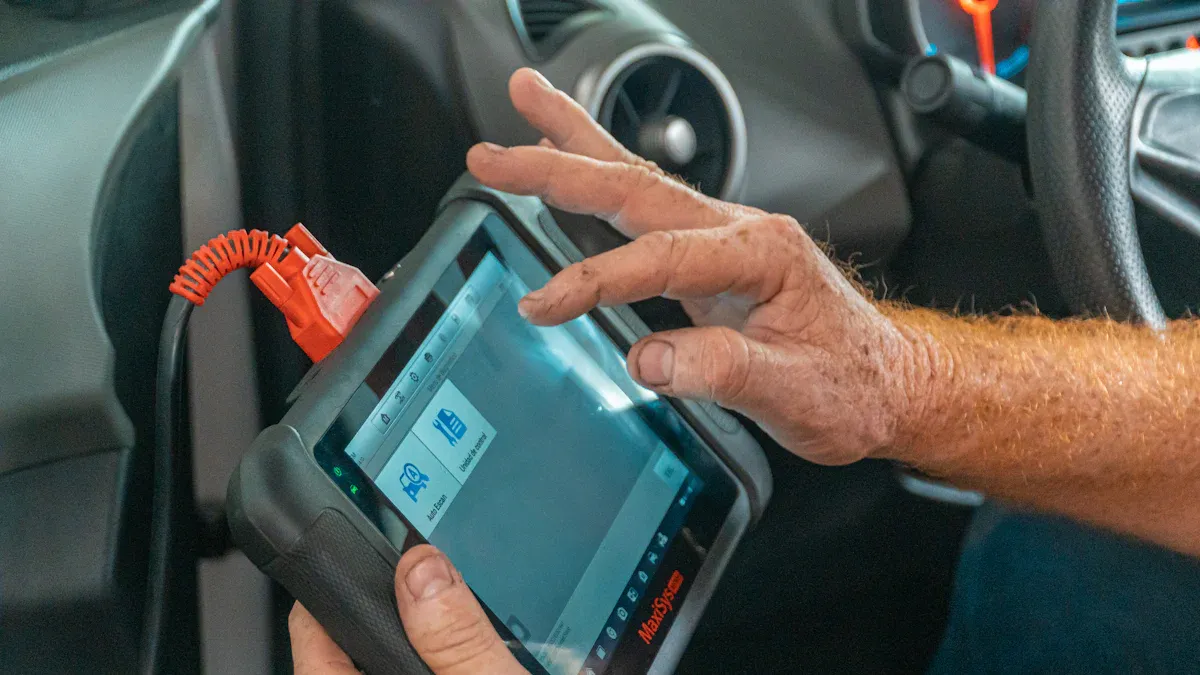
Faulty engine sensors send incorrect data to your car’s computer. This leads to poor engine performance. You can often identify a faulty sensor through a check engine light and diagnostic trouble codes. An OBD-II scanner can read these codes. Replacing sensors like the Oxygen Sensor, Mass Airflow Sensor, or Throttle Position Sensor can be a DIY task for some. However, proper diagnosis is key.
Note: A crankshaft sensor typically lasts between 100,000 and 150,000 miles. With proper maintenance, many sensors can last well past 100,000 miles.
If you are unsure which sensor is faulty or how to replace it, a professional mechanic can help. They have specialized diagnostic tools to pinpoint the exact problem.
Test Engine Compression
Poor engine compression means your engine cannot generate enough power. This is a serious issue that usually requires professional attention. A compression test measures the pressure inside each cylinder. This helps identify problems like worn piston rings, leaking valves, or a blown head gasket.
Here are the standard procedures for testing engine compression:
Begin with a normal (‘static’) compression test on a warm engine. This identifies issues like rings, valves, or piston holes. A cylinder balance test is also useful.
Reinstall all spark plugs except one. Ground the plug wire or remove the COP coil. Disconnect the injector for that cylinder.
Insert the compression tester into the empty spark plug hole. It’s recommended to leave the Shrader valve in the gauge and ‘burp’ it every 5-6 ‘puffs’.
Start the engine and record the reading.
Perform a ‘snap acceleration’ reading by quickly opening and closing the throttle manually (without speeding up the engine). Record the new reading. This forces the engine to take a ‘gulp’ of air.
Document readings for the problematic cylinder (if any) and 2-3 good cylinders, ideally in a chart.
Analyze results: running compression at idle should be 50-75 psi (approximately half of cranking compression). Snap throttle compression should be about 80% of cranking compression.
Another method involves these steps:
Ensure the engine can be cranked using the starter. This requires mating the engine and transmission and installing the flex plate.
Re-install the flex plate to the crank, ensuring proper alignment of bolt holes.
Install the compression gauge into the cylinder.
Crank the engine to record the ‘first puff’ reading.
Release the pressure on the gauge.
Perform multiple fresh cranks (e.g., three cranks) for each cylinder. This tests the fully compressed state, ensuring consistent results across cylinders.
Interpret results: less than 100 PSI is poor. Readings should be within 10-20% of each other. Significant differences or very low readings may indicate issues like leaking piston rings or a bad head gasket.
This is a job for a professional mechanic. They have the tools and expertise to perform these tests accurately and recommend the necessary engine repair.
Inspect Forced Induction Systems
If your car has a turbocharger or supercharger and struggles uphill, you need to check these systems. Issues like a lack of boost pressure can severely reduce power. This is not a DIY fix. A professional mechanic can perform a boost leak test to check all charge piping and intercooler connections.
Here are diagnostic steps for inspecting forced induction systems:
Verify wastegate plumbing aligns with manufacturer specifications.
For 3-port MAC solenoids, ensure the COM port connects to the wastegate, NO to the boost source, and NC to the atmosphere or pre-turbo intake.
Conduct a boost leak test on all charge piping and intercooler connections.
Confirm wastegate spring pressure matches tuning objectives.
Ensure any unused vacuum ports on aftermarket wastegates are properly sealed.
Verify turbo shaft play remains within acceptable limits.
They can also inspect the wastegate, compressor blades, and look for oil leaks. These components are complex and require specialized knowledge for proper diagnosis and repair.
Check for Brake Drag
Brake drag forces your engine to work harder, reducing performance and wasting gas. You can check for brake drag yourself. After driving, carefully feel if any wheel hubs are significantly hotter than others. This indicates a dragging brake. You can also lift your car and try to spin each wheel by hand. If a wheel is hard to turn, you likely have brake drag.
Fixing brake drag can involve lubricating caliper pins, replacing a faulty caliper, or adjusting the brake pedal. Some of these are DIY tasks, but if you are unsure, a professional mechanic can diagnose and fix the issue. This will improve your car’s efficiency and power.
Fix Engine Overheating
An overheating engine loses power and can suffer severe damage. If your car struggles uphill and overheats, you must address it immediately. First, check your coolant level. Low coolant is a common cause. You can top it off yourself. Inspect your radiator and hoses for leaks. A faulty thermostat can also cause overheating. Replacing a thermostat is a moderate DIY task.
However, if the overheating is severe or persistent, you need professional help. A mechanic can diagnose issues with your water pump, radiator, or head gasket. Addressing overheating protects your engine from costly damage and restores its full power.
A car struggling uphill is a clear warning sign. You need to address it promptly. Systematically diagnose issues in your car’s fuel, ignition, air, exhaust, transmission, sensors, and engine health. Addressing these problems quickly restores your car’s performance and ensures driving safety. It also prevents more costly repair down the line. If you are unsure about diagnosis or uncomfortable with specific fixes, seek professional help. A timely auto repair service can get your engine and car running smoothly again.
FAQ
Why does my car only struggle uphill?
Uphill driving demands more power from your engine. This extra load makes underlying issues more obvious. Problems like weak fuel delivery or poor engine compression show up when your car works harder. Your car needs peak performance on inclines.
Is it safe to drive my car if it struggles uphill?
No, it is not safe. Reduced power can create dangerous driving situations. It also signals a problem that could worsen. Driving your car with this issue can lead to more expensive repairs. Get it inspected promptly. ⚠️
What is the most common reason a car struggles uphill?
Fuel delivery problems are very common. A clogged fuel filter or dirty fuel injectors often cause power loss. A restricted air intake from a dirty air filter is also a frequent culprit. These issues limit your engine’s ability to produce power.
How can I prevent my car from struggling uphill?
Regular maintenance is crucial. Change your oil and air filters on schedule. Keep your fuel system clean with additives. Inspect your spark plugs regularly. These steps help your engine maintain optimal performance. ✅
