

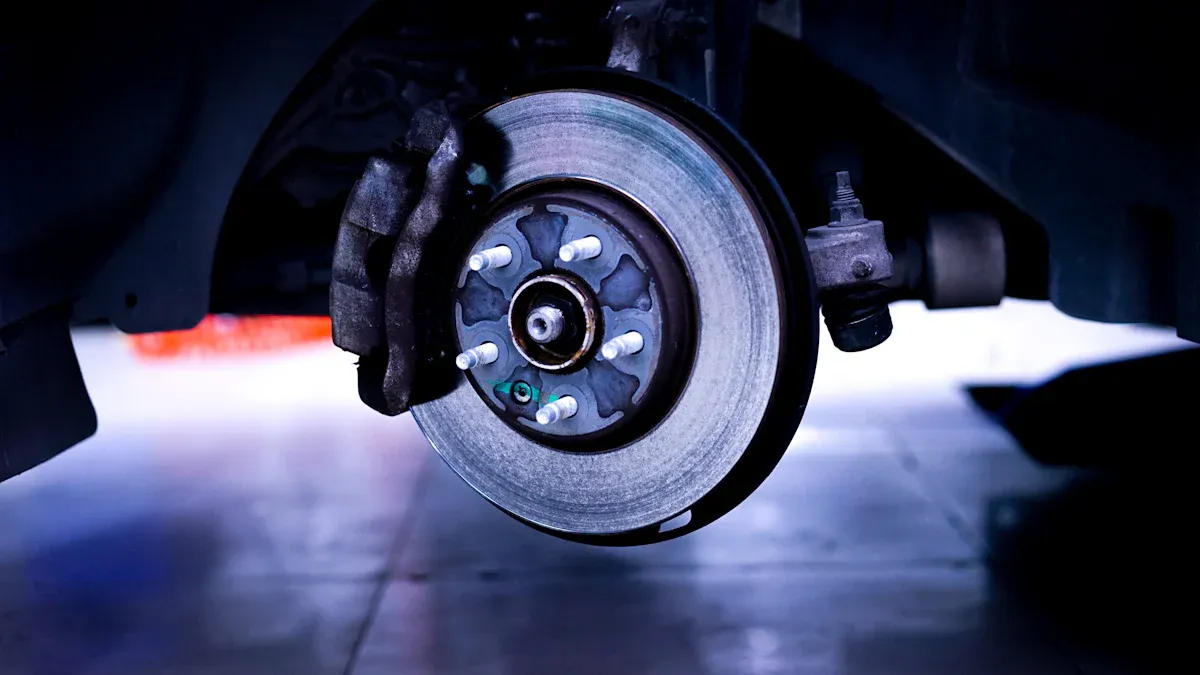
Your vehicle’s safety and performance depend critically on its brake pads. They provide the essential stopping power you need on the road. Indeed, nearly 30% of fatal and injury-causing crashes involving large trucks are linked to truck brake issues. You must choose between two main types: ceramic and metallic brake pads. This often presents a dilemma. This guide will give you a clear, balanced comparison. It outlines 12 key pros and cons for each type. This helps you make an informed decision for your stopping needs.
Ceramic Brake Pads: Quiet Performance
Pro 1: Quiet Operation
Ceramic brake pads are famous for their quiet performance. You will notice very little noise when you apply them. Their unique material composition causes this. They produce less vibration and friction noise.
Pro 2: Low Dust Production
You will also find these pads produce much less dust. This dust is lighter in color. It is not as noticeable on your wheels. This keeps your wheels cleaner for longer.
Pro 3: Consistent Performance
Ceramic pads offer consistent performance. They are engineered for thermal stability. They can handle very high temperatures without losing much power. High-quality ceramic pads keep stable friction. They resist fade at temperatures over 650°C (1200°F). The ceramic formulation gives you a smoother pedal feel. This is because their friction coefficient drops slower than semi-metallic pads. This holds true at both normal and high temperatures. These pads show minimal thermal fade. They keep excellent braking performance even when temperatures quickly go above 500 degrees Celsius. You get good braking performance over a wide temperature range. Their friction coefficient stays high when cold and when hot. This coefficient usually ranges between 0.4 and 0.5. It can even go up to 0.6. This gives you consistent braking force. They also have very high thermal resistance. This makes them good for extreme temperatures. They do not suffer from thermal decay.
Pro 4: Longer Rotor Life
These pads are less abrasive on your brake rotors. This means your rotors will last longer. You save money on rotor replacements over time.
Pro 5: Smooth Braking Feel
You will experience a smooth and progressive braking feel. Ceramic pads offer a gentle stop. They avoid the aggressive “bite” some other pads have. This makes for a more comfortable ride.
Pro 6: Eco-Friendly Materials
Ceramic brake pads use eco-friendly materials. Manufacturers use non-toxic materials. These include ceramic fibers, bonding agents, and small amounts of filler material. These pads are also free of heavy metals. For example, they use copper-free materials. This meets environmental rules. It still keeps high performance. You will find ceramic fibers like alumina. These offer high thermal stability and durability. Mineral fibers add strength. Aramid fibers give high strength and heat resistance. This improves overall pad performance.
Con 1: Higher Initial Cost
You will often pay more for ceramic pads upfront. Their advanced materials and manufacturing processes make them more expensive.
Con 2: Weaker Cold Braking
Ceramic pads can show weaker performance in very cold conditions. They work best for temperatures above -5°C. Their effectiveness can drop in colder weather. This can lead to longer stopping distances. They may also wear out faster in the cold.
Con 3: Lower Friction
While consistent, ceramic pads generally have a slightly lower friction coefficient than metallic pads. This means they might not offer the same initial “bite” or aggressive stopping power.
Con 4: Not for Heavy Duty
If you drive a heavy vehicle or tow often, ceramic pads might not be your best choice. They are not designed for heavy-duty applications. They may not provide enough stopping power under extreme stress.
Con 5: Reduced Pedal Feel
Some drivers find the pedal feel with ceramic pads less direct. You might feel less feedback through the brake pedal. This can make it harder to judge braking force precisely.
Con 6: Limited Heat Dissipation
Ceramic materials do not dissipate heat as quickly as metallic compounds. While they handle high temperatures well, they hold onto heat longer. This can be a concern in very demanding braking situations.
Metallic Brake Pads: Robust Stopping
Metallic brake pads offer a different set of advantages. You will find them built for strength and durability. They excel in situations demanding high performance.
Pro 1: Strong Stopping Power
You get powerful stopping force with metallic pads. These pads have a high friction coefficient. This means they grab your rotors firmly. This gives you excellent stopping power. They are especially good in tough conditions. For example, you will find them ideal for heavy-duty use. They are also great for aggressive driving. Their design helps them manage extreme heat. This means you get consistent braking. They deliver superior stopping power in all weather.
Pro 2: Excellent Heat Dissipation
Metallic pads are very good at handling heat. Their high metal content helps them move heat away from the rotor. This stops your rotors from getting too hot. This keeps your braking system working well. Manufacturers make these pads with steel fibers. They also mix iron powder into the braking material. These components help transfer heat. Metallic brake pads use a mix of metals. These include steel, iron, copper, and other alloys. These metals are known for moving heat away quickly.
Pro 3: Effective Cold Braking
You will notice metallic pads work well even when cold. They do not need to warm up much to perform. This gives you reliable stopping power right away. This is a big plus in colder climates.
Pro 4: Durable and Long-Lasting
These pads are tough. They can handle a lot of stress and heat. This makes them very durable. They often last a long time, especially in demanding driving situations. Their robust construction means they can take a beating.
Pro 5: Cost-Effective Option
You will often find metallic pads are more affordable. They cost less than ceramic pads upfront. This makes them a popular choice for many drivers. They offer good performance without a high price tag.
Pro 6: Firm Pedal Feel
You will feel a firm and responsive brake pedal. Metallic pads give you direct feedback. This helps you feel more connected to your vehicle’s braking. You can judge your braking force precisely.
Con 1: Increased Brake Noise
You might hear more noise with metallic pads. They can produce squealing or grinding sounds. This happens because of their harder materials. The noise can be more noticeable than with ceramic pads.
Con 2: High Dust Production
Metallic pads create a lot of brake dust. This dust is usually dark black or gray. It contains abrasive metal particles. This dust can stick to your wheels. It can even cause small rust spots on wheel surfaces. This happens because of the iron content. Here is what makes up the dust:
Component | Percentage (%) |
|---|---|
Iron (Fe) | 20 |
Copper (Cu) | 10 |
Zinc (Zn) | 4 |
Tin (Sn) | 3 |
Non-metal material | 50 |
Carbon (C) | 26 |
Sulfur (S) | 3 |
Oxygen & Magnesium | Remainder of non-metal |
You can see that iron, copper, zinc, and tin make up most of the metal content. Non-metal materials like carbon and sulfur are also present.
Con 3: Faster Rotor Wear
Metallic pads are harder. They can wear down your brake rotors faster. This means you might need to replace your rotors more often. Consider the typical lifespan:
Brake Pad Type | Typical Lifespan (miles) | Typical Lifespan (kilometers) |
|---|---|---|
Ceramic | Over 60,000 | Over 100,000 |
Semi-Metallic | Significantly less than ceramic | Significantly less than ceramic |
Ceramic pads often last much longer than semi-metallic pads. |
Con 4: Inconsistent Extreme Performance
While strong, metallic pads can sometimes show inconsistent performance. This might happen under very prolonged, extreme braking. You might notice more noise or vibration. This is not about stopping power, but about the overall feel.
Con 5: Heavier Weight
Metallic pads are heavier than ceramic pads. This extra weight can slightly increase your vehicle’s unsprung weight. This might affect handling for very performance-focused drivers.
Con 6: Rust Potential
The metal components in these pads can rust. This happens when they are exposed to harsh conditions. Rain, snow, and road salt speed up rust formation. Chemicals like sulfur oxides and nitrogen oxides also cause corrosion. Moisture, freezing temperatures, and road salt create a perfect storm for rust. Salt acts like an electrolyte. It makes the rust process much faster. This can damage your braking system over time.
Which Brake Pads Are Right For You?
Choosing the right brake pads depends on your specific needs. You must consider several factors. This helps you make the best decision for your vehicle.
Consider Your Driving Style
Your driving habits greatly affect pad choice. Aggressive driving increases brake pad wear. You should adopt a smooth, gradual braking style. This extends the lifespan of your brake pads. It also enhances overall safety.
Metallic brake pads suit heavy-duty towing, hauling, or track use. They offer an aggressive bite and robust heat management. They provide immediate stopping force for heavy loads.
Ceramic pads use gentle, adherent friction. This is less abrasive to brake rotors. It often leads to longer pad and rotor life.
Evaluate Your Vehicle Type
The type of vehicle you drive matters. Different vehicles need different pad characteristics.
Vehicle Type | Recommended Brake Pad Type |
|---|---|
Heavy-Duty Trucks | Semi-Metallic, Ceramic, Low-Metallic NAO, Non-Asbestos Organic |
High-Performance Cars | Semi-Metallic |
Performance Trucks | Low-Metallic NAO |
Heavy Vehicles | Semi-Metallic |
Factor in Your Budget
You should think about both initial and long-term costs. Ceramic pads cost more upfront. However, they can save you money over time.
Feature | Ceramic Brake Pads | Metallic Brake Pads |
|---|---|---|
Cost (Initial) | Typically more expensive upfront. | Generally less expensive upfront. |
Cost (Long-term) | Lower long-term cost due to less rotor wear, less frequent pad replacement, and less cleaning effort. | Higher long-term cost due to more frequent rotor and pad replacement, and more effort required for cleaning. |
Prioritize Performance Needs
You must decide what performance aspects are most important.
Initial Bite: This is the immediate grip of the pad on the rotor. It happens when you first apply brake pressure.
Total Friction (Coefficient of Friction – Mu): This represents the overall friction between the pad and rotor. Higher values mean greater stopping power.
Wear Rates: This pertains to how quickly both the brake pad and the rotor wear down.
Noise, Vibration, Harshness (NVH): These relate to the sound and feel of the braking system.
Assess Environmental Concerns
Brake dust can affect the environment. Copper content in brake dust particles harms human lung cells. This shows that pad compositions influence environmental impact.
Ceramic pads were the second most toxic among four types tested.
Non-asbestos organic pads were the most potent. They caused inflammation and toxicity. This was even more than diesel exhaust particles.
Think About Maintenance
Regular maintenance keeps your brakes safe.
You should visually inspect brake pads every six months. Do this during regular vehicle maintenance.
Perform general brake inspections every 12,000 miles or once a year.
Replace brake pads if less than 3mm of material remains.
Seek professional help for rotors if they appear warped or deeply scored.
The best Brake Pads for you depend on your driving habits and vehicle. Ceramic pads offer quiet, clean, and smooth performance. Metallic pads provide powerful, durable, and affordable stopping. You should weigh all pros and cons before buying. Always get regular brake system inspections. Professional installation ensures safety and optimal performance. Trained technicians offer expertise and use high-grade parts. They also provide warranties, giving you peace of mind.
FAQ
Can I mix ceramic and metallic brake pads on my car?
You should not mix different types of brake pads on the same axle. This can cause uneven braking. It also affects your vehicle’s stability. Always use the same type of pad on both wheels of an axle.
How do I know when to replace my brake pads?
You should listen for squealing or grinding noises. You might also feel vibrations when you brake. Many pads have wear indicators that make noise. Check your owner’s manual for specific mileage recommendations.
Are ceramic pads always better for daily driving?
Ceramic pads offer quiet and clean braking. They are great for most daily driving. However, if you need strong initial bite or tow heavy loads, metallic pads might suit you better. Consider your specific driving needs.
Do metallic pads damage rotors more quickly?
Yes, metallic pads are harder. They can cause more wear on your brake rotors. This means you might need to replace your rotors sooner. Ceramic pads are gentler on rotors.
Will metallic pads make my car stop faster?
Metallic pads often provide a stronger initial bite. This gives you a feeling of faster stopping. They excel in high-performance situations. However, ceramic pads offer consistent stopping power over a wide temperature range.



