The average car cabin noise at highway speeds generally falls between 60 and 70 decibels, similar to normal conversation levels. Quieter luxury or electric vehicles often register mid-50s to around 60 dB, while louder economy, off-road, or sports cars can exceed 70 dB, sometimes reaching above 80 dB. This range depends heavily on factors like tire types, road surfaces, vehicle aerodynamics, and engine or transmission sounds, all influencing where a vehicle fits within this logarithmic scale.
Grasping these elements helps clarify why some cars feel calmer inside while others feel noisier, guiding attention to how noise measurements are done and what impact cabin noise can have on comfort and safety, leaving room to investigate which cars strike the best balance next.
Typical Cabin Noise Levels Across Vehicle Types
Cabin noise levels in cars differ widely depending upon the type of vehicle, with these variations influenced through design, engine type, and intended use. Tire resonance plays a notable role, as the interaction between tires and road surface generates vibrations that can transmit through the chassis, becoming perceptible as both sound and seat vibration.
Typically, luxury cars maintain cabin noise between 55 and 65 decibels at highway speeds through employing advanced sound insulation and aerodynamic shaping, which reduce wind and road noise. Economy and compact cars often experience increased tire resonance and seat vibration, pushing noise levels into the 65 to 75 dB range.
Performance vehicles, with louder engines and sportier exhausts, can surpass 75 dB, intensifying seat vibrations. Electric and hybrid vehicles generally offer quieter cabins, often below 60 dB, benefiting from the absence of combustion engine noise but still affected by tire and wind sounds.
Decibel Scale and Everyday Noise Comparisons
The decibel scale helps people understand how loud different sounds are in everyday life.
For example, normal conversation is about 60 to 70 decibels, while a vacuum cleaner is around 75 and city traffic hits about 85.
Car cabin noise usually falls between these levels, making it easy to compare how quiet or loud a vehicle feels during a drive.
Decibel Scale Explained
At the point it comes to grasping how loud things really are, the decibel scale is the best way to make sense of everyday sounds. Our ears pick up changes in sound through psychoacoustic perception, which means even small shifts in decibels can feel big. The scale is logarithmic, so each 10 dB increase is actually ten times louder. Hearing thresholds start around 0 dB, the quietest sound most people can hear.
| Sound Example | Decibel Level |
|---|---|
| Whisper | 30 dB |
| Normal conversation | 60 dB |
| Vacuum cleaner | 75 dB |
Understanding these levels helps drivers know what to expect inside their cars. It’s not just about numbers, but how those numbers feel in real life.
Everyday Noise Comparisons
How loud does everyday driving actually feel compared to sounds we encounter outside the car? Cabin noise in most vehicles sits between 60 and 70 decibels at highway speeds, similar to normal conversation or a busy urban soundscape. This means your drive feels much like chatting with a friend or walking through a lively city street.
Vacuum cleaners and busy traffic hover around 75 decibels, so louder cars can feel like you’re stuck behind one. Headphone etiquette matters here—cranking up music to drown out road noise can lead to hearing fatigue. Quieter cars, especially electric models, offer a more peaceful ride, closer to a quiet home. Grasping these everyday noise comparisons helps drivers choose vehicles that match their comfort and lifestyle.
Car Noise Reference Points
Everyday driving noise fits into a broad soundscape that ranges from quiet whispers to the loud roar of city traffic.
Grasping car cabin noise requires considering how tire whispering, engine harmonics, and road conditions shape the experience.
The human ear perceives noise on a logarithmic decibel scale where small numerical changes mean big differences.
- Normal conversation usually occurs between 60 and 70 dB, matching typical car interior noise at cruising speeds.
- Vacuum cleaners produce about 75 dB, similar to louder economy or off-road vehicles when tires and engines create extra noise.
- City traffic noise often peaks near 85 dB, well above many car cabins but close to the pain threshold at 125 dB.
Tire type and surface affect cabin noise, blending with engine harmonics that whisper or roar depending on speed and soundproofing.
This interplay defines how tranquil or intense the ride feels.
The Quietest Cars: Luxury and Electric Models
Luxury sedans and electric vehicles stand out as the quietest cars on the road, thanks to advanced sound insulation and sleek aerodynamic designs that keep cabin noise low even at highway speeds.
Electric models often achieve noise levels below 60 decibels through eliminating engine noise, while luxury sedans and large limousines use multiple layers of soundproof materials to reduce road, wind, and tire noise effectively.
These carefully engineered features create a calm cabin environment, which feels especially soothing for long drives and highlights the quietness that sets these vehicles apart from sportier, louder cars.
Sound Insulation Techniques
- Acoustic metamaterials—engineered structures that absorb and scatter sound waves, markedly reducing noise transmission into the cabin.
- Active cancellation systems—electronic setups that emit sound waves opposite to incoming noise, effectively neutralizing unwanted sounds.
- Improved insulation layers—multi-density foams and barriers placed around the engine bay, doors, and floor to dampen vibrations and airborne noise.
Additional features like aerodynamic designs reduce wind noise, while high-quality seals prevent air leaks. Together, these technologies create an environment where drivers and passengers enjoy extraordinary quietness, even at highway speeds.
Electric Vehicle Quietness
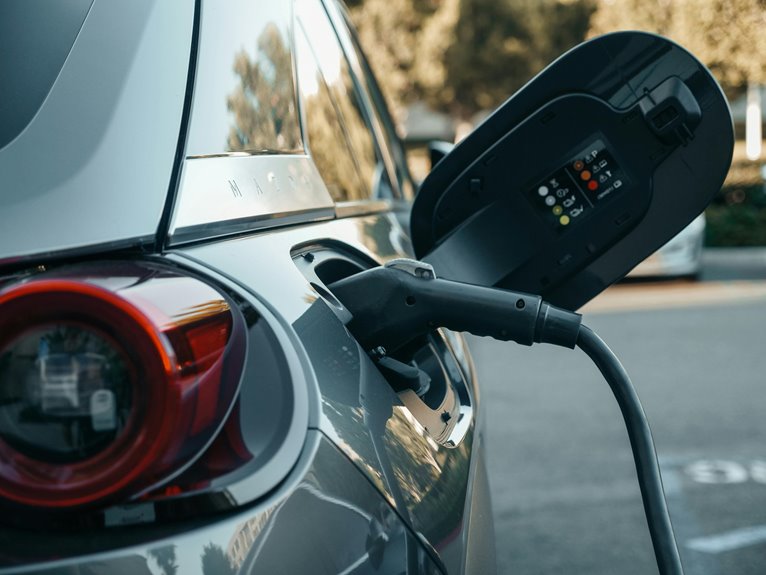
Often, electric vehicles stand out for their exceptional quietness, making them some of the most peaceful cars to drive. The absence of engine noise means the only sound inside is a faint battery hum, which is barely noticeable. Many EVs also use a synthetic soundscape to alert pedestrians, but inside the cabin, it’s serene. This quietness is a big reason why luxury and electric models are often rated as the quietest cars on the market.
| Vehicle Type | Typical Noise Level (dB) | Notable Feature |
|---|---|---|
| Luxury Sedan | 55-60 | Advanced insulation |
| Electric SUV | 57-58 | Battery hum |
| Hybrid Compact | 58-60 | Synthetic soundscape |
This peaceful experience is a hallmark of modern electric vehicles.
Luxury Sedan Noise Levels
- The rear seat enjoys this serene ambiance owing to strategic placement of insulation and noise-canceling technology, ensuring passengers have a peaceful ride without engine or road disturbances.
- Engine idle noise is diminished owing to specialty materials and sealing techniques to reduce vibration and sound infiltration into the cabin.
- Active noise cancellation, guided owing to precise ambient microphone input, continuously adapts to driving conditions, keeping highway noise levels typically between 55 and 60 decibels, far below the noise of average vehicles.
Together, these features create a sanctuary within the luxury sedan, turning highway commutes into a nearly silent retreat.
The Loudest Cars: Performance and Off-Road Vehicles
Some of the loudest cars on the road are performance and off-road vehicles, where noise is often part of the experience. These cars use aggressive exhaust tuning to create a deep, throaty sound that turns heads.
Rally suspension adds to the noise, letting more road and engine sounds into the cabin. Drivers feel every bump and hear every rev, making the ride exciting but loud.
High-performance engines and open exhaust systems push cabin noise above 75 decibels, sometimes even hitting 80 or more. Off-road tires and rugged builds also contribute, amplifying road and wind noise at speed.
While some love the raw, unfiltered feel, others might find it tiring over long drives. Still, for many, the roar is a badge of honor, a sign of power and escapade.
Key Factors Influencing Car Interior Noise
Performance and off-road vehicles often spotlight loud cabin noise as part of their character, but noise inside a car depends on much more than engine roar and exhaust tones. Several key factors influence interior sound levels beyond the obvious powertrain noise.
- Road surface: Rough surfaces increase tire noise and cause more cabin vibration, amplifying perceived loudness inside the vehicle. Smoother pavement reduces this effect.
- Cabin vibration: Vibrations transmitted through the chassis and body panels can reverberate inside the car, raising noise levels noticeably.
- Tire type and tread pattern: Aggressive or heavily treaded tires generate more noise and vibration than touring tires optimized for quietness.
Additional influences include vehicle speed, aerodynamic design, and sound insulation quality, all of which work together to shape the cabin’s acoustic environment and overall ease.
How Car Noise Is Measured and Analyzed
Measuring car interior noise involves carefully capturing sound levels inside the cabin under controlled conditions to reflect real-world driving. This process starts with precise microphone placement, typically at head height in the center of the cabin, ensuring consistent and reliable data. Measurements are usually taken at highway speeds, around 100–130 km/h, with stock tires to simulate typical driving conditions.
To gain deeper appreciation, engineers apply psychoacoustic modeling—a method that goes beyond raw decibel readings to analyze how humans perceive different noise sources, such as wind, engine, and road noise. This modeling helps distinguish which sounds are most intrusive and guides improvements in soundproofing. Combining objective decibel values with subjective assessments creates a refined comprehension of cabin quietness and ultimately improves the driving experience.
Practical Implications of Cabin Noise on Comfort and Safety
While driving, cabin noise levels can greatly influence both comfort and safety, shaping the total experience inside the vehicle. Excessive noise can cause mental fatigue, reducing a driver’s ability to stay focused and alert. This fatigue can slow reaction time, potentially increasing the risk of accidents during critical moments. Noise also interferes with communication inside the car, distracting drivers from conversations or emergency instructions.
Key factors affecting comfort and safety from cabin noise include:
- Sustained exposure to higher noise levels leads to increased stress and tiredness, impairing decision-making.
- Reduced ability to perceive crucial sounds, like sirens or horns, due to masking through loud engine or tire noise.
- Elevated noise levels at higher speeds intensify fatigue and decrease overall driving comfort.
Ensuring lower cabin noise through sound insulation and aerodynamic design helps maintain mental clarity and timely responses during driving.