

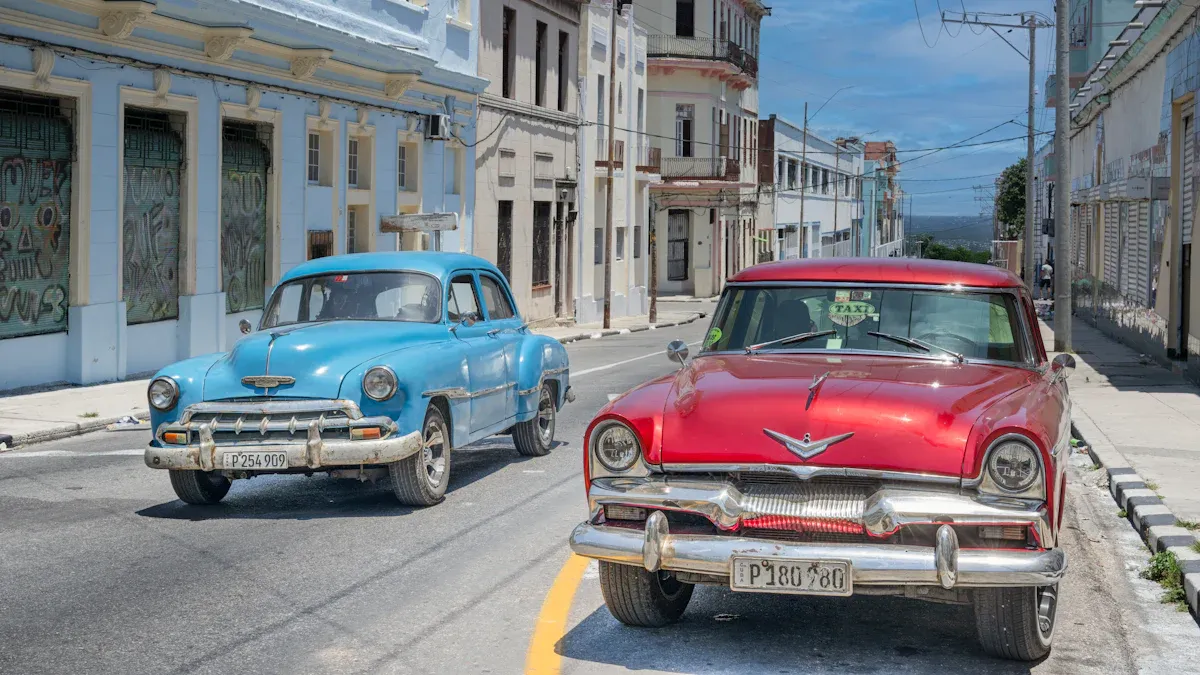
The automobiles from the 1950s hold an iconic status. People still love their classic designs. The Chevrolet Bel Air, Ford Thunderbird, and Cadillac Eldorado were the most popular cars of this decade. This era saw post-war optimism and economic prosperity. Consumer culture grew. By the close of the decade, a significant 75% of all American households possessed an automobile. This fueled automotive innovation and demand.
Key Takeaways
The 1950s was a time of growth. Many families bought cars. Cars became a big part of American life.
Cars from the 1950s had cool designs. They featured shiny chrome and big tail fins. They also had new things like power steering and air conditioning.
The Chevrolet Bel Air was a very popular car. It had a stylish look and strong engines. It became a symbol of the time.
The Ford Thunderbird started a new type of car. It was a ‘personal luxury car.’ It focused on comfort and style, not just speed.
The Cadillac Eldorado showed off luxury. It had fancy designs and advanced features. It was a car for people who wanted the best.
1950s Automotive Landscape
Post-War Growth and Consumerism
The 1950s marked a period of significant economic expansion in the United States. This era saw widespread postwar prosperity. Families experienced rising incomes, which allowed them to spend more on consumer goods, including automobiles. Car ownership became a common aspiration.
Year | Income Type | Amount |
|---|---|---|
1950 | Median Household Income | $3,000 |
1957 | Average Annual Earnings (Men) | $4,713 |
1957 | Average Annual Earnings (Women) | $3,008 |
In 1950, the median household income reached $3,000. By 1957, men earned an average of $4,713 annually, and women earned $3,008. These income levels supported strong consumer spending on cars. In 1950, 60% of families owned a car. That same year, 47% of car buyers paid cash for their vehicles. This economic boom fueled a massive demand for new cars.
Design Trends and Innovation
The 1950s became a “golden era” for American automobiles. Car designs reflected the optimism of the time. Designers drew inspiration from the space race, creating ‘space-age curves’ and aerodynamic chassis. Iconic design features included:
Chrome accents: Chrome symbolized luxury, success, and prosperity. Automated plating techniques allowed for its mass production.
Tail fins: These gave cars a distinctive, futuristic look.
Wrap-around windshields: They offered improved visibility.
Sleek and streamlined profiles: Cars looked fast and modern.
Bold colors: Vibrant hues became popular.
Technological innovations also improved the driving experience. These advancements included:
Power brakes
Air conditioning
Seat belts
Automatic transmissions
Power windows
Padded dashboards
Improved braking systems
These features made cars safer and more comfortable.
American Auto Industry Dominance
The “Big Three” American automakers dominated the market during this decade. General Motors, Ford, and Chrysler controlled a large share of car sales.
General Motors saw a dip in 1957. However, it recovered in 1958. GM reached a peak of 67% of the big car market by 1962. It also achieved an all-time high of 51% in the overall market that same year.
Ford performed strongly from 1956 to 1959. It experienced only a slight dip in 1958.
Chrysler Corporation’s market share temporarily increased in 1957 due to new styling. However, its share declined in 1958 and continued to slide through 1959.
These companies produced millions of vehicles. They shaped the automotive landscape for years to come.
Chevrolet Bel Air: An Enduring Icon
Signature Design Elements
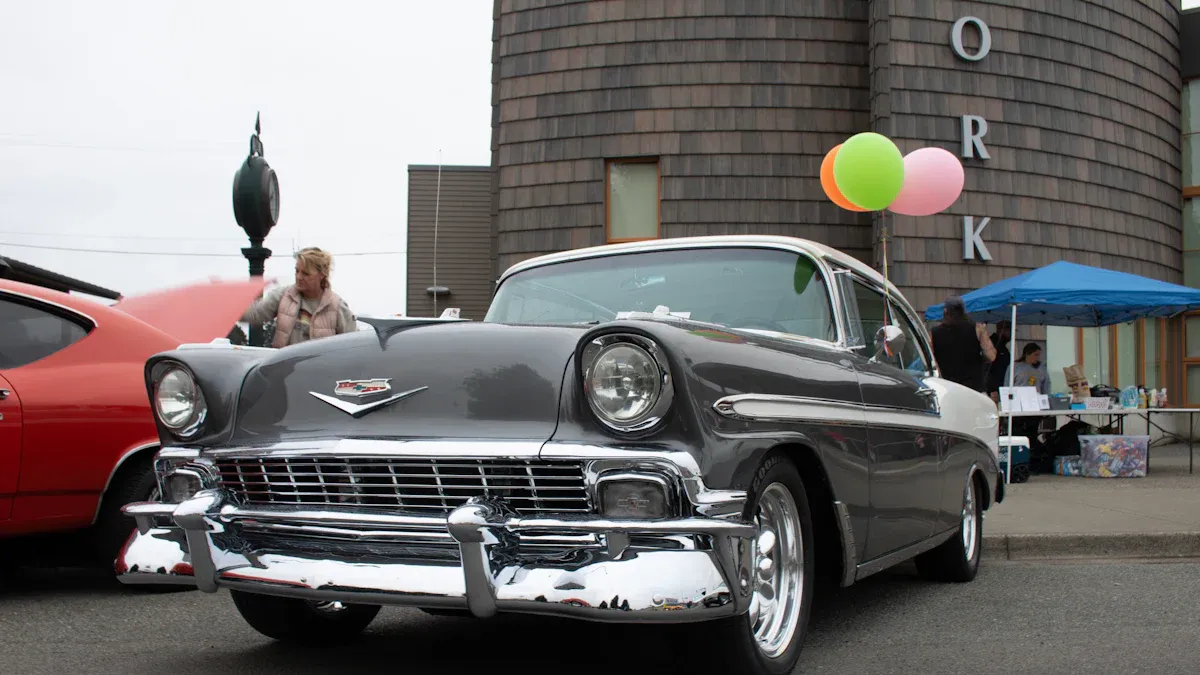
The Chevrolet Bel Air stands as an enduring icon from the 1950s. It became an everyday symbol and a top seller. Chevrolet produced the Bel Air from 1950 to 1975. Its initial popularity came from its innovative hardtop design. In its first year of production, Chevrolet built 76,662 Bel Air models. The Bel Air’s design captured the spirit of the decade. It featured bold lines and a distinctive look. Its chrome accents and sleek profile made it instantly recognizable.
Performance and Powertrains
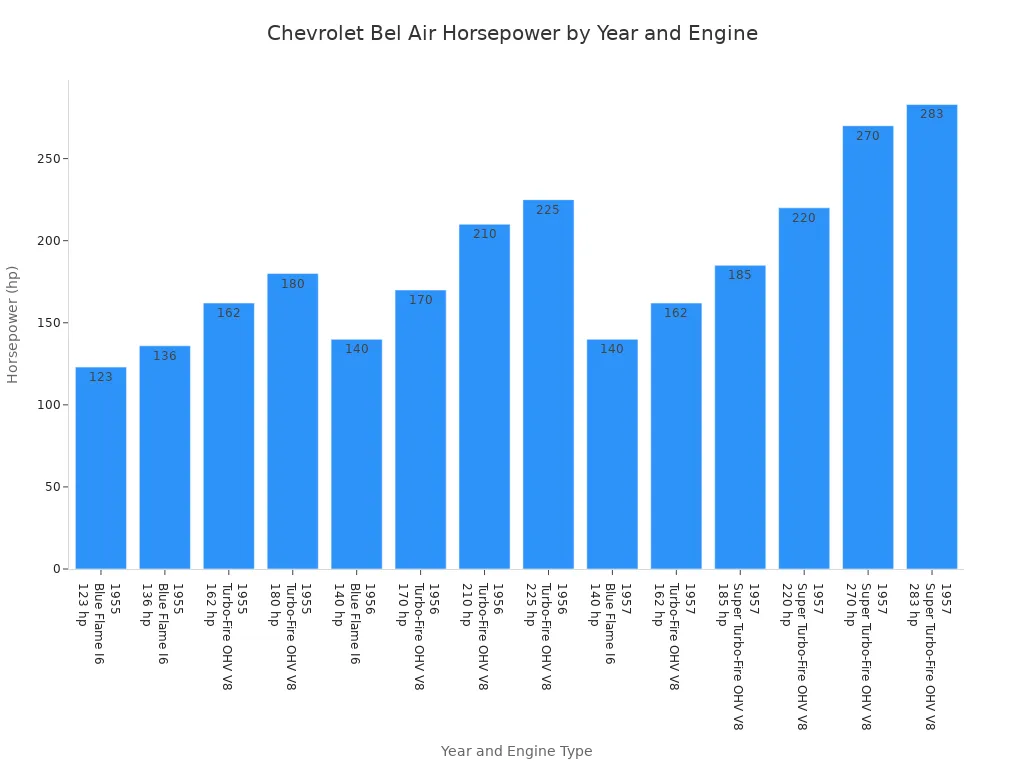
The Bel Air offered various engine options. These engines provided both reliability and power. In 1955, the Blue Flame I6 engine produced 123 hp with a manual transmission. An automatic transmission version offered 136 hp. The Turbo-Fire OHV V8 engine was also available. It delivered 162 hp, with an optional 180 hp version. By 1957, the Super Turbo-Fire OHV V8 engine could produce up to 283 hp. This was possible with Rochester Ram-Jet fuel injection.
Year | Engine Type | Displacement | Horsepower | Notes |
|---|---|---|---|---|
1955 | Blue Flame I6 | 235 cu in | 123 hp | Manual transmission |
1955 | Blue Flame I6 | 235 cu in | 136 hp | Automatic transmission |
1955 | Turbo-Fire OHV V8 | 265 cu in | 162 hp | |
1955 | Turbo-Fire OHV V8 | 265 cu in | 180 hp | Optional |
1956 | Blue Flame I6 | 235 cu in | 140 hp | |
1956 | Turbo-Fire OHV V8 | 265 cu in | 170 hp | |
1956 | Turbo-Fire OHV V8 | 265 cu in | 210 hp | Quad barrel carburetor |
1956 | Turbo-Fire OHV V8 | 265 cu in | 225 hp | Dual-quad barrel carburetors |
1957 | Blue Flame I6 | 235 cu in | 140 hp | |
1957 | Turbo-Fire OHV V8 | 265 cu in | 162 hp | |
1957 | Super Turbo-Fire OHV V8 | 283 cu in | 185 hp | |
1957 | Super Turbo-Fire OHV V8 | 283 cu in | 220 hp | 4-barrel carburetor |
1957 | Super Turbo-Fire OHV V8 | 283 cu in | 270 hp | Dual 4-barrel carburetors |
1957 | Super Turbo-Fire OHV V8 | 283 cu in | 283 hp | Rochester Ram-Jet fuel injection |
Cultural Impact and Appeal
The Bel Air became a symbol of American prosperity. Its widespread availability and stylish looks made it a favorite. Many people remember the 1955, 1956, and 1957 models as “tri-five chevys.” These models are highly sought after by collectors today. The Bel Air’s appeal crossed many groups. It was a family car, a hot rod, and a cruiser. This car truly defined an era. It remains one of the most popular cars from that time. Today, many enthusiasts restore these vehicles. They become prized collector cars.
Ford Thunderbird: Personal Luxury
Distinctive Two-Seater Styling
The Ford Thunderbird carved out a new niche in the automotive market. It created the “personal luxury car” segment. Ford launched the Thunderbird as a 1955 model on October 22, 1954. It featured a distinctive two-seater design. This design emphasized comfort and convenience. It differed from pure sports cars like the Corvette. The Thunderbird had a low-slung body. This innovative design set a new tone for American automobiles. Sales were brisk from the start. Ford received 3,500 orders within the first ten days. The company initially planned for 10,000 units. However, it sold 16,155 cars in 1955.
Driving Experience and Features
The Thunderbird offered a luxurious driving experience. It came with a powerful V8 engine at its launch. This engine contributed to its performance capabilities. The car also included many advanced features. These features focused on comfort. They included power steering, power brakes, power seats, and power windows. These elements set it apart from more basic competitors. The Thunderbird’s clean styling and focus on luxury attracted immediate interest. It successfully filled a market need.
Market Influence and Legacy
The Thunderbird’s influence grew significantly. Ford introduced a pivotal design change in 1958. This model added a rear seat. The 1958 second-generation Thunderbird saw its sales soar. It sold almost 38,000 units. This nearly doubled the volume of the original two-seat model. Sales continued to climb to 67,000 units in 1959. By 1960, sales surpassed the 90,000-unit mark. This redesign expanded a new market segment. It became known as ‘personal luxury cars’. The 1958 Thunderbird’s success solidified this new segment. It sold 200,000 units in three years. This was four times the sales of the two-seat model run. The 1958 model was named Motor Trend Magazine‘s Car of the Year. This cemented its impact. The Thunderbird remains one of the most popular cars from its era. Many models are now prized collector cars.
Cadillac Eldorado: Luxury Defined
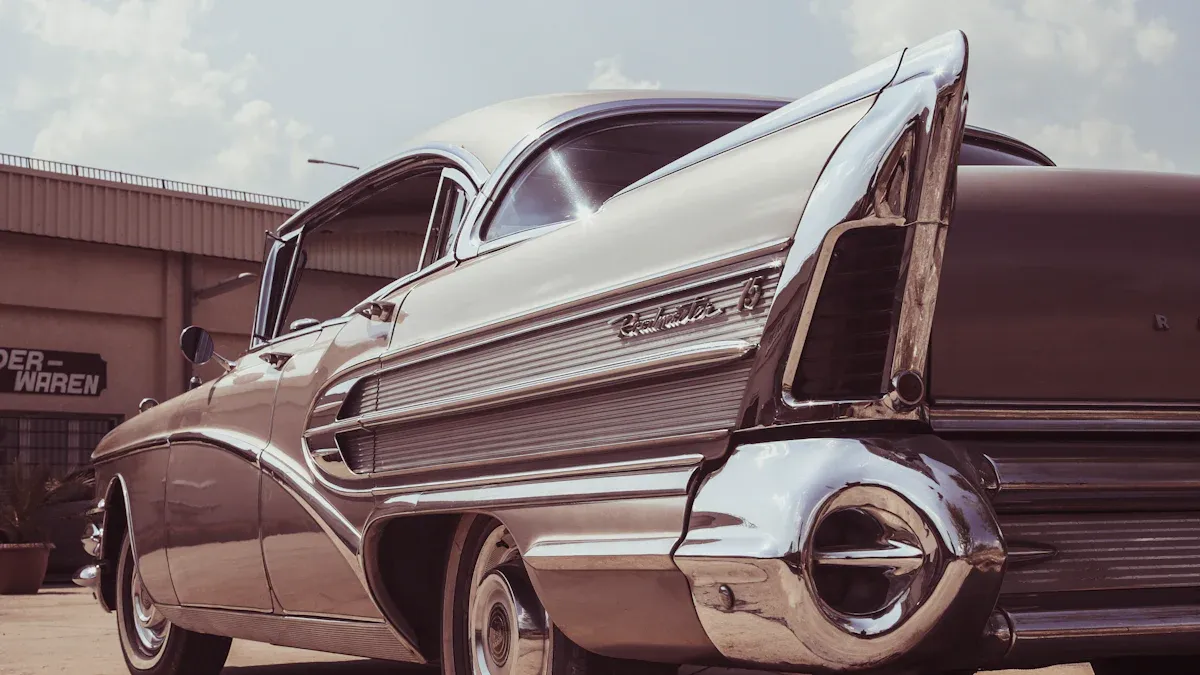
The Cadillac Eldorado stood as the epitome of American luxury in the 1950s. It showcased lavish design, advanced features, and became a powerful symbol of affluence.
Opulent Design and Tailfins
The Cadillac Eldorado’s design, especially its tail fins, left an indelible mark. They symbolized a bold era of car manufacturing. The Eldorado’s distinctive fins became a hallmark of 1950s automobile design. They represented post-war optimism and futuristic aspirations. Key design features of the fins included:
A dramatic upward angle, influenced by jet aircraft, created a sense of motion.
Fins often extended high above the rear, culminating in stylish tail lights. These echoed an aircraft-inspired theme.
The fins were intricately sculpted. They showcased Cadillac’s commitment to superior craftsmanship. Variations in shape and size appeared across models.
Smooth lines and chrome accents in the fin design emphasized luxury and sophistication.
Fins integrated with the overall body design for a seamless flow. This enhanced aerodynamics and striking appearance.
Color palettes often accentuated the fins. Custom paint options encouraged personalization. This reinforced its opulent status.
Advanced Comfort and Technology
The Eldorado offered advanced comfort and technology. These features made it a leader in luxury.
Year | Model | Comfort Features | Technological Advancements |
|---|---|---|---|
1955 | Eldorado Biarritz | Optional air conditioning, power-operated seats | New 6.0-liter (365 cubic inch) V8 engine (270 hp) |
1957 | Eldorado Brougham | Air suspension, memory seats | Stainless steel roof, automatic headlight dimmers, cruise control |
1958 | Eldorado | Smoother ride | “Air Ride” suspension system (compressed air) |
1959 | Eldorado | Leather upholstery, air conditioning, power-operated seats | Advanced suspension system, power-assisted brakes, 6.4-liter (390 cubic inch) V8 engine (345 hp) |
Throughout 1950s | Eldorado | Comfortable ride (advanced suspension with coil/leaf springs) | Power steering, power brakes, automatic transmission, “Autronic Eye” automatic headlight dimming system |
These innovations provided a superior driving and riding experience.
Status Symbol of the Era
The Cadillac Eldorado was marketed as a status symbol. Its luxurious interiors featured premium materials. This reinforced Cadillac’s image as a leader in opulence. It represented the pinnacle of American automotive design. The Eldorado also included powerful engines and performance-oriented options. This appealed to consumers who desired both luxury and high performance. Cadillac’s broader marketing strategy targeted affluent families and luxury consumers. They sought exclusivity, style, and vehicles that reflected their status and lifestyle. The brand positioned itself as a symbol of sophistication. The Eldorado remains one of the most popular cars from its era. Today, many enthusiasts seek these vehicles as prized collector cars.
Other Most Significant Cars of the 1950s
The 1950s also saw other most significant cars emerge. These included both American and notable foreign models. They gained traction and left a lasting impact.
Chrysler 300: Performance and Style
The Chrysler 300 series combined luxury with raw power. Virgil Exner designed its ‘100-Million Dollar Look’. He cleverly used parts from other Chrysler models. For example, the Imperial provided the front clip. The 1955 C-300 featured a 331 cubic inch Hemi engine. This engine produced 300 horsepower. It achieved 0-60 mph in 9.8 seconds. It also reached 127.58 mph in the flying mile at Daytona Speed Weeks. The C-300 dominated NASCAR and AAA championships. It earned the title of ‘world’s fastest stock car’. This established a glorious racing heritage. The 300C continued this legacy. It won The Flying Mile at Daytona for three consecutive years. This made it the fastest American car in Class 7. The 1957 300C had a 392 cubic inch Hemi engine. It produced 375 hp. The 1958 300D set a new Class E record of 156.387 mph at the Bonneville Salt Flats. This racing prowess, along with luxurious tan leather seats, positioned the 300 as a “Halo” car. It drew customers into Chrysler showrooms.
Volkswagen Beetle: Unexpected Success
The Volkswagen Beetle achieved unexpected success in the United States. Its low price was roughly half the cost of an average American car. It also had low operational costs. The Beetle was easier to maneuver than larger American cars. It gained a reputation for reliability.
Year | Total Sales (US) |
|---|---|
1950 | 328 |
1951 | 367 |
1952 | 887 |
1953 | 1,139 |
1954 | 8,086 |
1955 | 32,662 |
1956 | 40,432 |
1957 | 50,059 |
1958 | 55,482 |
1959 | 88,857 |
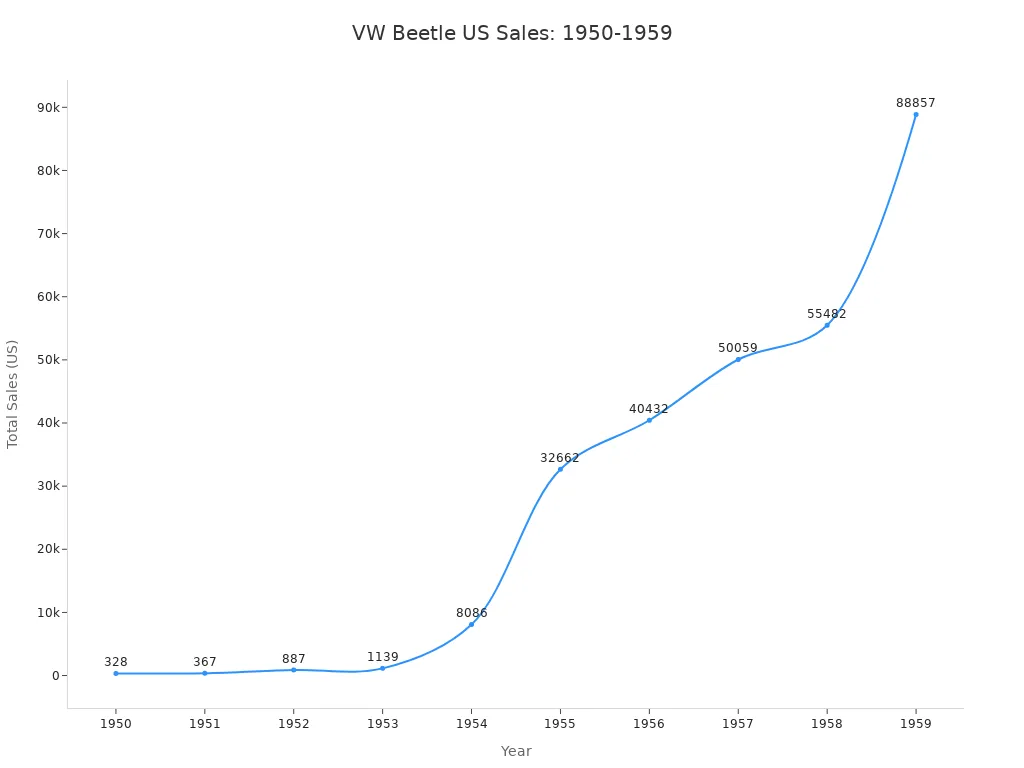
The booming U.S. economy fueled demand for a dependable second family car. The Beetle offered an alternative to expensive American cars. Its small size and unique shape attracted buyers. Buying a VW signaled individualism. It became one of the most popular cars for those seeking practicality.
Chevrolet Corvette C1: America’s Sports Car
The Chevrolet Corvette C1 established itself as America’s sports car. Harley Earl led its initial design. He drew inspiration from European sports cars. The C1 Corvette featured a lightweight fiberglass body. It had distinct styling. This approach made it a symbol of American ingenuity. Early models used a 235 cubic inch ‘Blue Flame’ inline-six engine. It produced 150-155 hp. A 2-speed Powerglide automatic transmission was standard. It achieved 0-60 mph in 11.5 seconds. The C1 Corvette’s chassis had a box-girder frame. Its front suspension used an independent coil-spring setup. This provided stable handling. The rear suspension incorporated a solid axle and leaf springs. This balanced comfort and performance. GM Executive Robert McLean mandated the use of off-the-shelf mechanical components to manage costs. The C1 Corvette remains a highly sought-after model for collector cars.
The 1955 Porsche 550 Spyder also stands as a notable example of the most significant cars from the 1950s.
The most popular cars of the 1950s featured distinctive styling, technological innovations, and cultural significance. These vehicles showcased bold designs with chrome accents and tailfins. They also introduced advancements like air conditioning in 1953, torque converters for automatic transmissions in 1950, and power steering in 1951. These classic models continue to influence automotive design and popular culture. The 1950s was a pivotal decade for the automobile. It shaped the future of car manufacturing and consumer expectations.
FAQ
What made 1950s cars so popular?
Post-war prosperity and a growing consumer culture fueled demand. Cars featured bold designs with chrome and tailfins. Innovations like power steering and automatic transmissions made driving better. American automakers dominated the market.
Which car was known as America’s sports car?
The Chevrolet Corvette C1 earned the title of America’s sports car. It featured a lightweight fiberglass body and distinct styling. Harley Earl led its initial design. Early models used a ‘Blue Flame’ inline-six engine.
What was the “personal luxury car” segment?
The Ford Thunderbird created the “personal luxury car” segment. These cars emphasized comfort and convenience over pure sportiness. They offered luxurious features and powerful engines. This segment appealed to buyers seeking both style and comfort.
Why did the Volkswagen Beetle become popular in the US?
The Volkswagen Beetle gained popularity due to its low price and operational costs. It was also known for its reliability. Its small size and unique shape offered an alternative to larger American cars. Many families bought it as a dependable second car.



