

You might wonder about the cost if your engine makes strange noises. Replacing a timing chain tensioner can be a significant expense, often ranging from $600 for an economy car to well over $2,500 for luxury models. This small but vital component, the timing chain tensioner, maintains proper tension on your engine’s timing chain. Understanding its function and recognizing early signs of failure is crucial. You can prevent much more extensive and costly engine damage by addressing issues promptly.
Key Takeaways
A timing chain tensioner keeps your engine’s timing chain tight. This prevents serious engine damage.
Listen for engine rattling or ticking noises. Watch for the check engine light. These are signs of a bad tensioner.
Change your oil regularly. Use the correct oil type. Follow your car’s maintenance schedule. This helps prevent tensioner problems.
Replacing a timing chain tensioner can cost $600 to over $2,500. The cost depends on your car and where you get it fixed.
Do not drive with a bad tensioner. It can cause major engine failure. Get it checked by a mechanic right away.
What is a Timing Chain Tensioner
Defining the Component
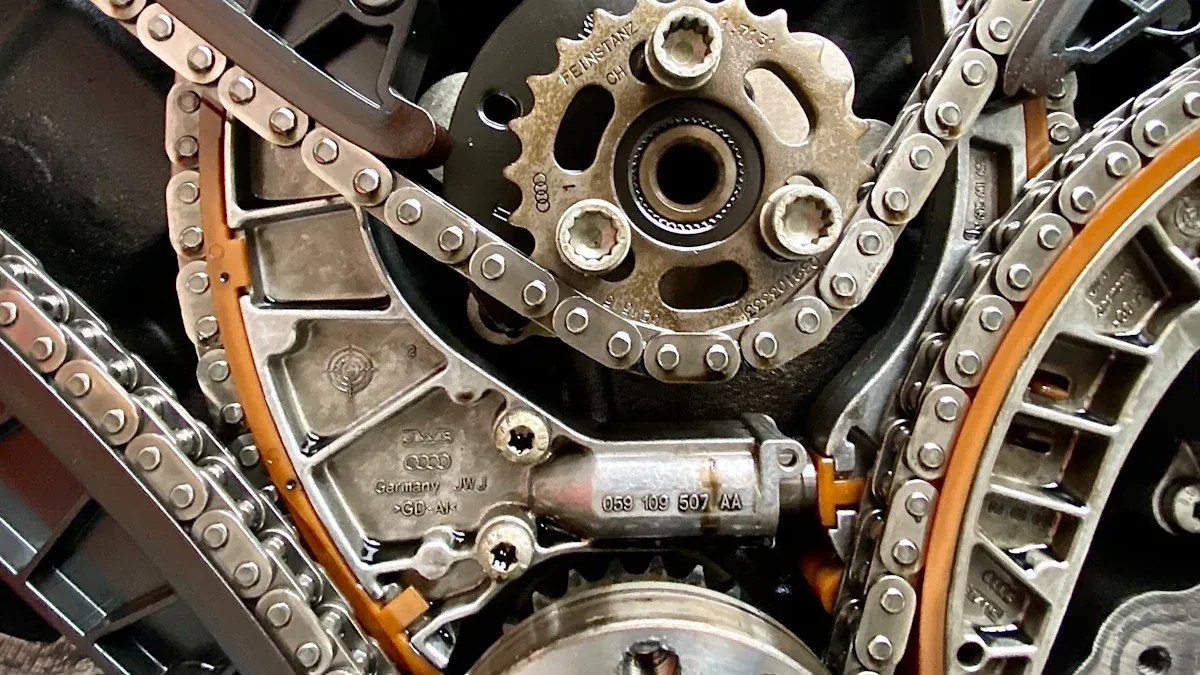
A timing chain tensioner is a crucial mechanical part in your engine. It works to apply and maintain the correct tension on the timing chain. This component uses either spring tension or hydraulic pressure. It adjusts tension to compensate for wear and slack in the chain. This ensures the timing chain always stays tight.
Its Role in Engine Health
Proper tension is vital for your engine’s health. It ensures the timing chain remains securely engaged with the crankshaft and camshaft sprockets. This prevents any slippage or timing problems. The timing chain tensioner often acts like a simple hydraulic piston. It includes a ratchet mechanism. This mechanism prevents the tensioner from retracting.
When oil pressure is present, the tensioner pushes against the timing chain guide. The ratchet then stops the tensioner from relaxing when oil pressure is absent. This constant pressure keeps your engine’s timing precise.
Consequences of Failure
A failed timing chain tensioner can cause serious engine problems. The timing chain can become loose or misaligned. In severe cases, the chain might even break. If the chain breaks, your engine’s valves and pistons can collide. This collision results in catastrophic engine damage. You face very expensive repairs if this happens.
Common Symptoms of a Failing Timing Chain Tensioner
You need to know the signs of a failing timing chain tensioner. Catching these problems early saves you from bigger engine damage. Here are the common symptoms you might notice.
Engine Rattling or Ticking Noises
You might hear strange noises coming from your engine. A common sign of a bad timing chain tensioner is a rattling or ticking sound. This noise often comes from the front of the engine. It can sound like:
Something rattling in a tin can!
A loose chain slapping against engine parts.
When your timing chain tensioner fails, you might also experience other issues along with the noise:
Your engine might jump out of time.
You could hear backfires.
The check engine light might turn on.
Your engine could have a rough idle.
Your car might enter ‘limp home’ mode. This mode reduces engine load, cuts nonessential systems, and limits your speed.
Check Engine Light On
Your check engine light is a warning system. If it turns on, it signals a problem. A failing timing chain tensioner often triggers this light. Your engine’s computer, called the PCM, constantly watches engine timing. It uses crankshaft and camshaft sensors for this. If the timing is off because of a bad tensioner, the PCM stores a diagnostic trouble code (DTC).
You might see specific codes related to timing issues:
P0017: This code means the crankshaft and camshaft signals are out of time.
P0011 and P0340: These codes relate to camshaft timing or sensor problems. They can point to timing chain issues.
GM vehicles: You might see codes like P0008, P0009, P0016, P0018, and P0019. These codes also show problems with crankshaft and camshaft position correlation. A faulty timing chain tensioner directly affects this.
Engine Misfires or Rough Idling
A failing timing chain tensioner can cause your engine to misfire. It can also make your engine idle roughly. When the timing chain is loose, the valves open and close at the wrong times. This disrupts the combustion process. You might feel your engine shake or stumble when it runs. This happens because the engine cannot maintain smooth operation.
Reduced Engine Performance
You will likely notice a drop in your car’s performance. A stretched timing chain, caused by a bad tensioner, leads to several problems:
Increased Fuel Consumption: Your car uses more gas than usual.
Reduced Power at Low Speeds: You feel less power when accelerating from a stop.
Sluggish Acceleration: Your car feels slow to speed up.
Difficulty Maintaining Speed: Your car struggles to hold a steady speed, especially uphill.
These issues show your engine is not working efficiently. The improper timing prevents it from delivering its full power.
Difficulty Starting
Starting your car might become a challenge. If the timing chain cannot keep the crankshaft and camshaft synchronized, your engine struggles to start. You might find:
The engine cranks longer than usual before it starts.
The engine fails to start at all.
This happens because the engine’s internal components are not moving in perfect harmony. This makes it hard for the engine to ignite the fuel and air mixture correctly.
Causes of Timing Chain Tensioner Failure
Several factors can lead to the failure of this important engine component. Understanding these causes helps you prevent future issues.
Normal Wear and Tear
Every mechanical part in your engine experiences wear over time. The tensioner is no exception. Its internal springs can lose tension. Its seals can harden and crack. These parts simply degrade from constant use. This natural process eventually leads to the component’s failure. You cannot completely stop this, but you can manage it.
Inadequate Oil Maintenance
Poor engine oil maintenance is a major contributor to tensioner problems. Low oil pressure directly causes issues with the tensioner. Engine sludge or extremely low oil levels often cause this reduced oil pressure. Regular maintenance, including keeping engine oil fresh and at the correct level, is crucial. This prevents timing chain failure. Engine oil lubricates the timing chain. This reduces friction and wear on its components. Dirty oil or insufficient oil levels increase friction. This accelerates wear on the chain. The tensioner, which keeps the chain taut, can wear out prematurely if you neglect regular maintenance. A damaged or faulty tensioner results in chain slack. This significantly increases the risk of failure. The tensioner often operates using oil pressure. Low oil levels could lead to insufficient pressure and subsequent tensioner issues.
Manufacturing Defects
Sometimes, a component fails due to a defect from the factory. This is less common. Faulty materials or errors during assembly can cause early failure. You cannot prevent these types of failures. They are simply a result of a flawed part.
High Mileage Effects
Your car accumulates high mileage over its lifespan. This puts more stress on all engine components. The tensioner endures countless cycles of heating and cooling. It also experiences continuous mechanical stress. This prolonged use increases the chances of material fatigue. High mileage accelerates the normal wear and tear process.
Timing Chain Tensioner Replacement Cost
You need to understand the costs involved when your car needs a new timing chain tensioner. This repair can be quite expensive. The total cost depends on several factors.
Cost Breakdown: Parts and Labor
The average cost for a timing chain tensioner replacement falls between $1,382 and $1,840. This range includes both parts and labor. Labor costs make up a large portion of this total. Mechanics estimate labor costs between $975 and $1,431.
If you only need the tensioner replaced, the cost can be lower. This specific part replacement might cost you $300 to $1,000. However, some vehicles have more complex systems. For example, a VVT (Variable Valve Timing) timing chain tensioner service can cost $1,200 to $1,500. This is especially true if you use original equipment manufacturer (OEM) parts at a dealership.
Replacing a timing chain tensioner is a time-consuming job. It can take at least 14 hours of labor. Mechanics typically charge $120 to $150 per hour for their work.
Factors Influencing Price
Several things affect the final price you pay.
Vehicle Make and Model: Luxury cars or vehicles with complex engines often cost more to repair.
Engine Design: Some engines require more disassembly to reach the tensioner. This increases labor time.
Geographic Location: Labor rates vary by region. Shops in larger cities might charge more.
Mechanic’s Rates: Independent shops often have lower hourly rates than dealerships.
Parts Quality: You can choose between OEM parts or aftermarket parts. This affects the price.
Parts Cost Variations
The cost of parts can change significantly. A full timing chain replacement is much more involved than just replacing the tensioner. A complete timing chain kit includes the chain, guides, sprockets, and the tensioner.
Replacing only the timing chain tensioner is less expensive. It focuses on just that one component. A full timing chain replacement can cost $500 to $1,500. For some vehicles, this cost can go up to $1,600 to $2,000. However, full timing chain replacements are rare. You usually only need them if the chain itself is damaged or stretched beyond repair. Most often, only the tensioner needs attention.
DIY vs. Professional Replacement
You face a choice when your timing chain tensioner needs replacement. You can attempt the repair yourself or hire a professional mechanic. Each option has its own considerations.
When to Consider DIY
You might consider a DIY approach if you have extensive automotive experience. You also need the right tools. Replacing a timing chain tensioner is not a simple task. It requires precision and specific equipment. For example, you need a TSI Lower Timing Chain Tool (T10368). Some people use washers as a substitute for this tool. You can also find universal VW tools online, such as a Timing Tool Set for 05-09 Audi VW A3 A4 Quattro TT Eos GTI Jetta Passat WZ35B4. You must understand engine timing thoroughly. You also need a dedicated workspace and plenty of time.
Benefits of Professional Service
Choosing a professional mechanic offers many advantages. Mechanics possess specialized knowledge and experience. They have all the necessary tools for the job. This ensures correct installation. A professional service also provides a warranty on parts and labor. This gives you peace of mind. They can diagnose other potential issues during the repair. This prevents future problems. You save time and avoid frustration by letting experts handle it.
Potential Risks of DIY
Attempting this repair yourself carries significant risks. An incorrect installation can lead to severe engine damage. This damage often costs much more to fix than the initial repair. You might strip bolts or misalign critical engine components. You could also install the tensioner incorrectly. This causes the timing chain to slip. This leads to catastrophic engine failure. You also risk injury without proper safety equipment and training. Consider the complexity before you decide to do it yourself.
Preventing Timing Chain Tensioner Issues
You can take steps to keep your engine’s timing chain tensioner working well. Proactive maintenance helps avoid costly repairs. You extend the life of this important component.
Regular Oil Changes
Regular oil changes are very important. Engine oil lubricates many parts. It also helps the timing chain tensioner work correctly. Dirty oil can cause problems. It can lead to sludge buildup. Sludge blocks oil passages. This reduces oil pressure. The tensioner needs good oil pressure to function. You should change your oil at recommended intervals. This keeps the oil clean. Clean oil ensures proper lubrication and tensioner operation.
Using Correct Oil Type
Always use the correct type of engine oil. Your car’s manufacturer specifies a certain oil. This oil has the right viscosity. It also has the correct additives. Using the wrong oil can harm your engine. It might not provide enough lubrication. It could also affect oil pressure. This impacts the hydraulic function of the tensioner. Always check your owner’s manual. It tells you the exact oil type to use.
Following Maintenance Schedule
Your car has a maintenance schedule. The manufacturer creates this schedule. It lists when to perform various services. You should follow this schedule closely. It includes checks for engine components. It also tells you when to replace fluids. Sticking to this schedule helps prevent issues. It ensures all parts, including the Timing Chain Tensioner, receive proper care. This proactive approach saves you money in the long run.
Your engine’s health depends on the timing chain tensioner. 🛠️ Address any warning signs immediately. This action prevents much more extensive and costly engine damage. Look out for key symptoms:
Engine rattling or ticking noises
An illuminated check engine light
Engine misfires or rough idling Replacement costs vary significantly, often ranging from $300 to over $1,500. Always consult a qualified mechanic for accurate diagnosis and expert repair.
FAQ
How long does a timing chain tensioner typically last?
A timing chain tensioner often lasts the life of your engine. However, poor oil maintenance or high mileage can shorten its lifespan. Regular service helps extend its durability.
Can I drive my car with a bad timing chain tensioner?
You should avoid driving with a bad timing chain tensioner. Continued driving risks severe engine damage. The timing chain could slip or break. This causes catastrophic engine failure. Get it inspected immediately.
What happens if I ignore a failing timing chain tensioner?
Ignoring a failing tensioner leads to serious engine problems. Your engine’s timing will become incorrect. This causes misfires, reduced power, or complete engine failure. Repairs will be much more expensive.
Is a timing chain tensioner the same as a timing belt tensioner?
No, they are different. A timing chain tensioner works with a metal chain. A timing belt tensioner works with a rubber belt. Both maintain tension. They are for different engine designs.



