Michelin currently stands as the world’s largest tire manufacturer by sales volume. Bridgestone often contends for this top position, showcasing the competitive landscape. The global tire industry represents a major economic force. Its market value ranged from $143.06 billion to $264.68 billion in 2024. Experts project the tire market will expand at a 5% Compound Annual Growth Rate through 2032. This dynamic sector sees constant shifts in rankings among the largest tire manufacturers. Michelin and Bridgestone exemplify the intense competition for leadership in the global tire market.
Key Takeaways
Michelin is the world’s largest tire maker by sales. Bridgestone is also a top competitor.
The tire market grows due to more car sales and new electric vehicles. This leads to new tire designs.
Tire companies use new technology like self-healing and smart tires. They also focus on eco-friendly materials.
Leading tire brands succeed with strong research, global reach, and good brand names. They also form smart partnerships.
Global Tire Industry: Trends and Drivers
Market Dynamics
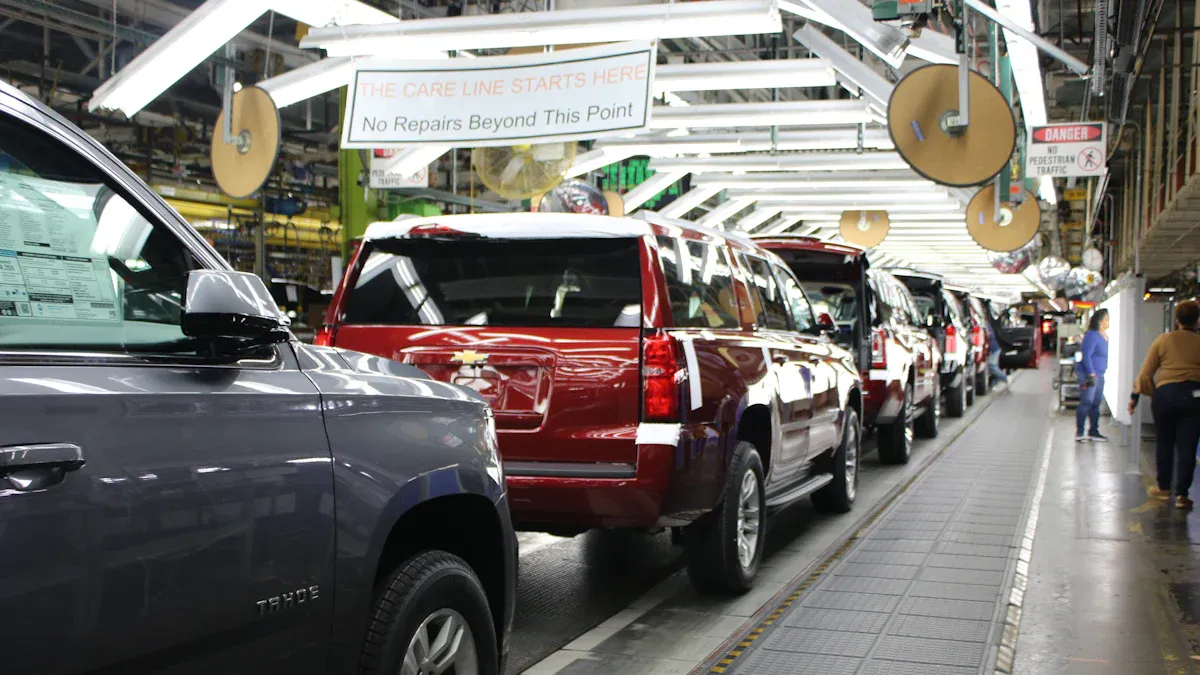
The global tire market experiences constant change. Several factors drive this evolution. Growing automotive sales, especially in Asia-Pacific regions like China and India, directly increase the demand for new tires. The shift towards Electric Vehicles (EVs) also influences tire design. Manufacturers develop low-rolling resistance tires to improve energy efficiency for these vehicles. Companies like Michelin and Bridgestone create specific tire lines for EVs. Environmental rules and consumer awareness push the tire manufacturing industry towards sustainability. This leads to more investment in materials such as bio-based rubber and recycled components. Modern tires also integrate sensors. These sensors monitor pressure, temperature, and tread wear. Goodyear and Continental lead innovations in smart tire technology. They aim to improve safety and performance.
Technological Innovations
The tire industry constantly develops new technologies. These advancements improve performance and safety. Self-healing tires use special materials to seal small punctures automatically. This reduces blowout risks and makes the tire last longer. Run-flat tires keep their shape and performance after a puncture. This allows drivers to reach a safe location. Smart tires have sensors. These sensors monitor pressure, temperature, and tread depth. They provide real-time data for best performance and safety. Low rolling resistance tires reduce the energy needed for movement. This improves fuel efficiency and lowers carbon emissions. Airless tires use solid or flexible structures instead of air. This eliminates punctures and blowouts. Eco-friendly tires use sustainable materials like natural rubber. They also use recycled content. This minimizes environmental impact.
Sustainability Initiatives
Major tire manufacturers set ambitious sustainability goals. They aim to use 100% sustainably produced materials by 2050. This change helps the environment. It also matches market trends for eco-friendly tire products. Continental Tires focuses on sustainable management. They source natural rubber responsibly. They work to eliminate deforestation. Cooper Tire & Rubber emphasizes planet, people, and products. They aim for clean oil use in all plants. They also reduce greenhouse gas emissions. Nokian Tyres focuses on transparent reporting and ethical business. They purchase raw materials responsibly. These companies use eco-friendly materials. They enhance fuel efficiency. They extend tire lifespan. They also reduce noise emissions. Many participate in tire recycling programs.
Ranking the Largest Tire Manufacturers Globally
The global tire industry features several dominant players. These companies consistently rank among the top by sales volume. Michelin currently leads the pack. Bridgestone holds a strong position, often competing for the top spot. Goodyear and Continental also maintain a consistent presence in the top tier. These largest tire manufacturers drive innovation and set industry standards. They represent the most influential largest tire manufacturers shaping the future of mobility.
Michelin
Michelin, headquartered in Clermont-Ferrand, France, is a global leader. It is currently the world’s largest tire manufacturer by sales volume. Michelin’s financial performance shows its strength.
Year | Annual Revenue |
|---|---|
2024 | $29.426B |
2023 | $30.676B |
2022 | $30.122B |
Michelin has an unimpeachable brand reputation. Customers recognize its high quality and reliability. This fosters strong loyalty. Michelin spearheads innovation. Its research and development efforts lead in tire technology. These efforts enhance safety, longevity, and fuel efficiency. The company offers a versatile product portfolio. It produces tires for many applications.
These include cars, motorcycles, and even spaceships. Michelin has an expansive global footprint. It operates over 70 production facilities. It also has research centers and sales offices in more than 170 countries. This provides stability against regional economic changes. Michelin is also the largest tire manufacturer in Europe. Michelin’s strong branding includes the famous Michelin Man. The Michelin Guide also contributes to its global identity. This makes Michelin a household name. Michelin is a key largest tire manufacturer in Europe.
Bridgestone
Bridgestone, based in Tokyo, Japan, is another major player. It consistently ranks among the top automotive tire manufacturers. Bridgestone’s latest annual sales revenue for 2024 was reported as $28.9 billion. This shows its significant market presence.
Bridgestone focuses on different market segments.
Core Business Segments:
Consumer Market (B2C): This segment focuses on passenger vehicles. It includes SUVs, luxury cars, and sedans. Bridgestone emphasizes high-rim diameter tires (18 inches and larger). It also makes EV-specific tires. Sales of 20-inch and above tires increased over 110% in North America in 2024 compared to 2023.
Business Market (B2B): This segment covers commercial trucks and buses. It also includes mining vehicles, aircraft, and various industrial applications. The ‘solution business’ contributed 30% of revenue in the first half of 2024. Premium tires accounted for 63% of revenue.
Bridgestone has a global footprint. It operates in over 150 countries. It has 181 production facilities across 24 countries.
This company uses a ‘local production for local sales’ approach. North America is its largest market. It contributes approximately $12 billion in sales in 2024. Asia is a crucial region for Bridgestone. Japan contributes 24% of revenue. China and the broader Asia Pacific region account for 13% of revenue. Europe is also a significant market for Bridgestone. It focuses on premium tire sales there. Bridgestone continues to expand its global reach.
Goodyear
Goodyear, based in Akron, Ohio, USA, is a well-known name. It has a long history of innovation. Goodyear’s full-year 2024 sales revenue was $18.9 billion.
Year | Revenue (Millions of US $) |
|---|---|
2024 | $18,878 |
2023 | $20,066 |
Goodyear is famous for its pioneering work. It developed the first detachable rubber product. It also introduced the first pneumatic rubber product for bicycles. The company focuses on advanced technologies. These include run-flat products and smart products. Goodyear maintains a strong presence in North America. It also has significant operations globally. Goodyear supplies products for various vehicles. These include passenger cars, trucks, and SUVs. Goodyear also has a strong motorsports heritage.
Continental
Continental, headquartered in Hanover, Germany, is a leading global automotive supplier. It is also a significant manufacturer of vehicle components. Continental is one of the largest tire manufacturers in Europe. The company has a diverse portfolio. It includes brake systems, interior electronics, and automotive safety. Its Continental division produces a wide range of products. These serve passenger cars, commercial vehicles, and two-wheelers. Continental focuses on advanced technologies. These include intelligent mobility solutions and sustainable manufacturing.
Sumitomo Rubber Industries
Sumitomo Rubber Industries, based in Kobe, Japan, is a global manufacturer. It produces a wide range of rubber products. This includes vehicle components, sports equipment, and industrial rubber products. Sumitomo Rubber Industries reported sales revenue of 1,211.9 billion JPY for the year 2024. This translates to approximately $7.9 billion USD.
Metric | 2024 (billions JPY) |
|---|---|
Sales revenue | 1,211.86a |
Sumitomo operates under several well-known brands. These include Dunlop, Falken, and Sumitomo. The company emphasizes research and development. It focuses on creating high-performance and environmentally friendly products. Sumitomo has a strong global presence. It has manufacturing facilities and sales networks worldwide.
Pirelli
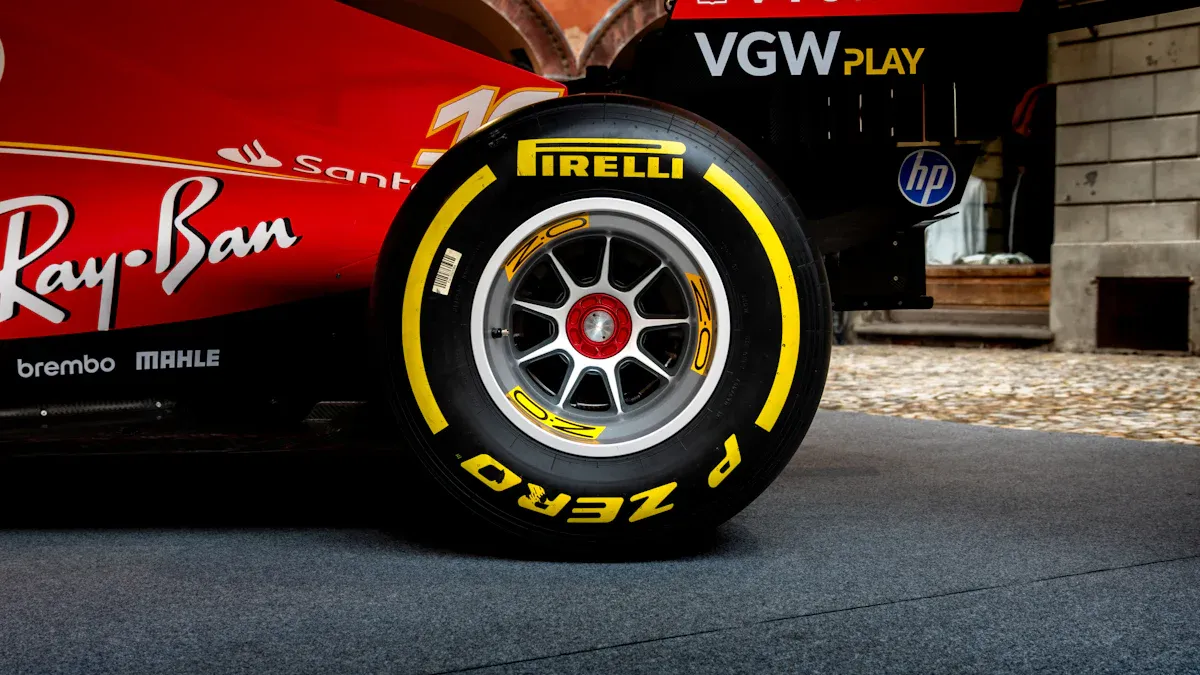
Pirelli, headquartered in Milan, Italy, is known for its premium and high-performance products. The company has a strong focus on the prestige car segment. Pirelli is also deeply involved in motorsports. It is the exclusive supplier for Formula 1.
Pirelli’s revenues have shown a steady increase.
Pirelli reported revenues of €6,773 million for FY 2024. This highlights its strong market position in specialized segments. The company invests heavily in research and development. It aims to create cutting-edge technologies. These technologies improve safety, performance, and sustainability.
Key Players and Market Influence
The global tire industry includes many influential companies. These manufacturers contribute significantly to the market. They offer diverse products and services. Their strategies and innovations shape the future of mobility.
Hankook Tire
Hankook Tire, based in Seoul, South Korea, is a prominent global tire manufacturer. The company has grown significantly. It now serves various vehicle types. Hankook focuses on advanced technology and performance.
Hankook Tire’s financial performance shows its strong market position. Its latest annual sales revenue, based on the Trailing Twelve Months (TTM) for 2025, is $10.93 Billion USD.
Year | Revenue (Billion USD) |
|---|---|
2025 (TTM) | 10.93 |
2024 | 6.83 |
2023 | 6.78 |
Hankook Tire invests heavily in research and development. It creates innovative products. These products improve driving safety and comfort. The company supplies original equipment tires to many global automakers. It also has a strong presence in the replacement market. Hankook Tire operates production facilities and sales networks worldwide.
Yokohama Rubber Company
The Yokohama Rubber Company, headquartered in Tokyo, Japan, is another key player. It produces a wide range of rubber products. These include tires for passenger cars, trucks, buses, and off-road vehicles. Yokohama also manufactures industrial products and aircraft components.
The Yokohama Rubber Company’s latest annual sales revenue for 2024 (IFRS) was 1,094,746 Millions of Yen. This figure highlights its substantial economic footprint.
Yokohama emphasizes environmental sustainability. It develops eco-friendly tires. These products reduce fuel consumption and carbon emissions. The company also focuses on high-performance tires. These products cater to sports cars and racing applications. Yokohama maintains a global presence. It has manufacturing plants and sales offices across continents.
ZC Rubber
ZC Rubber, based in Hangzhou, China, has emerged as a major force in the global tire market. It is recognized as the largest tire manufacturer in China. The company produces a comprehensive range of tires. These include products for passenger cars, trucks, buses, bicycles, and motorcycles. ZC Rubber also makes off-the-road tires.
ZC Rubber’s latest annual sales revenue was $5.2 billion. This represents a 9% increase. This figure places them at No. 9 among the top tire makers globally.
ZC Rubber operates under several well-known brands. These include Westlake, Goodride, Chaoyang, Arisun, and Trazano. The company focuses on quality and cost-effectiveness. It aims to provide reliable products to a broad customer base. ZC Rubber has expanded its distribution network globally. It serves markets in North America, Europe, Asia, and Africa.
Giti Tire
Giti Tire, with its global headquarters in Singapore, is a leading tire manufacturer. It has strong roots in China. The company produces a diverse portfolio of tires. These products serve passenger cars, SUVs, vans, light trucks, and heavy trucks. Giti Tire also manufactures tires for buses.
Giti Tire’s latest annual sales revenue for the 2024 financial year was USD $3.099 billion. This demonstrates its significant contribution to the industry.
Giti Tire operates multiple manufacturing facilities. These are located in China, Indonesia, and the United States. The company invests in research and development. It creates innovative tire technologies. Giti Tire supplies original equipment tires to many vehicle manufacturers. It also has a strong presence in the replacement market. Giti Tire focuses on delivering safe and high-performance products to its customers worldwide.
Success Factors for Leading Tire Brands
Leading tire brands achieve success through several key factors. These factors help them stay competitive and meet customer needs.
Research and Development
Research and development (R&D) drives innovation for tire companies. It helps them create advanced products. These products improve safety, longevity, and fuel efficiency. Companies invest heavily in R&D to develop new materials and designs. This leads to self-healing, run-flat, and smart tire technologies. These innovations keep brands at the forefront of the industry.
Global Reach
A strong global presence is vital for leading tire brands. A diversified global manufacturing footprint allows companies to produce closer to vehicle assembly plants. This reduces transportation costs. It also improves shipping times. This strategy helps mitigate risks from trade restrictions. Emerging economies like Brazil, India, and Thailand offer significant expansion opportunities. Trade agreements also facilitate international trade and export opportunities.
Brand Strength
Strong brand recognition and customer loyalty are crucial. Customer loyalty depends on tire performance. A J.D. Power study shows satisfaction with tire traction and handling is crucial. A drop in satisfaction leads to lower loyalty. Customers with traction or handling problems showed a 19-percentage point lower loyalty rate.
“The overall experience of tire traction and handling during poor weather conditions, such as snow-covered/icy roads and wet roads, is one of the top customer concerns,” said Jason Norton, director of benchmarking at J.D. Power. “If tire performance doesn’t meet customer expectations in these conditions, they will seek an alternative that does. In this competitive environment for tire manufacturers, a greater focus on quality will enhance overall customer loyalty.”
Quality enhances loyalty. Goodyear and Michelin achieve strong satisfaction scores across many categories. These include tire ride, wear, traction, handling, and appearance.
Strategic Partnerships
Strategic partnerships boost technology and brand recognition. Pirelli partners with Formula One as the exclusive tire supplier. This has significantly boosted its brand and technological prowess. Michelin also partnered with Tesla. They developed energy-efficient tires for the Model 3 electric vehicle. This aligns with Tesla’s sustainability vision. It also enhances Michelin’s image as an innovation leader. These collaborations help develop custom-made tires for specific needs.
The global tire industry remains dynamic, with largest tire manufacturers like Michelin and Bridgestone leading the way. Innovation, sustainability, and a strong global presence are crucial for continued market leadership. The industry faces future challenges. These include volatile raw material prices and increasing regulatory risks.
💡 Tip: The industry also sees a talent shortage for specialized skills in EV tire design.
Disruptive technologies will shape the future. Airless tires promise exceptional durability. Renewable materials, such as guayule plant rubber and rice husk silica, offer sustainable alternatives. These advancements will redefine vehicle performance and environmental impact. The largest tire manufacturers must adapt to these shifts.
FAQ
<<>>
FAQ
What company is the largest tire manufacturer globally?
Michelin currently holds the top position as the world’s largest tire manufacturer. This ranking is based on sales volume. Bridgestone often competes closely for this leading spot. The industry sees constant shifts in these rankings.
What factors determine a tire manufacturer’s ranking?
Several factors determine a manufacturer’s ranking. These include total sales revenue and production volume. Global market share also plays a role. Innovation in technology and product diversity are important. A strong global presence and brand recognition also contribute to a company’s position.
What are smart tires?
Smart tires contain embedded sensors. These sensors monitor tire pressure, temperature, and tread depth. They provide real-time data to the driver or vehicle system. This technology improves safety and performance. It also helps extend tire life.
What is the importance of sustainability in the tire industry?
Sustainability is crucial for the tire industry. It involves using eco-friendly materials and reducing environmental impact. Manufacturers aim for 100% sustainably produced materials. This helps conserve resources. It also meets consumer demand for greener products.
<<>>