Do you always feel the pressure to buy a new car? Many people do, but holding onto your current vehicle can be a smart financial move. It’s not just about skipping a monthly payment. You unlock many money-saving perks. In fact, 27% of recent car buyers struggle with their payments, and 10% regret their purchase due to car affordability issues. Smart car ownership truly boosts your budget. Keeping an older car offers significant financial benefits, giving you even more money-saving perks from your reliable vehicle.
Key Takeaways
Keeping your old car means no monthly car payments, freeing up cash for savings or other needs.
Older cars often have lower insurance costs because they are cheaper to replace or repair.
Your old car has already lost most of its value, so you avoid the big money loss new cars have.
You save money on taxes and fees because older cars have lower registration costs.
You can save money on repairs by doing simple fixes yourself and finding cheaper parts for older models.
No Car Payments

Free Up Monthly Cash
You know that feeling when a big bill hits your bank account every month? For many people, that’s their car payment. When you keep your old car, you completely get rid of that payment. Think about it: no more money going out for a car loan. This immediately frees up a lot of cash in your budget. The average monthly car payment for a new vehicle is $748. This is based on data from Experian as of Q3 2025. Imagine having an extra $748 in cash every single month! That’s a huge amount of cash you can use for other things. This extra cash makes a big difference in your daily finances. You can use this cash for groceries, bills, or even fun activities. It gives you more breathing room. This simple choice to keep your current car puts more cash directly into your pocket.
Invest Your “Payment”
Now, what if you took that $748 you saved and put it to work? Instead of sending it to a lender, you can send that cash to your savings. You are essentially paying cash for a car, but it’s a car you already own! This strategy is like buying a car with cash, but you are building your own wealth. You can invest this money in smart ways. For example, you could put your cash into high-yield savings accounts. Money market accounts are another good option. Certificates of Deposit (CDs) also offer a safe place for your cash to grow. Over time, this saved cash can grow into a significant sum. You are not just avoiding a payment; you are building your financial future. You are paying cash for a car in your savings account, making your money work for you. This is a smart way of paying cash for a car without actually buying a new vehicle. You are paying cash for a car you already have, and that cash is growing. This is a powerful way to build wealth. Think about the freedom this extra cash gives you. You are actively choosing financial security by paying cash for a car in your own savings.
Lower Car Insurance
Reduced Coverage Needs
You know how expensive car insurance can get, right? When you own an older car, you often need less coverage. This immediately saves you a lot of cash. Insurance companies base your premiums on your car’s current market value. A car that has already depreciated significantly costs less for them to replace if something happens. This means you can often drop expensive collision and comprehensive coverage. You might decide to only carry liability insurance, which is much cheaper. This choice drastically cuts your monthly insurance bill. You keep more of your hard-earned cash in your pocket. This is a direct financial benefit you get from driving an older vehicle. Think about what you could do with that extra cash every month! You could put it towards groceries, utilities, or even a fun night out.
Cheaper Rates for Older Models
Insurance companies truly love older models. They know these cars cost less to repair or replace after an accident. Parts for an older car are usually cheaper and much easier to find than for a brand-new vehicle. This lower risk for the insurer means significantly lower rates for you. You pay less each month for your policy, plain and simple. This puts more cash directly back into your budget. Imagine the extra cash you will have each year, adding up to hundreds of dollars! You can use this cash for other important things, like paying down debt or saving for a vacation. An older car helps you save significant cash on your policy. This extra cash can build your emergency fund, giving you peace of mind. You gain more available cash for your financial goals, making your money work harder for you. This is a smart way to manage your cash flow and boost your personal finances. You are essentially getting a discount just for keeping your reliable ride.
Minimal Depreciation
Avoid New Car Value Drop
You know new cars lose a lot of value fast. It’s a tough truth. A new car loses about 16% of its value in the first year. Some even lose 20% of their original purchase price. This is a big drop. Imagine losing that much cash right after you buy something! By the end of the fifth year, these new vehicles often retain only 45% of their initial value. This rapid decline in value is a major financial hit. You are essentially throwing away thousands of dollars in cash. This is why buying a used car is often smarter. You avoid this huge initial loss of cash. This is a key benefit of buying a used car.
Stable Old Car Value
Your old car has already lost most of its value. It is stable now. This means its value won’t drop much more. A $1,000 repair on your old car might seem like a lot of cash. But think about the cash you save by not buying a new car. A new car loses much more cash in depreciation during its first few years. For example, that $1,000 repair is far less than the thousands you would lose in depreciation on a new car. So, fixing your old car is often a better use of your cash. You keep more cash in your pocket. This makes buying a used car a smart move. You save cash. You keep your reliable vehicle. You avoid the big cash drain of a new car. This is another reason why buying a used car is a good idea. You save cash. You get more for your cash. You make a smart financial choice.
Reduced Taxes & Fees
Lower Registration Costs
You know how annual fees can add up, right? Well, your old car helps you save cash here too. Many states base your annual registration fees on your car’s age and value. A brand-new car costs a lot to register. But an older car, which has already depreciated, costs much less. You pay less cash each year just to keep your car on the road. This is a direct saving that goes right back into your pocket. Imagine what you can do with that extra cash! It’s a simple way to keep more of your money. You avoid those high fees that new car owners face.
Property Tax Savings
Some areas also charge property taxes on your car. Just like registration fees, these taxes often depend on your car’s value. An older car means a lower assessed value. This translates to significantly lower property taxes for you. You pay less cash to the government each year. Sometimes, if your car is old enough, you might even qualify for tax reimbursements or pay almost nothing at all. Think of your reliable old car as a “cash-saving machine” when it comes to taxes. You keep more of your hard-earned cash. This makes owning an older vehicle a very smart financial move. You save cash on taxes, leaving you with more money for other important things.
DIY Maintenance Savings
Simpler Repairs
You might think fixing a car is hard, but older cars are often much simpler. They don’t have as many complex computer systems as new models. This means you can often tackle basic repairs yourself. You save a lot of cash on labor costs. Learning simple car maintenance tasks boosts your confidence. It also keeps your car’s reliability high. For example, you can easily do your own:
Oil Changes: Changing your oil regularly prevents big engine problems. Doing this yourself can save you about $40 or more each time.
Tire Changes and Rotations: You can learn to change a flat tire. Rotating your tires every 5,000-8,000 miles is also easy. DIY tire rotations save you $20-30 per service.
Air Filter Replacement: Replacing engine air filters (every 10,000-15,000 miles) and cabin air filters (about every 15,000 miles) keeps your car running well. It also improves air quality. Doing this yourself costs much less than a mechanic’s charge.
These small acts of maintenance add up to big savings. They also give you a better understanding of your car. This knowledge helps you keep your car’s reliability strong.
Abundant Online Guides
You don’t need to be a mechanic to fix your car. The internet is full of amazing resources. You can find step-by-step guides for almost any repair. These guides help you understand your car’s maintenance needs. Many people trust ALLDATA DIY for detailed information.
“ALLDATA DIY saved my butt multiple times. Better than any off-the-shelf repair book. Comprehensive information that allows you to fully understand the system and the problems. Specific information relevant to your year make and model. I will always keep an up-to-date subscription on any vehicle I own.” – Paul H.
ALLDATA provides unedited OEM information. It gives you factory service manual data and recall procedures. This helps you keep your car’s reliability. Other great online resources include:
AA1car.com: Offers free, accurate information for all skill levels.
EricTheCarGuy: A former mechanic who simplifies complex topics.
Ratchets and Wrenches: Provides many how-to videos for DIYers.
Scotty Kilmer: A popular channel with condensed, informative videos.
These resources make car maintenance accessible. You can learn to diagnose issues and perform repairs. This saves you money and keeps your car running smoothly. You gain confidence in your car’s reliability.
Cost-Effective Repairs
Affordable Parts
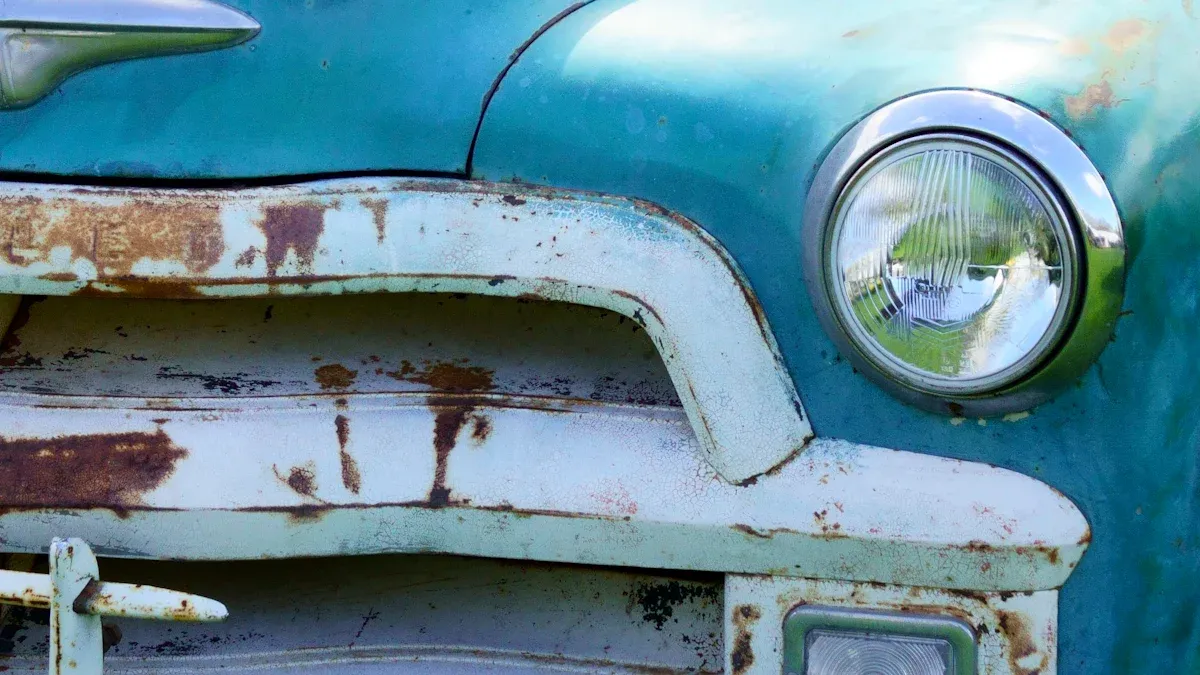
You know that sinking feeling when your car needs a repair? With an older car, that feeling is often less severe. Parts for older models are usually much cheaper. They are also easier to find. Many aftermarket companies make parts for popular older cars. This means you have more options. You can often choose between new, used, or refurbished parts. This flexibility helps you save a lot of cash. A new headlight for a brand-new car can cost hundreds of dollars. An older car’s headlight might be a fraction of that price. This makes repairs much more manageable for your budget. You keep more money in your pocket.
Strategic Maintenance Choices
You can also make smart choices about your car’s maintenance. You do not need to fix every tiny scratch or dent. Forgoing non-essential cosmetic repairs saves you even more money. Your old car is a workhorse, not a show car. Focus on what keeps it running safely and reliably. This means prioritizing preventative maintenance. You should schedule maintenance tasks based on how you use your car, its age, and its mileage. Do not wait for problems to pop up. Regular inspections of your engine, brakes, tires, and suspension reduce repair costs. They also make your car safer.
Think about how you manage your fuel. Monitoring fuel usage and minimizing idling time saves money. It also reduces wear and tear on your car. Regular tire maintenance is also crucial. Check tire pressure often. Get wheel alignments and rotations for even wear. Always inspect your tires for damage. You can also improve your driving habits. Smooth acceleration and braking reduce wear on many components. Avoiding speeding helps too. Performing basic checks before you drive keeps your car in good shape. These strategic maintenance choices extend your car’s lifespan without excessive cost. You keep your car reliable and your wallet happy.
Avoid Costly Upgrades
Skip New Tech Fads
You might feel tempted by all the fancy gadgets in new cars. Automakers pack them with the latest tech. But many of these features add a lot of cost without being truly essential. A survey shows that over half of Americans, 54% of them, think new cars have too much technology. Almost 7 out of 10 drivers, 68%, would rather skip the new tech for a cheaper vehicle. This tells you something important. Many new features are just fads. They make your car more expensive.
Automakers increasingly use subscription models for connected services. These include convenience, safety features, and even performance boosts. Many of these features were once standard. Now, they require monthly or annual fees. This adds significant ongoing cost to vehicle ownership. For example, BMW charges $149 for a lifetime Drive Recorder or $39 annually. Traffic-camera info costs $25 each year. Ford’s BlueCruise hands-free system costs $495 annually. General Motors’ Super Cruise can cost $2,200 for three years. Mercedes-Benz offers Mercedes Me Connect for $150 annually. They even have a Digital Extras Acceleration Increase for $1,200 a year. Tesla’s Full Self-Driving system is $12,000 or $200 per month. Toyota charges $80 annually for remote start. Your old vehicle does not have these extra costs. It just works.
Focus on Functionality
Your old car keeps things simple. It focuses on getting you where you need to go. You do not pay for features you do not really need. You avoid all those extra subscriptions and high-tech add-ons. This means you save a lot of cash. You get a reliable car without the financial burden of constant upgrades. You choose practicality over flashy new tech. This smart choice helps your budget. You keep more money in your pocket. Your old vehicle is a tool, not a gadget. It serves its main purpose well. You value its ability to transport you safely and efficiently. This focus on core function saves you from unnecessary spending.
Reduced Financial Stress
Freedom from Debt
You know how debt can weigh you down. It creates a constant worry. When you keep your old car, you completely avoid new car debt. This frees you from a huge financial burden. Many people struggle with auto loan payments. Younger borrowers especially face difficulties. Rising interest rates make borrowing more expensive. This leads to higher monthly payments for many. Inflation also makes things harder. Car prices have gone up a lot. This makes it tough to manage debt. Higher prices for groceries and gas also cut into your budget. This makes it hard to pay your bills.
Debt can seriously impact your health. It causes stress. This stress can lead to:
Depression and anxiety
Poor psychological well-being
High blood pressure and obesity
Lower life expectancy
You might feel intense shame or failure because of debt. This is a known source of stress. Look at these numbers:
Metric | Current Level | Comparison/Context |
|---|---|---|
Subprime Auto Loan Delinquency (60+ days) | 6.56% | Highest since 1994 (Fitch Ratings) |
All Auto Loan Delinquency (90+ days) | 3% | Not seen since 2010 (Federal Reserve Bank of New York) |
These numbers show many people struggle. You can avoid this stress by keeping your reliable car.
Peace of Mind Ownership
Imagine not owing anyone for your car. That is the peace of mind you get from owning your old car outright. You do not worry about making payments on time. You do not fear defaulting on a loan if money gets tight. You have complete ownership from the start. This means no future payments. You also do not need to use sale money to pay off a loan if you decide to sell.
The car truly feels “yours” when your name is on the title. You worked hard to save for it. This removes the burden of a car loan hanging over your head. You do not worry about the car being worth less than what you owe. This alleviates concerns about missing payments. It gives you great peace of mind. There is huge satisfaction in living without debt. Many people find paying off a mortgage so satisfying. They would not want to take on new debt. You get that same feeling with your debt-free car.
Boost Emergency Fund
Redirect Saved Car Funds
You are saving a lot of money by keeping your old car. Think about all the cash you are not spending. You avoid those big monthly car payments. Your insurance costs less. Repairs are often cheaper too. This money is not just disappearing into thin air. You can take all these saved funds and put them to work for you. Instead of spending it, you can actively redirect it. This means you choose where that money goes. You can use it to build something important for your future. This is a smart way to manage your finances.
Build Financial Security
Building an emergency fund is super important. It gives you a safety net. This fund helps you handle unexpected costs. Think about a sudden job loss or a medical emergency. You will feel much more secure with money saved up. According to Jeremy Straub, CEO of Coastal Wealth, you should aim to save 5-10 percent of each paycheck. You should keep doing this until your fund covers at least three months of expenses. Your old car helps you reach this goal faster. You can put all the money you save from your car into this fund. This builds your financial security. It gives you peace of mind. You are creating a stronger financial future for yourself.
Eco-Friendly Savings
Lower Carbon Footprint
You might not think about it, but keeping your old car helps the planet. Manufacturing new vehicles creates a lot of pollution. For example, making a medium-sized passenger car, including its end-of-life process, releases about 10 tons of CO2 for gas models. Electric cars are even higher, at 14 tons of CO2. This manufacturing process accounts for a big part of a car’s total lifetime emissions, sometimes up to 90% for electric vehicles. You avoid all these new emissions when you keep your current vehicle.
You also help the environment by not buying a new car. A new, more fuel-efficient diesel car only becomes better for the environment after you drive it for about 188,000 kilometers. An electric car needs about 76,000 kilometers to offset its manufacturing impact. This is true even in countries with clean energy. Jarod Kelly, an engineer at Argonne National Library, says an EV’s emissions savings usually offset its manufacturing footprint around 13,500 miles. However, making EV batteries needs minerals like lithium and cobalt. This can cause environmental problems like water use and pollution. You make a positive impact by simply driving your existing car longer.
Extended Vehicle Lifespan
Making your car last longer is a big win for the environment. You reduce the need for new cars to be built. This directly lowers the overall carbon footprint. A small increase in a car’s lifespan can make a difference. For instance, a 10% longer lifespan can lead to a 1% reduction in emissions per car. This shows that durability is very important for cutting down carbon.
You help save resources and energy when you extend your car’s life. You prevent the environmental costs of mining new materials and building new factories. You also reduce waste. Your choice to keep your reliable vehicle is a simple, yet powerful, way to be more eco-friendly.
You now understand that keeping your old car offers many money-saving perks. It is a powerful and often overlooked financial strategy. You gain long-term savings and true financial freedom. Re-evaluate your car ownership habits. Embrace the practical and economic advantages of maintaining your older vehicle. These money-saving perks truly add up. Make smart financial choices today for a more secure future. You will enjoy these many money-saving perks.
FAQ
Is it always cheaper to keep an old car?
Not always. You must weigh repair costs against new car depreciation. Often, a repair is less than a new car’s value loss. Your old car has already lost most of its value. This makes repairs a smarter financial choice for you.
How do I know when it’s time to get rid of my old car?
Consider safety and reliability. If repairs cost more than the car’s value, or if it becomes unsafe, it might be time. You should also think about how often it breaks down. Your peace of mind is important.
Can an old car really be eco-friendly?
Yes! You lower your carbon footprint by not buying a new car. Manufacturing new vehicles creates a lot of pollution. Extending your car’s life reduces the need for new production. This saves resources and energy for you.
What are the best ways to maintain an old car?
Focus on preventative maintenance. Change your oil regularly. Check your tires. Follow your car’s service schedule. You can do many simple repairs yourself. This keeps your car reliable and saves you money.